MAM
From Startups to SaaS: Women Entrepreneurs’ impact on tech trends and beyond

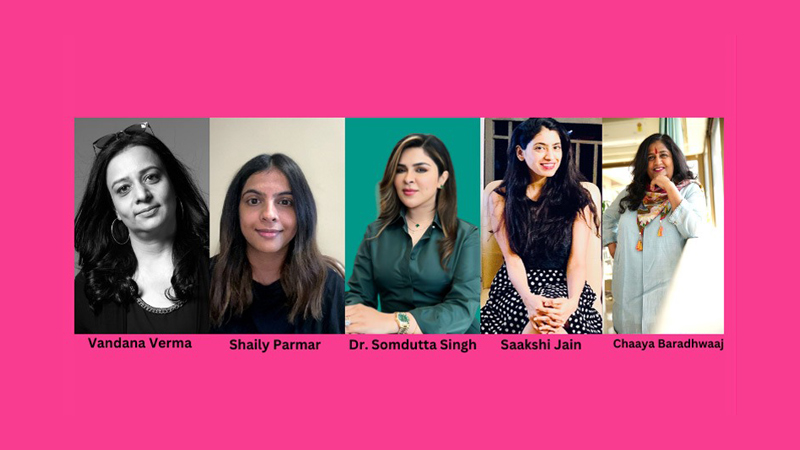
Mumbai: Women’s Entrepreneurship Day (WED) is a global initiative celebrated annually on 19 November to recognise and empower women entrepreneurs worldwide. Established in 2014 by Wendy Diamond, an entrepreneur, author, and philanthropist, Women’s Entrepreneurship Day aims to highlight the significant contributions of women entrepreneurs to the global economy and promote gender equality in the business world.
In the dynamic realms of technology and business, the role of women is increasingly pronounced and influential. Their impact is particularly notable in shaping the trajectory of these industries, where innovation, entrepreneurship, and a commitment to social responsibility converge. This intersection is marked by a wave of women entrepreneurs, leaders, and visionaries who are not only breaking through traditional barriers but are actively shaping the future of business.
As technology continues to evolve, women are at the forefront, leading startups, driving disruptive innovations, and contributing to diverse sectors such as health tech, e-commerce, and social impact tech. Their leadership extends beyond the boardroom, with a focus on fostering diversity and inclusion, championing tech education, and actively participating in the investment landscape.

Here’s what new-age entrepreneurs have to say about women entrepreneurs making significant contributions to the tech industry and staying ahead of trends in the business world
Wondrlab, co-founder & managing partner Vandana Verma
“As a co-founder of Wondrlab, India’s largest platform-first martech startup, the one accomplishment that fills me with both humility and pride is the creation of Wisr—a SaaS platform meticulously designed to uplift school infrastructure and elevate teacher salaries across India, all powered by the influence of brands. This journey has been nothing short of thrilling, and as a woman entrepreneur navigating the ever-evolving tech industry, the sense of accomplishment has been immensely gratifying.
Remaining at the forefront of industry trends isn’t just a professional aspiration; it’s a resolute commitment to perpetual innovation. Through Wisr, our innovative SaaS platform seamlessly connecting brands with the enhancement of school infrastructure, my aim transcends mere contribution—it’s about making a lasting impact. As women entrepreneurs, we aren’t just participants in the business landscape; we are the architects of transformative change, actively shaping the trajectory of technology and business with a potent combination of resilience, visionary foresight, and an unyielding determination to redefine industry standards.”
Vahan chief marketing advisor Saakshi Jain
In my journey through the ever-changing tech scene, I’ve discovered that success relies on empathy and adaptability. Women entrepreneurs bring a unique blend of tech expertise and a human touch, comprehending both the advancements and the people behind them. This empathy helps spotlight trends close to home, resulting in products that genuinely matter.
Flexibility is crucial as tech moves fast, and women entrepreneurs cultivate environments that welcome versatility and continual learning. Collaboration makes diverse teams ignite innovation and anticipate trends. In the tech world, women entrepreneurs are overcoming obstacles, shaping the future with innovative, flexible approaches.
In AI, women carve out spaces with forward-thinking endeavors, giving importance to ethical considerations and challenging stereotypes. They’re ahead of the curve on business trends, demonstrating a keen understanding of consumer needs. In my tech journey, I’ve learned that it’s all about sensing the tech pulse while staying authentic.
Women entrepreneurs bring this dynamic blend of tech smarts and a human touch, grasping the tech and the people behind it. It’s that empathy that helps identify trends that hit home, creating products that truly matter. When it comes to adaptability, it’s about navigating it, keeping things flexible, and never halting the learning process. We’re not just following business trends; we’re steering the ship with a sharp eye on what people truly need. Using AI with finesse for efficiency and exceptional user experiences, we’re altering the script and inspiring the next wave. It’s a human-first perspective; women entrepreneurs are propelling the change, leaving a mark and ensuring the road ahead in tech is all about diversity and inclusion
Virtue Worldwide senior account director Shaily Parmar
In the progressive world of Indian advertising, I am witnessing firsthand how women entrepreneurs are crafting a new narrative filled with creativity, resilience, and groundbreaking innovation. These incredible individuals are not just making waves; they are personally reshaping the entire landscape of our industry. Breaking through gender norms, they inspire me with their determination to create work that resonates deeply. In a traditionally male-dominated space, their stories resonate personally, inspiring a new era of inclusivity. These women aren’t just entrepreneurs; they are my mentors of change, personally shaping the future of creativity and inclusivity in the captivating world of advertising.
BC Web Wise founder – MD Chaaya Baradhwaaj
Women have showcased exceptional leadership, and have innovated and disrupted industries. Let’s look at some of the torchbearers. Falguni Nayar got beauty from e-commerce with Nykaa, Richa Kar of Zivame did the same with lingerie. Shraddha Sharma’s Yourstory has become a powerful vehicle that inspires entrepreneurs with authentic real stories. Trishneet Arora of TAC Security, has established a powerful presence in the globe and it’s a pioneer in cyber security. The list goes on and it is heartening that the women leaders and disruptors are coming from all walks of life and extend through Bharat.
Assiduus Global Inc founder & CEO Dr. Somdutta Singh
“My entrepreneurial journey has been phenomenal, marked by triumphs over challenges that echo the resilience of women in business. In every opportunity I have created over adversity has become a testament to my indomitable spirit and of women in the business. Whether faced with gender biases, skepticism, or barriers, every triumph became a resounding declaration that women can surmount any obstacle set before them. These victories are not just personal milestones but a collective anthem, resonating with the resilience that defines women in business.
Securing funding for women-led ventures proved to be a formidable challenge, one that demanded strategic acumen and unyielding determination. The financial landscape has historically favored male-dominated industries, and breaking through this bias required not only a robust business plan but also the courage to challenge the status quo. As a first-generation woman entrepreneur, the journey was characterized by a delicate connection between perseverance and empowerment. Every rejection letter was a call to refine and reinforce my vision, turning setbacks into stepping stones toward a more inclusive entrepreneurial landscape.
Naturally, being a trailblazer as a first-generation woman entrepreneur meant confronting entrenched stereotypes head-on. The societal narrative surrounding women in business often carried preconceived notions that needed dismantling. It involved proving that competence knows no gender, and success is not limited by traditional expectations. The empowerment derived from shattering these stereotypes was not just personal; it contributed to a broader cultural shift, challenging conventional norms and paving the way for future generations of women to chart their own entrepreneurial paths.
I discovered that strength is not solely defined by overcoming obstacles. It also involves staying true to oneself amidst adversity. Embracing my unique perspective as a woman in the entrepreneurial realm became a source of strength in itself. The power to create change lies not in conformity but in embracing the diversity of thought and approach that women bring to the table. Being oneself became a mantra, a reminder that authenticity breeds resilience. Creating a solid support network was not just a strategic move but a lifeline during the stormy seas of entrepreneurship. Expressing gratitude for each lesson, setback, and triumph became a grounding force, fostering humility and perspective. And perhaps most importantly, not being too hard on oneself emerged as a crucial lesson in self-compassion, recognising that the journey is as significant as the destination.”







MAM
India’s financial sector spent less on TV ads in 2025 but flooded the internet
Banks, insurers and lenders cut tv ads as digital jumps, LIC and Muthoot lead tv and Axis Bank tops online

MUMBAI: India’s banking, financial services and insurance sector, one of the most prolific advertisers in the country, delivered a split verdict on media in 2025. It spent less on television, held its nerve in print, turned up the volume on radio and deluged the internet with a ferocity that left every other medium looking pedestrian. The picture that emerges from TAM AdEx’s cross-media report for the BFSI sector is of an industry in transition, still wedded to the news bulletin but increasingly seduced by the algorithm.
Television: a retreat with caveats
TV ad volumes for the BFSI sector fell 16 per cent in 2025 compared with 2024, a sharp reversal after two years of consistent growth that had pushed volumes 16 per cent above 2021 levels by 2023 and a further 7 per cent higher by 2024. Within 2025 itself, the drop was concentrated in the middle of the year: the second and third quarters saw ad volumes slide 35 per cent each against the first quarter, with a partial recovery of 13 per cent in the fourth.
The retreat did not reshuffle the deck. Life insurance retained first place among TV categories with 19 per cent of ad volumes, mortgage loans held second with 16 per cent, and the top ten categories together accounted for 82 per cent of all BFSI television advertising. The dominance of news channels was equally pronounced: news claimed 68 per cent of ad volumes, general entertainment channels a distant 14 per cent and movies 12 per cent. Together, news and GEC captured 82 per cent of the sector’s television spend. News bulletins alone took 48 per cent of programme-genre volumes, with feature films second at 12 per cent. Prime time, between 6pm and 11pm, drew 34 per cent of ad volumes, followed by afternoon at 22 per cent and morning at 20 per cent. A full 82 per cent of all ads ran between 20 and 40 seconds.
Life Insurance Corporation of India was the sector’s biggest TV spender with 11 per cent of ad volumes. Muthoot Financial Enterprises came second with 9 per cent, followed by National Payments Corporation of India at 6 per cent, Tata AIG General Insurance at 5 per cent and State Bank of India at 5 per cent. The top ten advertisers together accounted for 51 per cent of total TV volumes. Three names were new to the top ten in 2025: Tata AIG General Insurance, IIFL Finance and Tata Capital. At brand level, Muthoot Finance Loan Against Gold led with 9 per cent share, Tata AIG Health Insurance entered the top ten for the first time, and the top ten brands together contributed 35 per cent of ad volumes.
Print: the long climb continues
Print told a different story. Ad space for the BFSI sector has grown every year since 2021, rising 16 per cent in 2022, 30 per cent in 2023, 51 per cent in 2024 and 64 per cent in 2025, all measured against a 2021 baseline. Within 2025, ad space was flat in the second quarter but surged 46 per cent in the third and 33 per cent in the fourth compared with the first. Life insurance led print categories with 21 per cent of ad space, followed by mutual funds and banking services and products at 13 per cent each, and corporate financial institutes at 11 per cent. The top ten categories together took 82 per cent of print ad space. LIC led print advertisers with 6 per cent share, and the top ten together covered just 19 per cent of ad space, a reflection of how fragmented print spending remains. Three new entrants joined the top ten in 2025, with Billion Brains Garage Ventures the only exclusive presence not seen in 2024’s list. In the top ten brands, LIC dominated with a 2 per cent share, while Nippon India Mutual Fund rose to third position from fourth in 2024. English accounted for 62 per cent of print ad space, Hindi for 20 per cent. Business and finance publications took 59 per cent of the genre split. The south zone led regional spending with 33 per cent of print ad space, Bangalore topping that zone, while New Delhi and Mumbai were the leading cities nationally.
Radio: louder than ever
Radio ad volumes for the BFSI sector have climbed steadily, rising 12 per cent above 2021 levels in 2023, 36 per cent in 2024 and 45 per cent in 2025. The quarterly pattern within 2025 was volatile: a sharp drop of 43 per cent in the second quarter and 42 per cent in the third, followed by a near-full recovery in the fourth. Life insurance led radio categories with 22 per cent of volumes, banking services and products second at 14 per cent and corporate NBFCs third at 11 per cent. LIC of India held its position as the leading radio advertiser with 20 per cent of ad volumes; the top ten radio advertisers together covered 69 per cent. Muthoot Financial Enterprises led radio brands with 10 per cent share, five of the top ten brands belonged to LIC alone, and SBI Mutual Fund made a remarkable leap to fifth position from 272nd in 2024. Evening and morning time-bands together captured 84 per cent of radio ad volumes, with evenings at 44 per cent and mornings at 40 per cent. Maharashtra was the leading state for radio BFSI advertising with 18 per cent share; Maharashtra, Gujarat and Uttar Pradesh together accounted for 43 per cent.
Digital: the five-times surge
If one number defines the 2025 BFSI advertising story, it is five. Digital ad impressions for the sector multiplied fivefold between 2021 and 2025, having already doubled in 2023 and doubled again in 2024 before the 2025 leap. Within the year, impressions dipped 19 per cent in the second quarter and 12 per cent in the third before recovering 8 per cent above the first quarter by the fourth. Banking services and products led digital categories with 27 per cent of impressions, life insurance and credit cards tied at 19 per cent each, and securities and sharebroking organisations fell from first place in 2024 to fourth in 2025. Axis Bank was the runaway leader among digital advertisers with 12 per cent of impressions, followed by ICICI Bank at 9 per cent, IDFC First Bank at 7 per cent and Kotak Mahindra Bank at 6 per cent. The top ten digital advertisers covered 59 per cent of impressions, and seven of them were new entrants compared with 2024, signalling rapid churn in the digital spending hierarchy. At brand level, Axis Bank led with 9 per cent, ICICI HPCL Super Saver Credit Card vaulted to third place from 921st in 2024, and six of the top ten digital brands were new to the list. Programmatic buying accounted for 91 per cent of all digital BFSI transactions; combined with ad networks, it captured 96 per cent.
The data from TAM AdEx paints the portrait of a sector that still believes in the power of the television news bulletin to sell insurance to the masses, but increasingly knows that the next generation of borrowers, investors and cardholders is scrolling, not watching. The race is now on to reach them before the algorithm serves up someone else’s loan offer first.






