Brands
From nappies to dignity Romsons steps up hygiene game
MUMBAI: ’Tis not just about comfort, it’s about confidence. Romsons Group is widening its hygiene lens, stepping decisively from hospital corridors into everyday homes with the launch of two new personal care products, Poochie Play Pants Baby Diapers and Dignity Bloom Disposable Period Panty.
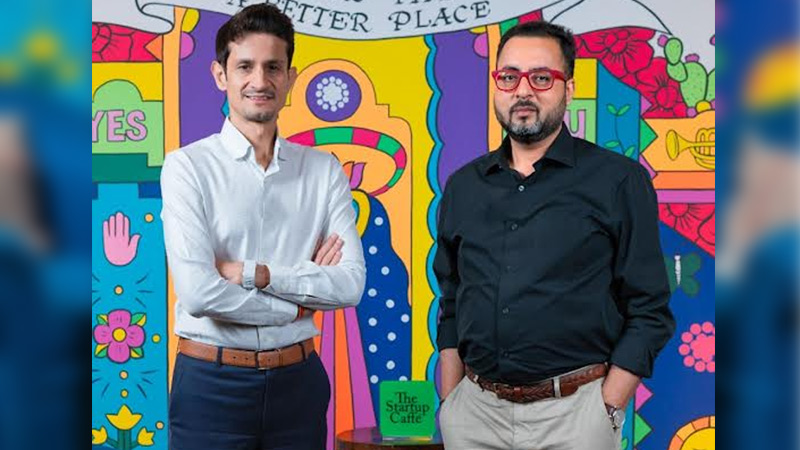
Unveiled by Romsons Group director Sahil Khanna during his appearance on The Startup Caffe podcast, the launches mark a strategic expansion for the 70-year-old healthcare and hygiene major. The move leverages Romsons’ medical-device DNA to address two of India’s most competitive, and under-penetrated, hygiene categories.
The headline act is Poochie Play Pants, Romsons’ first foray into India’s baby diaper market, a segment estimated to be nearly ten times the size of the adult diaper category and crowded with over 100 brands. Available in both tape and pant styles, Poochie is built around advanced core technology aimed at higher absorption, better retention and reduced leakage during extended wear. Designed for active babies, it focuses on comfort and freedom of movement, while being priced competitively for Indian households. Crucially, it carries the reassurance of Romsons’ seven-decade legacy in medical-grade disposables.
Alongside it comes Dignity Bloom Disposable Period Panty, a pants-style alternative to traditional sanitary napkins. Bloom integrates absorption directly into the garment, eliminating pad shift and reducing spillage during movement. The single-layer design removes the need for additional underwear, offering discreet protection for work, exercise and social settings. The emphasis is clear: dignity, mobility and confidence without compromise.
The twin launches also underline a bigger ambition. Despite growing awareness, hygiene penetration in India remains low, with sanitary napkin usage at around 12 percent and baby diapers at roughly 25–30 percent. Romsons’ stated focus is accessibility, ensuring that products commonly used in urban markets are also affordable and available in rural India.
With Poochie and Bloom, Romsons is betting that its medical heritage, combined with everyday relevance, can cut through crowded shelves. In a market where hygiene is still catching up with aspiration, the company is positioning itself not just as a manufacturer, but as a quiet enabler of safer, more dignified daily living.

Brands
Godrej clarifies ‘GI’ identifier after logo similarity debate
Says GI is not a logo, will not replace Godrej signature across products.
MUMBAI: In a branding storm where shapes did the talking, Godrej is now spelling things out. Godrej Industries Group (GIG) has issued a clarification on its newly introduced ‘GI’ identifier, addressing questions around its purpose and design following a wave of online criticism. At the centre of the debate were two concerns: whether the new mark replaces the long-standing Godrej logo, and whether its geometric design mirrors other corporate identities.
The company has drawn a clear line. The Godrej signature logo, it said, remains unchanged and continues to be the sole logo across all consumer-facing products and services. The ‘GI’ mark, by contrast, is not a logo but a corporate group identifier intended for use alongside the Godrej signature or company name, and aimed at stakeholders such as investors, media and talent rather than consumers.
The need for such a distinction stems from the 2024 restructuring of the broader Godrej Group into two separate business entities. With both continuing to operate under the same Godrej name and signature, the identifier is positioned as a way to differentiate the Godrej Industries Group at a corporate level.
The rollout, however, triggered a broader conversation on design originality. Critics pointed to similarities between the GI mark’s geometric composition and logos used by companies globally, raising questions about distinctiveness.
Responding to this, GIG said its intellectual property and legal review found that such overlaps are common in minimalist, geometry-led design systems. Basic forms such as circles and rectangles appear across dozens of brand identities worldwide, the company noted.
It added that the identifier emerged from an extensive design process and was chosen for its simplicity, allowing it to sit alongside the Godrej signature without competing visually. While acknowledging that elemental shapes may appear less distinctive in isolation, the group emphasised that the mark is part of a broader identity system that includes a custom typeface, sonic branding and other proprietary elements.
Following legal and ethical assessments, the company said it found no impediment to using the identifier, reiterating that the GI mark is a corporate tool not a consumer-facing symbol.
In short, the logo isn’t changing but the conversation around it certainly has.