MAM
Freedom Healthy Cooking Oils distributes Seed Ganesha idols for an eco-friendly festival

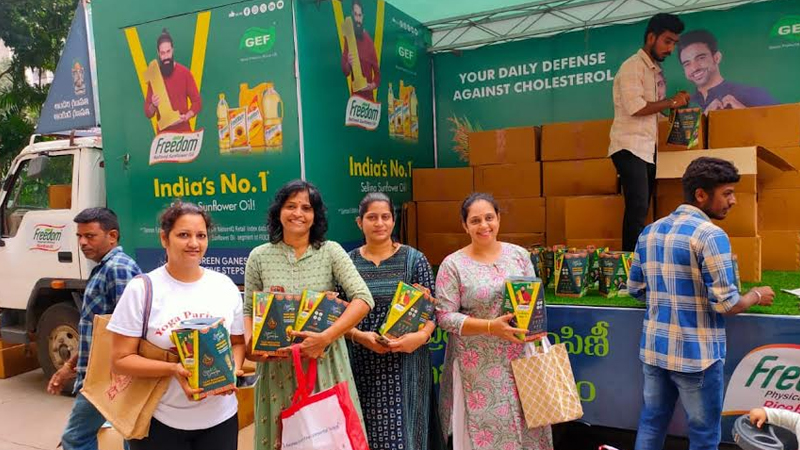
Mumbai: Gemini Edibles and Fats India Ltd (GEF India), the marketers and refiners of Freedom Healthy Cooking Oils, as a part of their efforts to promote sustainable and eco-friendly practices, will distribute 10,000 Eco-friendly Seed Ganesha Boxes. People are becoming conscious of the vicissitudes of climate change and rapidly adopting sustainable religious celebrations by worshipping eco-friendly Ganesha, as the immersion of these idols has no debilitating effect on the water bodies. To encourage this Freedom Healthy Cooking Oils will distribute 7,000 Eco-friendly seed Ganesha boxes in Hyderabad & 3,000 Eco-friendly seed Ganesha boxes in Bangalore. Freedom Healthy Cooking Oils DGM marketing Chetan Pimpalkhute along with the team flagged off vehicles to distribute the Eco-friendly seed Ganesha to apartment complexes like Rainbow Vista (Phase 1&2), Malaysian Township, Aparna Sarovar, NCC Urban.
Madhapur, Swanlake Apartment, Moosapet, Ridge towers, IDPL, My Home Jewel, Indis one city KPHP, Satellite Township, Kompally, Satyanarayana enclave Chanda Nagar etc., in the city.
The culture of installing a Murthi of Lord Ganesha is a tradition and has been going on for years. The murthi are normally made of Clay or Plaster of Paris and also painted with commercial paints to give them a real-life look and charm. The problem is the materials and the finishing products going towards the preparation of the murthi are toxic and also not good for nature, as they may have a harmful effect on soil and water bodies. To keep the environmental impact of the Ganesh festival to a minimum, people have started having clay and soluble Ganesh Murthi with manure and plant-able seeds. Once immersed in the pot, the Ganesh idol grows into a plant, with the seeds available in the murthi. Freedom Healthy Cooking Oils – The Green Ganesha initiative serves as a testament to their conscious endeavour to mitigate environmental harm without compromising on the festivities.

Freedom Healthy Cooking Oils senior vice president, sales & marketing P Chandra Shekhara Reddy said, “It is a part of our tradition to celebrate the Ganesh festival by placing the Murthi of Lord Ganesha in our homes. To help people celebrate the festival with traditional fervour and protect the environment, Freedom Healthy Cooking Oils has decided to distribute 10,000 eco-friendly Seed, Ganesha Murthi. We have been distributing the eco-friendly seed Ganesha Murthi’s for five years. With the Green Ganesha initiative, we give the people the freedom to celebrate the festival with traditional fervour in a sustainable and eco-friendly way.”



MAM
Beacon Group appoints Dr Rajesh Patel as Group CEO
36-year healthcare veteran to lead Beacon Diagnostics, Vector Biotek, Biogeny.
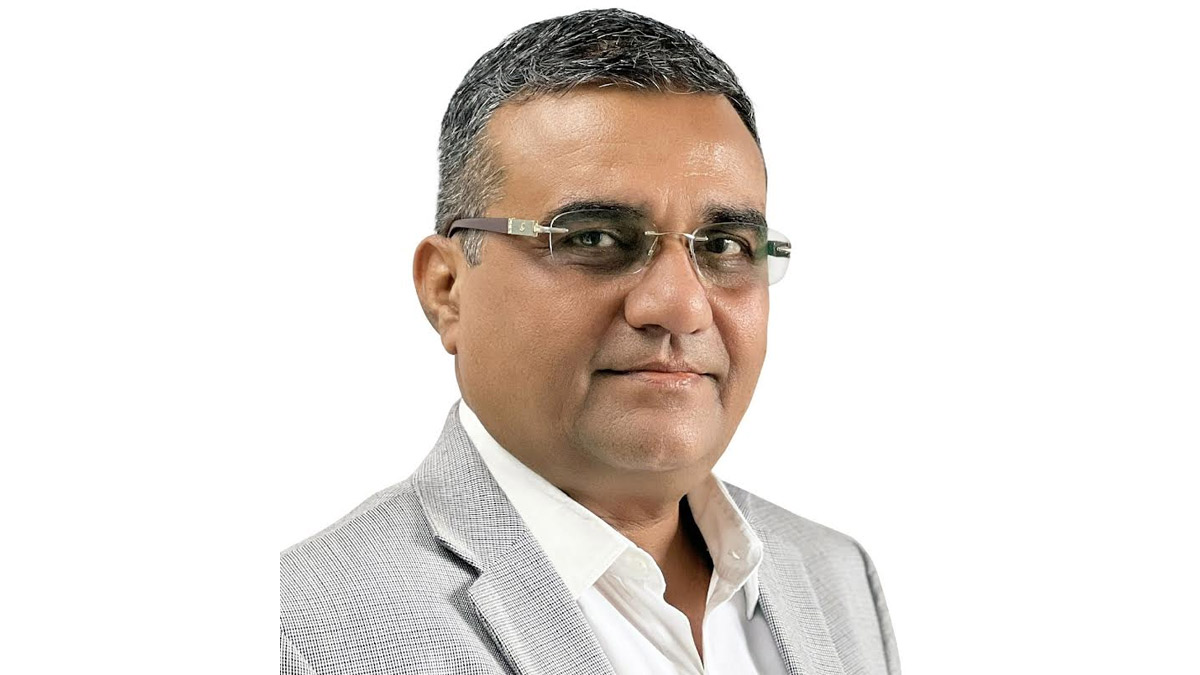
MUMBAI: A new chief, a fresh diagnosis and a sharper prescription for growth. Beacon Group has appointed Dr Rajesh Patel as its Group Chief Executive Officer, effective April 1, 2026, signalling a decisive push to scale its presence in the diagnostics and IVD space. Patel steps into the role with 36 years of experience across the healthcare and diagnostics industry, bringing a career shaped by leadership roles spanning sales, marketing, business development and operational strategy. His mandate is both expansive and precise: to steer the group’s overall strategic direction while tightening coordination across its three core entities Beacon Diagnostics, Vector Biotek and Biogeny Diagnostics.
In practical terms, that means driving cross-company synergies, accelerating market expansion and strengthening organisational capability areas increasingly critical as diagnostic players compete for scale in a fragmented yet rapidly evolving healthcare ecosystem. The group is positioning itself to capture unmet demand across chain laboratories, key accounts and standalone labs, segments that remain underserved despite growing diagnostic needs.
The appointment comes at a time when the In Vitro Diagnostics (IVD) sector in India is entering a more competitive and innovation-led phase, with companies focusing not just on product pipelines but also on service delivery, integration and customer-centric models. Beacon’s leadership appears to be betting that Patel’s execution-focused approach can help translate ambition into operational momentum.
Welcoming the appointment, Chairman Dr D K Joshi described Patel’s induction as a strategic move aligned with the group’s long-term vision, emphasising the role of leadership depth in navigating the next phase of growth.
For Beacon Group, the message is clear, in a sector where precision matters, leadership is the new differentiator—and this appointment is intended to set the tone for what comes next.






