MAM
Free Branding Services?

There are thousands of very, very small companies out there who will develop a logo at no cost, a tagline at no cost, get you a free domain name and a free website at no cost. I guess the next big thing will be that they also write you a fat check…all for free. Who are these enterprises and how are they doing this?
The Internet has removed the cumbersome overhead costs and linked very talented people to handle the real issues in real time without the fancy decorum and the super fulvous big time fanfare.
Enters the street fighter, a savvy marketer with some teeth and a friendly smile. The freelance nations have far too many operators on the marketing and branding circuit that all are chipping away the armor of the giant branding companies who until now sold more on their posh addresses and furniture than raw talent. Million dollar logos with a matching spin to thousand of others, million dollar-slogans, confusing sentences as branding miracles. Suddenly, such services are now available for free as an incentive to get a new client for print and related packaging services.

Recently, logos have seriously slipped in power, impact and originality. Outside the famous and overly used examples of Coca Cola, Nike, Mercedes, most customers can’t visualize a logo of a major corporation. Like, AT&T or GM. Also a lot of companies simply resorted to a word marks, the use of a simple typeface and that’s all. Like Microsoft or Rolex. Currently of the millions of logos in use today a very large number are just almost identical copies of others.
Losing Distinction
Before the web corporations, big or small easily got away with that as no one bothered to check a logo of an American company for similarities in Korea or India or vice versa. Today with a simple search, hundreds of countries are all lined up with their spinning logos. The similarities are far too obvious and hurt the image by not offering any creative distinction. On the web logos have lost their power.
All enterprising design logo shops are offering free logos in hope to get new clients. Nothing wrong here. The same design exercises, which took months and millions to justify a circle over a triangle, accompanied by psychological studies and fanfare to select a color. For example “blue “ is for the sky, therefore, it is open versus “green” for grass, which is flat? There were further national studies to find a matching tagline. This is now done in a few hour turn around. Is this any different than the a fully air conditioned room with a raised floor, called the data center to house a large cabinet-sized computer system with a power no greater than a fancy electronic gadget now on your desk.
If all these services become so easily accessible and so massively applied to everything big and small then where lies the distinction, the differentiation and the uniqueness? Furthermore, what is the future of such services including the gatekeepers of image and identity? It is dark.
If branding is really supposed to be a logo, a distinct color and a tagline then it is now available for free, all as a small introductory service from print shops all over the world. Look for free logos and creative branding on the web; the quality and the services are at par with any top major agency, minus the fanfare. The issue here is that e-commerce has taken the punch form design side and opened some new frontiers. Web site performance is more important than the logos or colors, the search engine positioning is more important than the tagline and the domain name is more important than the entire website itself.
New Frontiers
Corporate branding is now divided into two distinct areas, acquire a name identity that will work on global e-commerce and design a real web site that will deliver the message. All the other things in between which took months and years of expensive teams to mull over are now replaced by quick creative services. The magic is now in the cheapest and the fasted deliveries of creative ideas and the boardroom style branding think tanks are being booted out.
Corporate image and the naming of products and services are still the most critical issues for any serious player. The fact that most of these services are not capital intense any longer, the issues of distinction will always remain on the forefront.
Customer hungry corporations are putting more emphasis on correct global name identities as a key to play in this new name-economy and ride the fast tide of cyber branding… almost for free. Why not?





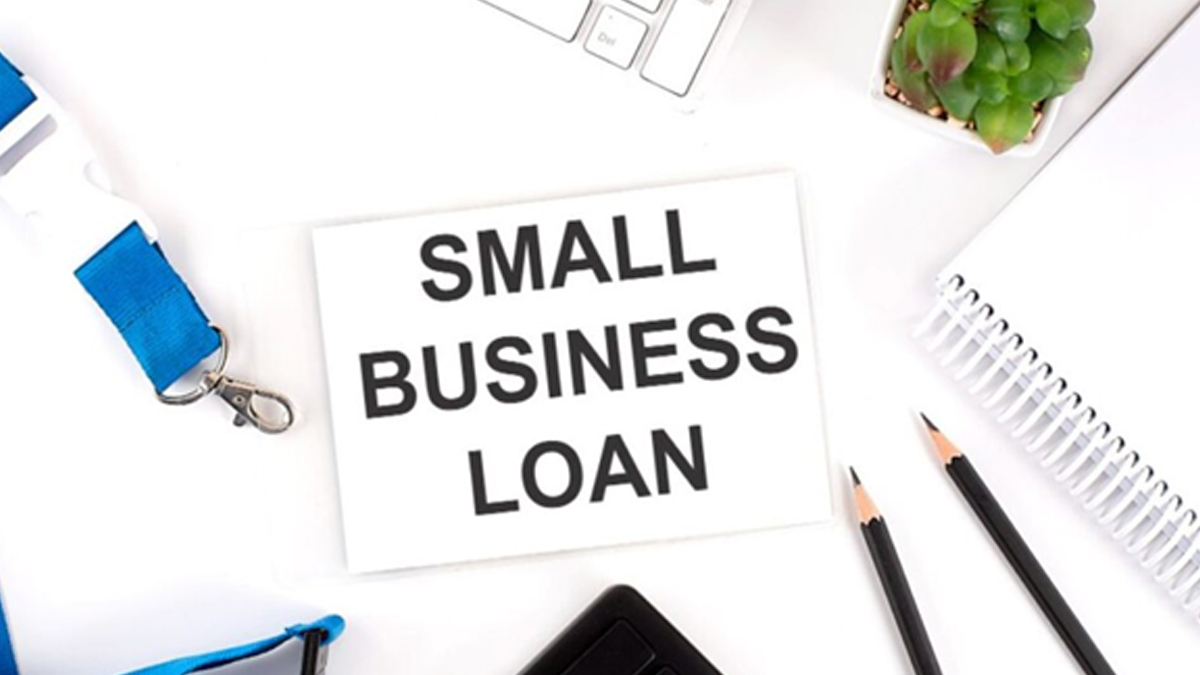
Starting a business is one of the most financially demanding transitions a person can make. In the early months, expenses are immediate and often unpredictable, while revenue streams may take time to stabilise. For first-time entrepreneurs, securing small business loans can feel like a paradox: lenders expect a clean financial track-record before approving a loan, but the business cannot establish that track record without funding. Understanding the start-up lending environment in India and knowing the realistic funding options make this process far less daunting, allowing entrepreneurs to plan strategically.
Why Traditional Business Loans Are Harder for Start-ups
Most financial institutions require a minimum business vintage of 2 to 3 years before approving a term loan. This is because the first two years of operations carry the highest risk of failure. For start-ups less than 12 months old, traditional loan options are limited, and lenders often ask for substantial collateral to mitigate risk.
The vintage requirement is not arbitrary. Businesses that have survived their first two operating cycles demonstrate market viability, which significantly lowers the lender’s risk. Until this milestone is reached, entrepreneurs often rely on bootstrapping, personal savings, or alternative financing to build a stable business foundation. Understanding this reality helps first-time entrepreneurs set practical expectations when seeking funding.
Government-Linked Schemes for Startups
India offers several government-backed schemes to support first-time entrepreneurs. One such scheme is the Pradhan Mantri Mudra Yojana (PMMY), which provides collateral-free loans for micro and small enterprises in three categories:
● Shishu: up to Rs. 50,000
● Kishore: Rs. 50,000 to Rs. 5 lakh
● Tarun: Rs. 5 lakh to Rs. 10 lakh
These loans are available through eligible lending institutions, making them suitable for early-stage businesses. For first-time entrepreneurs, a Mudra loan not only provides initial working capital but also helps establish a credit history. Repaying a Mudra loan on time strengthens the entrepreneur’s profile and increases the chances of securing larger loans in the future.
Using Personal Loans to Fund Early-Stage Needs
When business loan eligibility is not yet established, a personal loan can serve as bridge funding. These loans are assessed on the individual’s credit profile and income rather than the business’s financial history, making them accessible to salaried individuals or those with a strong personal credit record.
Personal loans have limitations: the loan amount is capped based on personal income, and the interest rate is typically higher than secured business loans. Nevertheless, taking out a personal loan during the first 12 to 18 months can provide crucial support as the start-up builds its financial profile. It is especially useful for covering immediate expenses such as inventory, marketing, or office setup costs.
Alternative Financing Options for Startups
For start-ups that are not yet eligible for traditional business loans, other financing options are available through financial institutions. Many lenders offer startup-focused or small-business loans designed for early-stage businesses. These loans evaluate the entrepreneur’s personal credit profile, business plan, and projected revenue rather than relying solely on business vintage. Financial institutions such as Tata Capital provide these loans with minimal documentation and fast disbursal, enabling entrepreneurs to manage operational expenses, purchase equipment, or fund early growth initiatives without pledging collateral.
Some lenders also offer flexible loan amounts, quicker approvals, and streamlined processes, making them well-suited for first-time entrepreneurs. Exploring these options early allows start-ups to access working capital while gradually building a credit history that will support larger loans in the future.
Building the Right Financial Profile Before Applying
For entrepreneurs planning to apply for a business loan in 12 to 18 months, the preparation period is critical. Key steps include:
● Filing Income Tax Returns (ITRs) consistently and accurately from the first year
● Maintaining a clean current account with regular deposits and no overdraft patterns
● Keeping the promoter’s CIBIL score above 750
Lenders assess start-ups by examining these signals. Entrepreneurs who maintain financial discipline from the start will have stronger loan applications after two years. Additionally, tracking cash flow and avoiding irregular withdrawals can further enhance the business’s credibility.
Collateral-Based Options for Larger Requirements
Startups requiring larger amounts beyond government schemes can consider loans against property. These loans allow entrepreneurs to access larger amounts of funding at lower interest rates, as the property secures the lender’s risk.
This option carries significant risk: using personal or family assets as collateral can result in a loss if the business does not perform as expected. Such loans should be considered only when the business plan is validated, the entrepreneur has clear cash flow projections, and the repayment strategy is realistic. Careful assessment of risk versus reward is essential before pledging assets.
Practical Steps to Strengthen Your Loan Application
To maximise the chances of approval, entrepreneurs should:
● Maintain accurate financial statements, bank records, and GST returns.
● Avoid over-borrowing; apply for realistic amounts that match business needs.
● Keep personal and business credit profiles in good standing.
● Explore lenders that offer startup-friendly products.
● Be transparent and complete in all documentation.
Taking these steps early ensures a smoother and faster loan process when the business is ready for formal financing. A well-prepared application reduces processing delays and demonstrates professionalism to the lender.
Conclusion
First-time entrepreneurs often face a funding gap in the early stages, but it is usually smaller than it appears. Maintaining clean banking records, filing ITRs consistently, and exploring personal loans, government schemes, and alternative financing options help build a strong financial profile. Entrepreneurs who plan systematically from day one are better positioned to access formal credit sooner, giving their start-ups financial stability through small business loans.
The ideal time to start building a credit-worthy business profile is the very first month of operations, not when applying for a loan. By understanding available funding options and acting proactively, first-time entrepreneurs can confidently apply for a business loan and set their businesses on a path to long-term growth.







