AD Agencies
Former iStream CEO launches regional video network, Studio Mojo


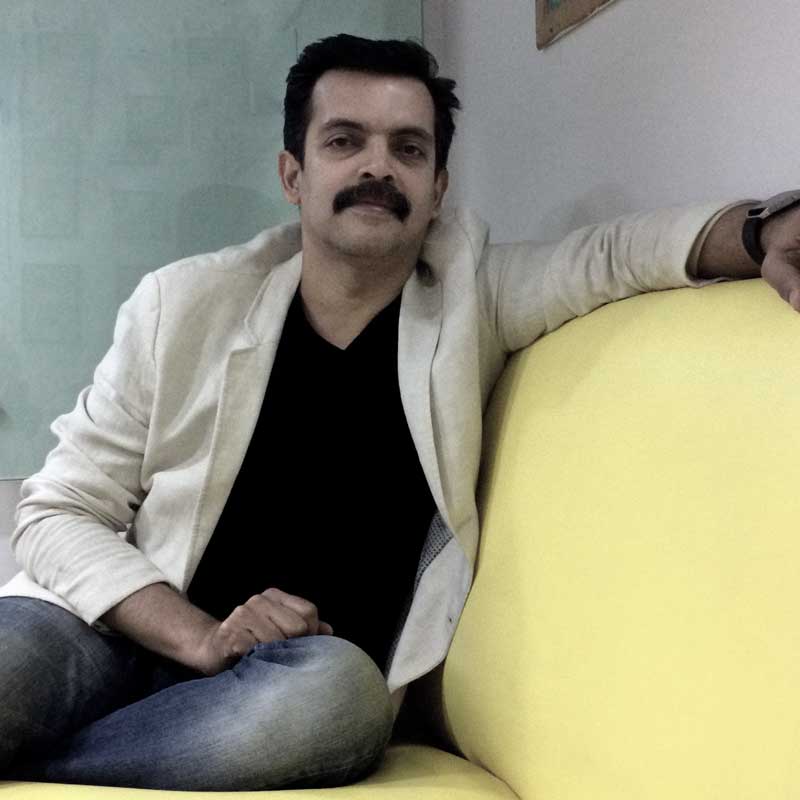
MUMBAI: The former CEO of iStream.com, Radhakrishnan Ramachandran has set up Studio Mojo, to tap into the fast-growing regional video entertainment market.
The online video market is growing at a frenzied pace in India with over 25 OTT platforms with global majors like Netflix and Amazon leading the pack. And many of them are planning an aggressive foray into regional language programming.
Over the next 4 years, more than a third of the Internet users in India are expected to be from regional languages like Tamil, Telugu, Malayalam, Bengali and Marathi. Until four years back most of the videos consumed digitally in India were in Hinglish. But that is the not the case anymore. The top four languages on platforms today are Tamil and Telugu along with Hindi and English.

iStream was India’s leading OTT platform in 2011, after raising 5 M USD from marquee VC investor SAIF. Though iStream had to shut down operations in 2013, Ramachandran is making a come back in the OTT space setting up Studio Mojo.
“ A lot of people have asked me over the past 12 months whether there are plans to relaunch iStream. The product game is over for me. Now it is time to play the content game. Hence Studio Mojo. The goal is to build one of the largest video networks for regional language programming,” says Ramachandran.
Studio Mojo will persue a multi-prong approach to cater to both long and short format content. The company is working with OTT platforms to create original programming in South Indian languages currently. Plans are to get into other regional languages like Marathi, Bengali, Bhojpuri by end of the year. Studio Mojo will also create short format content for platforms such as YouTube,Facebook, Twitter, and Instagram. Apart from that, it will also be licensing regional language content to Telcos, IPTV players and OTT players in markets such as Middle East and North Africa region and Southeast Asia where there is huge appetite for regional content.
“ We call ourselves a network because the objective is not just to create content but also identify talent with whom we will produce content. The idea is not to just work with the top names in the industry. We need to build the whole content ecosystem – spotting talent and giving them opportunities is equally important. If you look at some of the most creative movie industries like Malayalam the best content is being created by young scriptwriters and directors with lot of new faces,” adds Ramachandran.
To aid this network, Studio Mojo will set up studios in key markets like Chennai, Hyderabad and Cochin.
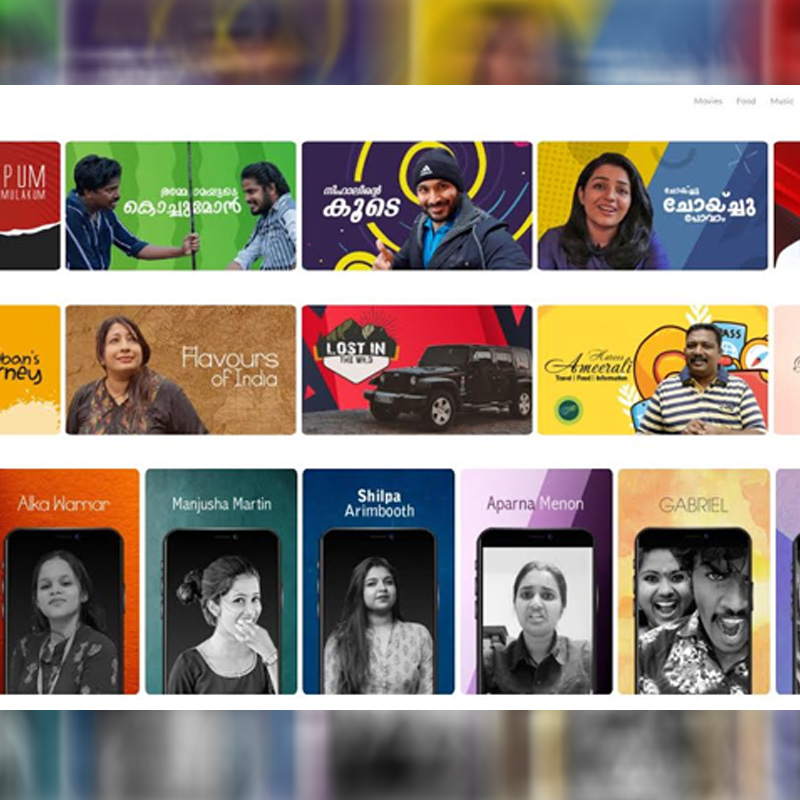
This is Ramachandran’s third video venture after iStream and Pepper Media which is amongst the leading MCN’s (multi-channel network) for YouTube in the country with over 10 million subscribers.

AD Agencies
Kevin Vaz opens FICCI-EY report with a declaration: India’s M&E industry set to breach Rs 3 trillion mark by 2027
In a keynote address at the FICCI-EY report launch, Kevin Vaz says sport, AI and the connected TV boom are driving a multi-screen revolution with no signs of slowing
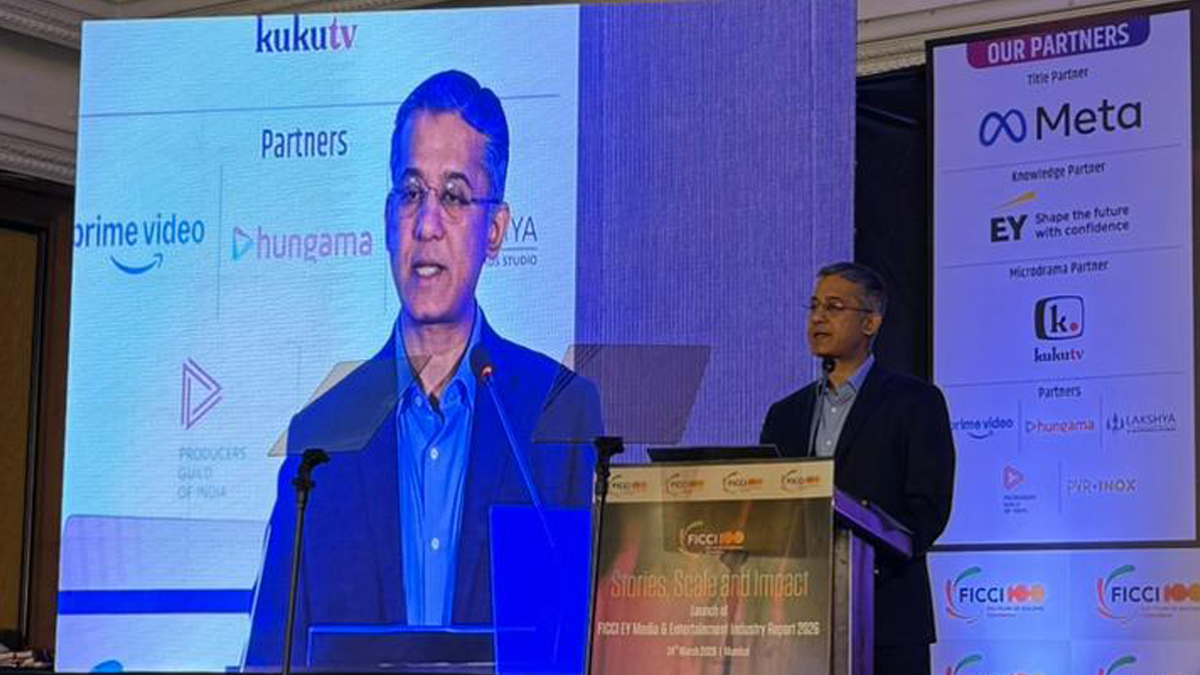
MUMBAI: India’s media and entertainment industry is growing faster than the economy, reshaping global benchmarks and is on course to blow past Rs 3 trillion by 2027. That was the headline message from Kevin Vaz, chairman of the FICCI Media and Entertainment Committee and chief executive of entertainment at JioStar, who delivered the opening keynote at the launch of the FICCI-EY Media and Entertainment Report 2026 in Mumbai on Monday. He did not waste much time on caveats.
The industry hit Rs 2.78 trillion in 2025, outpacing GDP per capita growth and surpassing even last year’s bullish forecasts. Vaz described the year in three words: scale, convergence, transformation. The numbers, he suggested, were only half the story. The other half was how that growth was happening.
Digital has become the industry’s largest segment, driven by advertising, subscriptions and commerce. But Vaz was quick to puncture the familiar narrative of digital killing everything else. India, he argued, is not an either-or market. It is an AND market. Connected TV is surging. Linear television, mobile, films and print are all still expanding. AVGC, the animation, visual effects, gaming and comics sector, is emerging as a serious growth engine, opening new storytelling formats and new global revenue streams. Nothing, he said, is replacing anything. Everything is reinforcing everything else.
Nowhere is that more vivid than in sport. In an on-demand world where audiences can watch anything, anytime, Indians still show up live. “Sports don’t fragment audiences,” Vaz said. “They unite them, just on different screens.” The ICC Men’s T20 World Cup 2026 made the point emphatically. During the final, JioHotstar delivered 72.5 million concurrent streams, a global record. Group chats exploded. Families renegotiated control of the television. Advertisers, Vaz noted with undisguised relish, stopped asking where audiences were and started asking how fast they could get in.
Cinema had its own landmark year. More than 1,900 films were released, with several crossing the Rs 1 billion mark. Dhurandhar was singled out as proof that Indian audiences will still turn up in large numbers for content that grips them. Live experiences, too, are getting bigger and more immersive, though Vaz suggested the surface has barely been scratched.
Then there is artificial intelligence, which he described as quietly, and sometimes not so quietly, reshaping everything. AI is enabling personalisation, efficiency and scale, but Vaz argued its deeper significance lies in what it is doing to creativity itself. He pointed to Mahabharat: Ek Dharmayudh, billed as the world’s first AI-produced show, as evidence that the technology can amplify creative ambition rather than hollow it out. He also used the platform to call on Indian policymakers to engage seriously with the creative industry on AI and copyright, ensuring that creators are fairly compensated as the technology spreads.
The picture that emerges from the report, and from Vaz’s keynote, is of an industry that has stopped thinking of itself as a fast-growing emerging market and started thinking of itself as a global template. Scale, diversity and innovation, he said, are no longer in tension in India. They are coexisting, and the rest of the world is taking notes.
The Rs 3 trillion milestone is two years away. As the man who chairs the committee that shapes the industry’s policy agenda and runs the country’s most powerful entertainment platform, Vaz set the tone for the day with characteristic directness: India’s media business is not just chasing growth. It is deciding what the country talks about at dinner. That is a different kind of power altogether.








