MAM
Fitternity extends its Series A round – raises additional capital from Sixth Sense Ventures


MUMBAI: Fitternity has raised an undisclosed amount of funding from Sixth Sense Ventures & several other investors. This is an extension to the Series A of $4 million raised in May earlier this year.
With over 10 million consumers having used the platform to access over 12,000 gyms and studios across the country, Fitternity is driving the P&L of fitness centres in an asset light fashion. Fitness consumption behaviour is evolving rapidly, driven by Gen Z and millennials who are not only value conscious but seek variety and flexibility. Fitternity has been able to preempt this change through a variety of offerings across the spectrum, because one-size-doesn't-fit-all. On the back of this, Fitternity launched OnePass – an exclusive, all access pass for all fitness and health needs around working out and eating healthy. Now users can get unlimited access to workout across 12,000+ fitness centres & sports facilities across the country with an added feature of lifetime validity. Fitternity pioneered the pay-per-session model, membership portability and dynamic pricing in India.
The company believes that with its multi-format business models & offerings implemented, the capital infusion will help them grow 10X to USD 100 million annual revenue over the next 24-36 months. The company has been able to establish an optimal linkage between pricing, consumer usage patterns and per unit price and also provide operational support through enterprise solutions.

Sixth Sense founder and CEO Nikhil Vora said, "Fitness and wellness is at an inflection point in India and Fitternity is at the driver's seat propelling Indians towards a healthier life. Through their unique offerings for consumers, insurance companies and corporates, Fitternity will dominate the $7 billion (2022E) fitness market in India."
The company is also working with corporates & insurance companies to propel preventive healthcare among Indians. Fitternity along with Aditya Birla Wellness Private Limited has launched a digitally enabled wellness and rewards programme offering workouts to users across the Fitternity ecosystem of gyms & fitness centres. It is also enabling corporate leaders to implement employee-wellbeing initiatives, by replacing outdated reimbursements and inconvenient annual memberships with pay-per-session credits directly into the employees' phones enabling true convenience and flexibility to achieve their fitness goals. Fitternity recently partnered with Reliance Nippon Life Insurance Company to launch one of the biggest fitness challenges, #WalkPeChal Mission Moon – with a goal to achieve 100 crore steps in 30 days via step-counters and fitness sessions booked through Fitternity.



Brands
GUEST COLUMN: Beyond layoffs, India emerges as creative-tech hub
Shift in hiring and AI-led workflows is reshaping global media and marketing
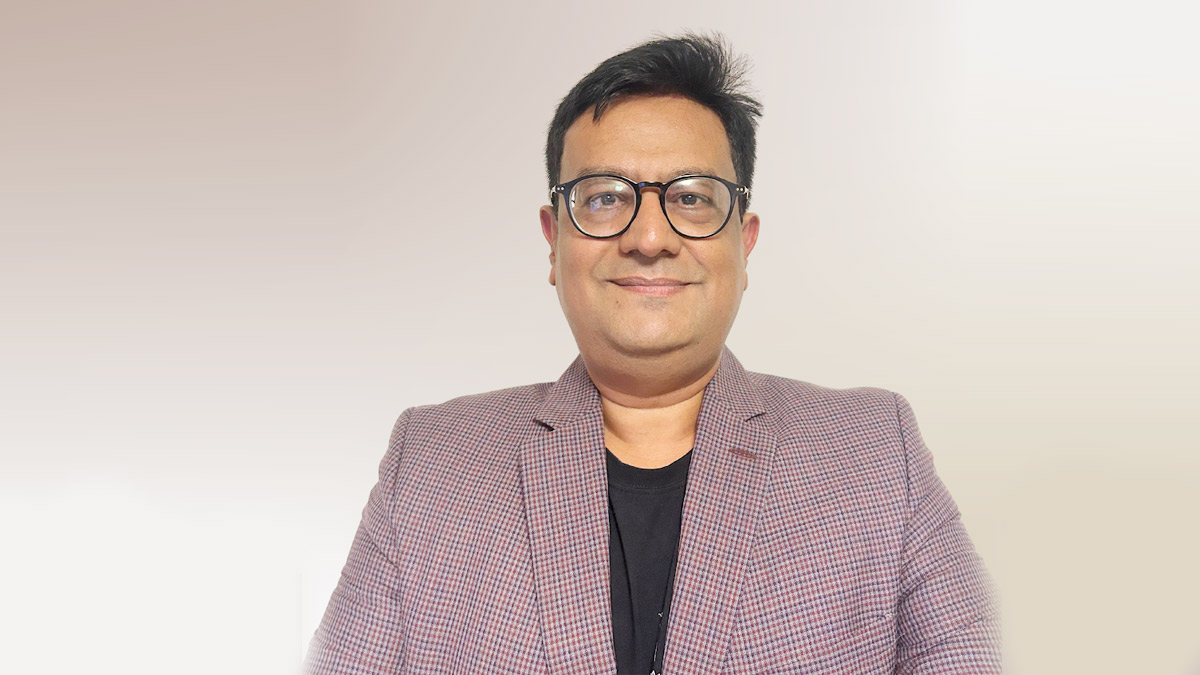
MUMBAI:The global narrative around layoffs in media and technology may suggest contraction, but a deeper transformation is reshaping how creative and tech capabilities are built and deployed. For Sanjil Zaveri, general manager – India at Brandtech+, this shift is less about decline and more about redistribution, one that is positioning India at the centre of a new global operating model. In this piece, Zaveri explores how integrated workflows, AI-powered production, and evolving talent demands are redefining the creative-tech ecosystem, why India is emerging as a strategic hub for global content and innovation, and what this means for the future of media, marketing, and talent.
The global headlines around layoffs in technology and media continue to dominate industry conversations. From platform restructuring to reduced marketing spends, the narrative suggests a slowdown across the creative and digital ecosystem.
But beneath these headlines, a different shift is underway, one that is quietly redefining how creative and technology work is delivered globally.
Hiring is not disappearing; it is being redistributed. And India is increasingly at the centre of this transition.
A structural shift in the creative-tech ecosystem
The media and marketing landscape is undergoing a fundamental reset. Brands today are moving away from fragmented agency models and siloed teams toward more integrated, agile structures.
Creative, technology, and media are no longer operating in isolation. Campaigns are now built through connected workflows, where ideation, production, and optimisation happen simultaneously.
This shift is forcing organisations to rethink where and how teams are built. Increasingly, the focus is on capability, speed, and scalability, rather than geography alone.
India’s emergence as a creative-tech hub
India’s role in this evolving ecosystem has expanded significantly.
Traditionally positioned as a backend execution market, India is now playing a far more central role in global campaign delivery. Teams based here contribute not just to production, but also to strategy, content development, and performance optimisation.
This is particularly relevant in a market where content velocity has increased dramatically. With the rise of digital platforms, OTT, and always-on marketing, brands require high volumes of creative assets without compromising on quality.
Industry insights from Ernst & Young point to India’s growing strength as a global content hub, while NASSCOM continues to highlight the scale and depth of the country’s digital talent pool. Together, these factors create a compelling case for India as a foundation for more efficient, integrated content ecosystems serving global markets.
A global company’s perspective on India
At Brandtech+, this shift is already shaping how we operate.
As a global organisation working across creative, marketing, and technology, our talent strategy is increasingly driven by capability rather than location. India has therefore become a key market for both scale and strategic talent.
In the first quarter of this year, we have significantly accelerated hiring in India across creative, technology, and operations roles, moving well ahead of plan and continuing to build strong momentum. We are actively hiring across multiple functions, with India playing a central role in delivering integrated creativetech solutions for global brands.
These signals reflect a broader change in how global companies view India, not as a delivery centre, but as a hub for connected creative, data, and technology capabilities.
“While much of the global narrative is centred on contraction, what we are seeing in India is a different kind of growth,” says Sanjil Zaveri. “As a global company, we are investing in talent that can work across creative, data, and technology, because that is where the future of marketing is headed.”
AI and the new content economy
Artificial intelligence is playing a critical role in enabling this transformation.
In today’s media environment, the demand for content has scaled exponentially. Brands are expected to create, adapt, and optimise creative assets across multiple platforms in real time. The scale of this demand would be difficult to sustain through traditional production models alone.
AI is helping make this possible.
Rather than replacing roles, AI is streamlining workflows, automating repetitive tasks, accelerating production timelines, and enabling faster experimentation. This allows creative and strategy teams to focus on higher-value outputs.
“AI removes the mundane and elevates the meaningful,” says Zaveri. “It allows teams to focus on ideas and storytelling, while technology drives efficiency.”
For media platforms and advertisers, this is redefining how campaigns are built, moving from linear production cycles to continuous, data-driven content creation.
What this means for media talent
For professionals across media, advertising, and digital, this shift is redefining skill requirements.
The traditional boundaries between creative, media planning, and technology are blurring. Content creators are expected to understand performance metrics. Media professionals are working more closely with data, platforms, and automation. Collaboration across disciplines is becoming a core skill.
This is creating demand for hybrid talent, professionals who can operate across disciplines and adapt to rapidly changing workflows.
India’s talent ecosystem is particularly well suited to this environment. With strong capabilities across content, design, engineering, and analytics, the market offers a unique combination of scale and versatility.
Importantly, global exposure is no longer tied to relocation. Professionals in India are increasingly working on international brands and campaigns, collaborating with teams across markets in real time.
Looking ahead: India at the centre of the reset
What we are witnessing today is not a temporary phase; it is a structural reset in the global creative-tech ecosystem.
Layoffs may continue to shape short-term narratives, but they do not capture where long-term growth is being built. That growth lies in new operating models, integrated workflows, and markets that can deliver both scale and innovation.
India is firmly at the centre of this transformation.
As global media and marketing organisations continue to evolve, India’s role will only become more critical, not as a support market, but as a strategic hub for content, creativity, and technology-led innovation.
The future of creative-tech will be defined by collaboration, speed, and adaptability. And increasingly, it will be shaped from India.
Note: The views expressed in this article are solely the author’s and do not necessarily reflect our own.






