MAM
Festive fever goes long haul as India’s holiday season stretches nine weeks


MUMBAI: Turns out Diwali isn’t the full stop anymore, it’s just the comma. Appsflyer’s India Festive Report 2025, based on a hefty 20.5 million installs and over 576 million dollars in ad spend, reveals that the country’s high-stakes festive season has stretched from a week-long Diwali blitz into a nine-week marathon of consumer intent.
The numbers tell the story. Gaming apps saw post-Diwali install growth of 29 per cent, while Food and Drink apps climbed 16 per cent as celebratory cravings lingered. Travel on Android skyrocketed with a 40 per cent jump in remarketing spend, showing that the festive bug bit long after the firecrackers faded. Meanwhile, Ios Shopping apps logged a 20 per cent rise in session volumes post-Diwali, fuelled by extended discounts and gift redemptions.
But it wasn’t all smooth sailing. Fraud rates ballooned: Food and Drink apps on Ios hit 60 per cent, a 176 per cent increase while Android Entertainment fraud climbed 74 per cent, exposing how loosened controls around gifting windows can make campaigns vulnerable.

Appsflyer GM for INSEA and ANZ Sanjay Trisal put it bluntly: “India’s festive season is no longer a one-week race to Diwali. It’s a sustained momentum period. To win, brands must pace budgets, double down on post-Diwali remarketing, and adapt strategies by platform.”
The report also flagged missed opportunities: gaming led install growth but saw little remarketing activity, limiting retention and monetisation. Shopping apps fared better, with the top ten increasing Share of Paying Users by 32 per cent year-on-year, powered by smoother checkouts and brand trust.
Meta’s Rishad Chindamada added that mobile is where the action is: “Full-funnel marketing, AI-driven optimisation, and channels like reels and business messaging can take brands from awareness to loyalty in this extended season.”
For marketers, the playbook is clear:
● Reallocate remarketing to the post-Diwali window, when intent is high but competition thins.
● Time strategies by platform Android for long-tail gains, Ios for sharp, front-loaded pushes.
● Retain beyond Day 7 with reactivation flows between Days 10–14.
● Harden fraud protection during peak gifting surges.
In short, the festive season is now less of a sprint, more of a Test match and those who play the long game stand to win big.




Brands
Samsung certifies 1,000 Maharashtra students in AI and coding
The South Korean electronics giant marks its first large-scale skilling push in the state, with women making up nearly half the national programme’s enrolment
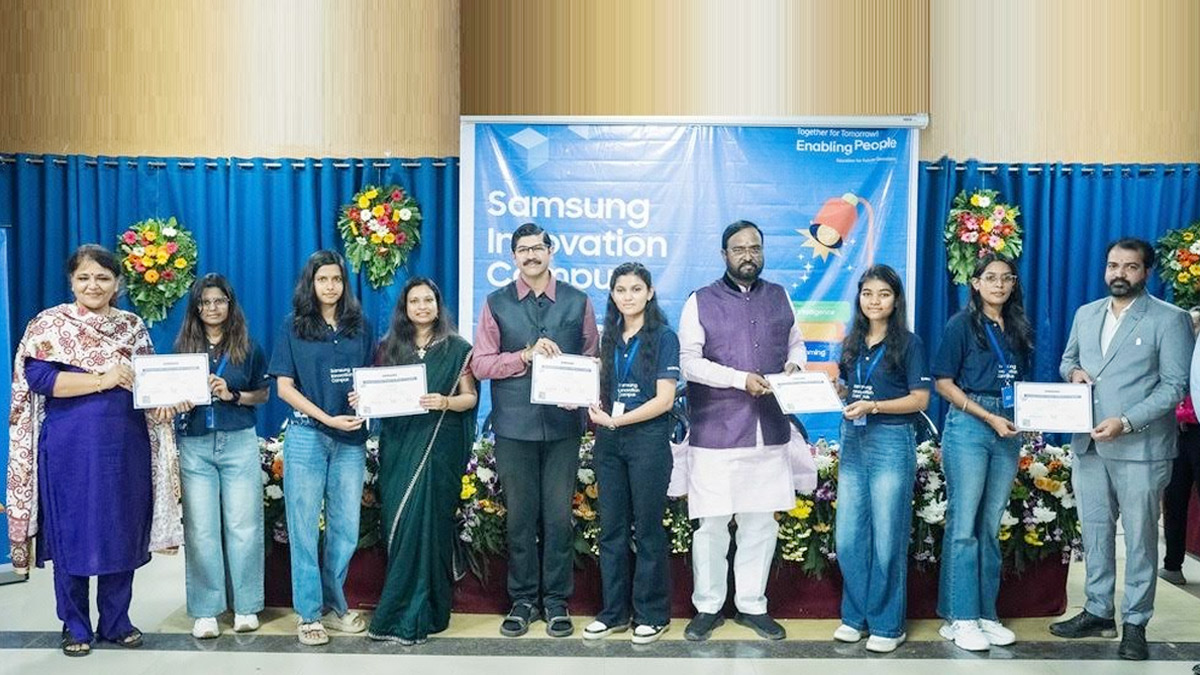
PUNE: Samsung has put 1,000 students in Maharashtra through a certified training programme in artificial intelligence and coding, the largest such drive the South Korean electronics company has run in the state and a signal that corporate India’s skilling ambitions are moving well beyond the boardroom brochure.
The certifications were awarded under Samsung Innovation Campus (SIC), the company’s flagship corporate social responsibility programme, which launched in India in 2022 with the stated aim of democratising access to future-technology education. The 1,000 graduates were drawn from four institutions: 127 from Savitribai Phule Pune University, 373 from Pimpri Chinchwad University, 250 from D.Y. Patil University’s Ramrao Adik Institute of Technology and 250 from Anjuman-I-Islam’s Kalsekar Technical Campus. All completed training in either AI or coding and programming, the two disciplines Samsung has identified as the critical pillars of the digital economy.
The programme does not stop at technical training. Soft-skills development and career-readiness modules are baked into the curriculum, a deliberate attempt to close the gap between what universities teach and what employers actually want.
“India’s digital growth story will ultimately be shaped by the quality of its talent pipeline,” said Shubham Mukherjee, head of CSR and corporate communications at Samsung Southwest Asia. “As technologies like AI move from the periphery to the core of industries, skilling must evolve from basic training to building real-world capability. This milestone in Maharashtra reflects how industry and academia can come together to create a future-ready workforce that is both globally competitive and locally relevant.”
The Maharashtra drive sits within a rapidly scaling national effort. Samsung Innovation Campus trained 20,000 young people across India in 2025, hitting its stated target for the year. Women account for 48 per cent of national enrolments, a figure the company cites as evidence of its push for an inclusive technology ecosystem. The programme is implemented in partnership with the Electronics Sector Skills Council of India and the Telecom Sector Skill Council.
Samsung, which is marking 30 years in India this year, runs SIC alongside two other initiatives, Samsung Solve for Tomorrow and Samsung DOST, as part of a broader effort to build what it calls a generation of innovators with both the technical depth and the problem-solving mindset to thrive in a fast-moving digital world.
A thousand certified students is a tidy headline. Whether they find jobs that match their new skills is the harder question, and the one that will ultimately determine whether corporate skilling programmes like this one are genuine pipelines or well-photographed gestures.






