MAM
F&B cos reduce sugar to target health-conscious customers


MUMBAI: There’s never been a better time for fitness brands with the younger generation becoming more and more health conscious. With almost sedentary lifestyles, people are opting for healthier eating and exercise options to stay fit.
Brands are ensuring their communication shows their commitment to health but the challenge lies for brands that have stuck for a decade with high sugar and salt content and are now finding it difficult to change that perception.
The answer: either promote the product for its taste and goodness or alter its key ingredient to make it more appealing for the health conscious consumer. Recently, world’s largest food and beverage company Nestle announced that it will further cut the amount of sugar, salt and saturated fats in its products as it tries to improve the image of packaged foods.

The move may also be viewed as a safeguard measure by Nestle against the recently accounted sugar tax in the UK, wherein soft drink companies will now be required to pay a levy on drinks with added sugar. Nestle has Nesquik, Nestea and MILO in its drinks portfolio. The new tax was designed to curb rising levels of obesity in the UK.
Nestle and its rivals (Mondelez and Mars) are under pressure from a shift in consumer preferences towards healthier food and away from processed products such as instant noodles and frozen pizza. The maker of KitKat chocolate bars and Maggi soups is responding with healthier products and is also moving into higher growth categories, such as coffee, pet care, bottled water and infant nutrition.
It also confirmed its commitment made in 2014 to reduce saturated fats by 10 per cent in all relevant products that do not meet World Health Organisation recommendations. Nestle chief executive Mark Schneider remarked, “The trend towards healthier foods is to be observed worldwide. Combining the convenience of packaged foods with healthy good nutrition, that is where our sweet spot is.”
Nestle spent 1.72 billion Swiss francs ($1.71 billion) on R&D last year. The company launched over 1000 new products last year to meet the nutritional needs of children and wants to further enhance products for kids with fruits, vegetables, fibre-rich grains and micronutrients. Reformulating recipes to make its products healthier is part of Nestle’s effort to keep its products attractive for consumers. This year it launched a new Milkybar white chocolate bar that has 30 per cent less sugar.
Although the F&B giant has decided to take the healthier route in UK, it wouldn’t come as a surprise if it decides to alter the ingredients in all its operating markets to reach more consumers. India has lately become the playing field of all major brands and the move may or may not be implemented here, as the Indian chocolate industry was worth Rs 78 billion at the end of 2016 and is predicted to reach Rs 122 billion with a compounded annual growth rate of 16 per cent by 2019.
According to the 2016 Euromonitor International report, the chocolate confectionery market in India is projected to grow at around eight per cent per annum between 2016 and 2021 to reach Rs 16,200 crore (on constant value) from Rs 11,256 crore in 2016, backed by better retailing across rural areas.
Given Indians’ love for sweets, whether or not global giants tweak their recipes here will not impact sales. A consumer in rural India will buy a product, regardless of the alteration of ingredients, because he has little knowledge about the health aspect. However, consumers in urban and metro cities are the ones who are cautious and tweaking the sugar and salt quantity is likely to get them to add the product to their basket.






Brands
Tessolve lands a semiconductor veteran to drive its next big push
Ravi Kumar Chirugudu, who started his career at ISRO and has spent 35 years building chips and companies, joins the Bengaluru-based firm as president and chief operating officer
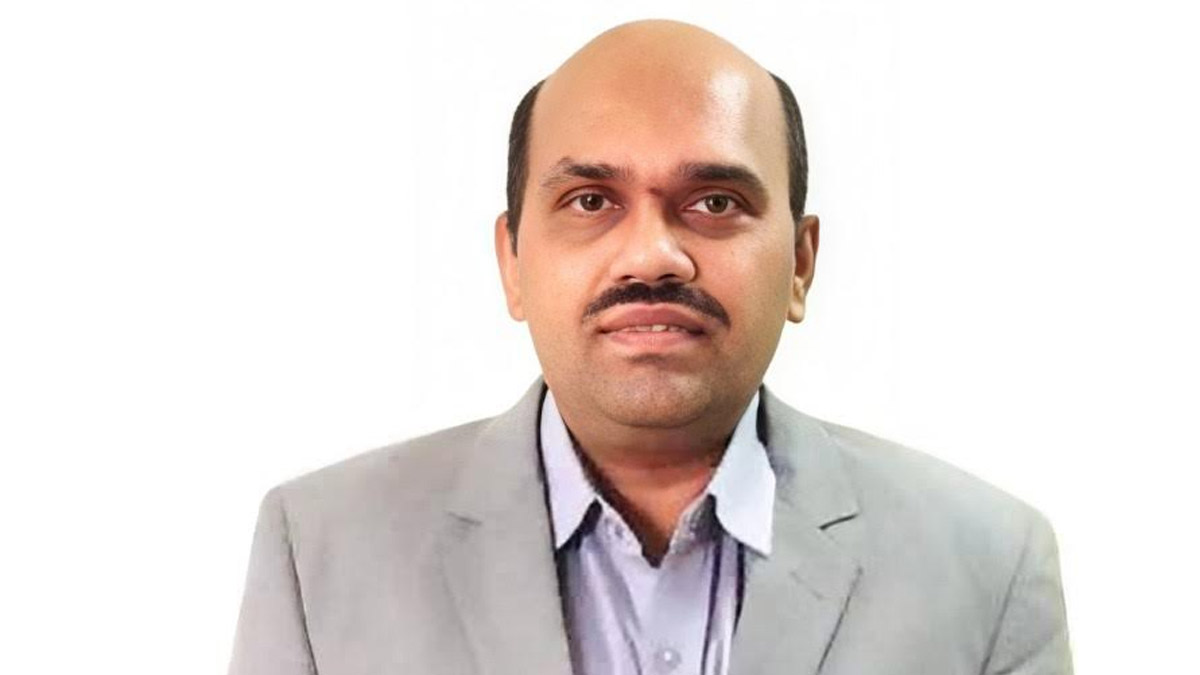
BENGALURU: Tessolve has never been shy about its ambitions. The Bengaluru-based engineering services firm already counts 18 of the world’s top 20 semiconductor companies among its clients, employs more than 3,500 engineers across 12 countries, and last year pocketed a $150m investment from TPG. Now it has hired the executive it believes can turn those assets into something bigger. Ravi Kumar Chirugudu, a 35-year semiconductor veteran who once built satellite payloads for ISRO and has since scaled engineering organisations across three continents, joins as president and chief operating officer, effective immediately.
THE MAN AND THE MANDATE
The appointment is, by any measure, a serious hire. Ravi Kumar Chirugudu comes to Tessolve after senior leadership stints at HCL Technologies, Altran and Wipro, where he managed large profit-and-loss portfolios and oversaw cross-regional teams. Over the course of his career, he has been instrumental in bringing more than 1,000 new products to market across the high-tech, energy and manufacturing verticals. Before the private sector claimed him, he began his working life as a scientist at the Indian Space Research Organisation, contributing to research and development in charge-coupled device technology and satellite payloads, a foundation that shaped everything that followed.
In his new role, he will lead Tessolve’s global growth strategy: expanding its engineering capabilities, deepening customer relationships and accelerating innovation across semiconductor and high-performance computing domains. The brief is broad, but the context is specific. Tessolve operates in the $550 billion global semiconductor market, and its recent moves, the acquisition of Germany’s Dream Chip Technologies and the TPG funding round, have sharpened both its reach and its expectations.
Srini Chinamilli, co-founder and chief executive of Tessolve, is characteristically direct about why Ravi Kumar Chirugudu was the choice:
“As we scale our global semiconductor and system engineering capabilities, Ravi’s appointment marks an important step forward. As global semiconductor demand continues to accelerate across industries, it is creating significant opportunities across the semiconductor lifecycle, from design, packaging, validation and systems integration. Ravi’s deep knowledge and leadership in this ecosystem brings the right mix of industry expertise, customer connect and execution capability, which will play a key role in strengthening our position as a trusted global engineering partner and reinforcing our market leadership.”
THE NEW ARRIVAL SPEAKS
Ravi Kumar Chirugudu, for his part, frames the move in terms of timing and culture, two factors that veteran executives tend to weigh as heavily as title or compensation:
“I am happy to join Tessolve at a time when the industry is rapidly evolving towards more complex, AI-driven systems. What stands out to me is its strong people-first culture and its commitment to bringing value to its customers. The strength of its global team, combined with its deep expertise in semiconductor innovation and next-generation product engineering, creates a solid foundation to build differentiated, scalable solutions. I look forward to working closely with the team to drive strategic growth and strengthen its role in shaping the global semiconductor ecosystem.”
The reference to AI-driven systems is not incidental. The semiconductor industry is in the midst of a structural reshaping, driven by the insatiable compute demands of artificial intelligence. For engineering services firms like Tessolve, which offers end-to-end capabilities from silicon design to packaged parts and invests in high-performance computing, high-speed interfaces, photonics and 5G, the moment is both an opportunity and a test. The company says it is well positioned to capture the next wave of industry growth. Ravi Kumar Chirugudu is now the person who has to prove it.
He came in from outer space, literally, and spent three decades learning how the semiconductor industry works from the inside out. Now Tessolve is betting that accumulated knowledge can help it cross the next frontier. In the $550 billion global chip market, the gap between ambition and execution is measured in engineering hours and leadership quality. Tessolve has just gone shopping for both.






