Brands
‘Enormous opportunity’: Brands upbeat about TV advertising in 2021

MUMBAI: It would be safe to conclude from the BARC TV Universe 2020 figures that television remains our favourite form of video entertainment across India. The report, which showed that the number of TV viewers had gone up by more than 50 million to 892 million in the last couple of years, highlights how the power of television and consequently, television advertising remains steadfast and there’s nothing to halt its run! Little wonder then that advertisers are ready to bet big bucks on this old-fashioned medium. As these growing numbers prove, the ‘idiot box’ has proven remarkably resilient in an era of immense disruption, despite the threat of pandemic and emergence of new SVoD platforms.
At the virtual panel discussion The Television Boardroom- organised by Indiantelevision.com Friday, brands across sectors ranging from F&B to automobiles spoke about the whys and hows of TV still taking the biggest slice of the advertising pie. The panel, moderated by Indiantelevision.com's Anil Wanvari comprised Kotak Mahindra Bank’s Elizabeth Venkataraman, PepsiCo India’s Om Jha, id Fresh Food’s Rahul Gandhi, ITC’s Sanjay Singal and Maruti Suzuki India’s Shashank Srivastava.
Brands buoyant about 2021

While the uncertainty and turmoil caused by the pandemic leading to a virtual halt of film and television shoots in the country was a dampener, marketers remained optimistic about prospects of advertising on television, especially as compared to 2020. The panel tried to explore the mindsets of the TV-viewing consumers and also shared what their expectations from the medium are.
Kotak’s Venkataraman made note of the unusual consumer viewing behaviour in the year gone by, which needed to be watched carefully to learn whether it sustains going ahead, as we come out of the pandemic. So while all agreed that TV viewership will be higher than 2019, there was a doubt on whether the levels that we see now would continue going ahead, with lockdowns being phased out and work and life calling.
Srivastava shared his data on projections for TV ad spend in 2021 which are 12 to 13 percent higher than previous year’s. Overall hope and optimism from this year was that it will not be an out and out disruptive year like the year before. With expectations from vaccination drives and/ or herd immunity impact, the world is expected to settle in by mid-2022. Consequently, both viewership and marketer’s spending should improve this year on, was the general opinion.
Role of branded content & impactful advertising
Discussions also revolved around the roles branded content and impactful advertising can play in upping the television adex game. ITC’s Singhal spoke about its tie-up with Star during the pandemic called ITC Masterchef, which had insights from five star hotel chefs on how to cook up five-star-like fare, using ingredients already available in one’s kitchen. This got a lot of mileage, so there is definitely a space for branded content, but the need has to be there first, or it could fall flat, he felt.
TV advertising consists of very short formats of 30-odd-seconds slots, hence to convey a larger picture of what the brand wants to talk about, branded content could help weave a brand story within the content very subtly so that the brand appears organically to the viewer. Brand integration can make it more relatable, without making it look like marketing -oriented.
Brand association, integration and branded content gives one extra arsenal to marketers to push your product and gain brand recall, while telling the story of the brand, Srivastava said.
However, contextual or relevance value along with understanding consumer’s needs is crucial for branded content to succeed. So, while TV offers the opportunity, for a brand to make it work is the challenge. That fear needs to be addressed for investment to come in this area. The impact also needs to be felt in numbers for it to be feasible.
TV stands out for marketers with its impact and reach, and with third party organisations like BARC doing the measurement for the brand on TV modelling analytical capability on television has evolved to a different level. All the impactful advertising in IPL is a case in point – brands associated with IPL 2020 have become household names. Srivastava cited the IPL viewership touching a high of 400 billion viewing minutes in 2020. “There is no debate on the glory and size of TV advertising’s impact” stated Kotak’s Elizabeth.
Alongside hard data it is also heavily intuitive, while being dependent on the brand objective. Hence there is also a role for a marketer’s gut instinct alongside the measurable impact was agreed overall.
On looking at sports content beyond cricket
Nothing beats or even comes close to cricket when it comes to sports in India is unanimously accepted. For television or brands to pick a sport and develop it, the nation must first adopt that sport, opined Jha. He cited instances to prove his point. Sony has been broadcasting football leagues for ages, while Star did a fantastic job with pro-kabaddi but the viewership is nowhere comparable to that of cricket.
Panelists concurred that brands have been shy of investing in other sports for the same reason, unless it’s a niche region. There were hopes from Football and Kabaddi in this context. Maruti Suzuki is eyeing football as the next massy sport to look forward to in TV advertising, Srivastava shared. Venkataraman deemed Kabaddi as a local sport and also showed promise. There was a feeling that building up hype and hoopla around a sport league could help the sport, as transpired with kabaddi.
All said and done, TV remains the best pick for a marketer today in India for ROI. And while it may not always be cheap, it is cost efficient for the kind of scale and resilience that the medium offers.
Also, with television reinventing itself by evolving into smart TVs, which can be connected to the home Wi-Fi or an Amazon firestick, it will continue to remain relevant to consumers and the viewership can only grow from here. And with 90 million households yet to own a TV set in India, according to BARC data, that indicates enormous opportunity for brands in times to come.







Brands
Rakesh Menon joins Paytm as avp – lending
Fintech product leader takes on new role after building digital lending, payments and credit products across fintech ecosystem
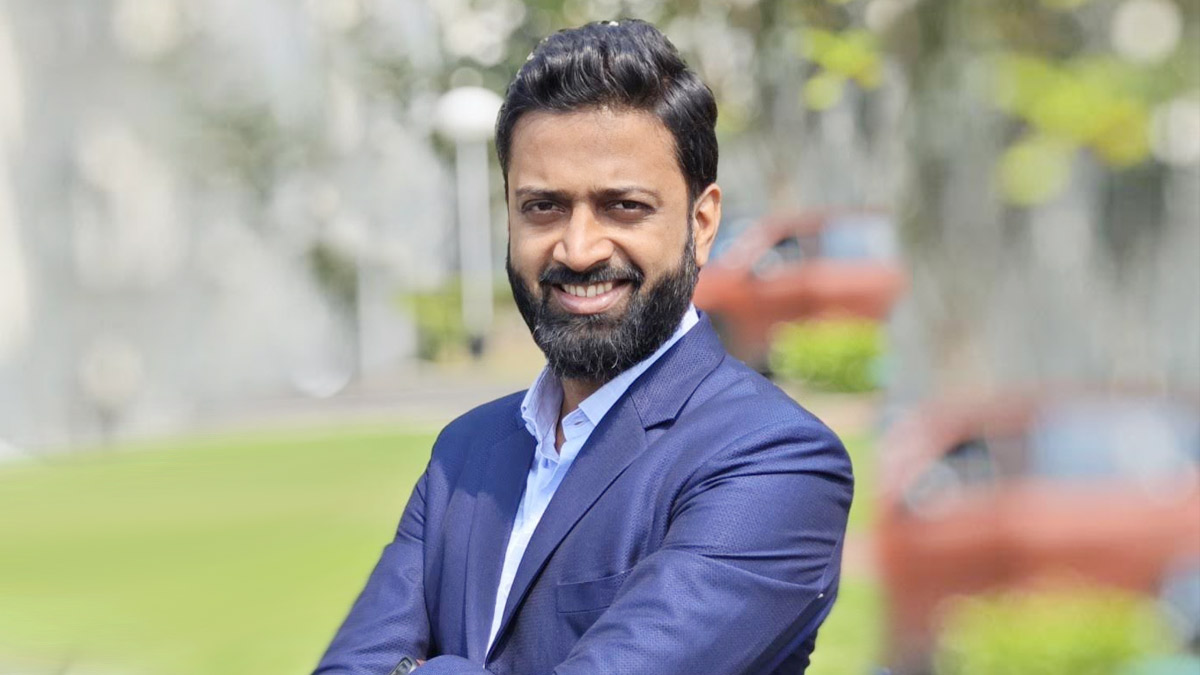
MUMBAI: Rakesh Menon has joined Paytm as assistant vice president – lending, taking on a new role focused on strengthening the company’s lending and credit products.
Prior to this, Menon worked at Profectus Capital Pvt Ltd as chief manager – payments based financing and digital lending.
At Profectus, he designed and launched digital credit products for merchants with variable cash flows, including overdraft-linked and revenue-share lending models. He led end-to-end LOS–LMS API integrations with payment partners and aggregators, enabling real-time underwriting, disbursal and repayment workflows.
He also worked on funnel optimisation initiatives using journey analytics, improving onboarding, KYC and disbursal conversion by 35 per cent. He developed ecosystem partnerships for transaction-data-based credit assessment and automated settlement systems, and collaborated with credit and data science teams to strengthen risk models and early delinquency detection.
Menon standardised partner onboarding and API frameworks, reducing go-live timelines by 40 per cent and improving digital scalability.
Before Profectus Capital, he worked at PayU as senior manager – presales lead – enterprise business from August 2022 to August 2023. He set up a national presales function for fintech and digital commerce clients, aligning solutions such as EMI, BNPL, BBPS and offer engines to merchant requirements.
He also helped improve conversion rates by around 15 per cent through merchant persona mapping, demo frameworks and structured sales playbooks, working closely with product and go-to-market teams.
From April 2019 to July 2022, Menon served as business unit head – SMB – direct acquisitions at Worldline, where he built the SMB online payments vertical from scratch. The business scaled to Rs 2,500 crore in annual transaction volume, growing at 45 per cent year-on-year.
During this period, he introduced paperless onboarding processes including eKYC and eSign, developed partner dashboards and CRM automation systems, and integrated platforms such as Shopify, WooCommerce and Tally to expand merchant adoption.
Across roles, Menon has worked across digital lending, payments and merchant financing, with experience in product development, ecosystem partnerships, API integrations and fintech-led growth strategies.
At Paytm, he will focus on scaling lending products and strengthening digital credit infrastructure within the company’s financial services ecosystem.
His appointment comes as fintech firms continue to expand their lending and embedded finance offerings in a competitive market.







