MAM
End result exceeded expectations: Starcom’s Anita Nayyar on Congress’ performance

NEW DELHI: Call it over-confidence of the BJP or the downfall of `India Shining’ or the success of Congress’ ‘Aam Aadmi’campaign, the recently concluded political battle, even in terms of communication strategy, has proved to be a fascinating one.
Even as the political analysts over the last few days have been trying to find out what led to the dramatic turnaround in the fortunes of those in the fray, Congress’ low-profile and precise advertising campaign turned out to be the surprise package.
Giving an insight on the Congress’ brief, strategy and critical issues, Starcom executive director – north, Anita Nayyar, who headed the media business of the political party during the elections, says the result came as a pleasant surprise.
Nayyar says, “The end result certainly exceeded expectations. While, it was more or less certain that there would be an increase in the number of seats (for the Congress), the final verdict of people was certainly beyond client expectations.We think, the way in which the communication strategy was formulated, the issue-based advertising which was released, had a greater effect on the voter.”

“The campaign was well planned and organised and seen in three phases – the first phase clearly spoke to the common man and dealt with issues like unemployment, UTI scams and farmer suicides etc. The second phase highlighted the achievements of the party and the third phase highlighted the vision of the party. This we think had a very positive impact on the voter. Unlike the opposition campaign which revolved around an individual, the Congress campaign was well thought through and issue based. It touched the voter since a large chunk of voters were affected. Take unemployment for instance, the youth is majorly affected,” explained Nayyar.
She said that the strategy had to be based on what the Congress was going to offer to the people of India, why should they vote for Congress, whom should they target given that the country specially the metros were reeling under the shine of India Shining campaign from the existing government.
“After arriving at the communication strategy by the communications agency Starcom identified the audiences the Congress should be talking to given that urban voter was influenced by `India Shining’. The audience after much delibration was zeroed down to the youth, women, farmers and the balance 70 per cent of the population residing in the semi-urban/rural areas of the country.The initial strategy presentation had a media mix of print, television, cable, radio and outdoor (video vans). However, following on the EC (Election Commission) and SC (Supreme Court) rulings radio could not be used,” says Nayyar.
The All India Congress Committee (AICC), which worked out a social-communication campaign (including advertising and PR) specifically for 17 states, didn’t focus on its ruling states due to budgetary constraints.
“The media strategy was once again devised statewise, keeping in mind the key issues to be addressed in the states and the reach of media in those states. For example: farmer suicides was a key issue in Andhra. A mix of print and television was taken to reach the audiences. Special care was taken to ensure that the message ran in regional press to reach the desired audience. Television also played a crucial role in terms of reaching the audience,” says Nayyar.
Congress’ low-profile in the media was a deliberate strategy. “Given the client’s experience in the last elections wherein lot of advertising had leaked and was blasted with a lot of rebuttles it was important ot maintain a low profile. Also, the strategy being followed by the AICC had to be kept confidential before the campaign was released,” she says.
Considering the fact that political advertising over the years has proven to be an arduous and even thankless task at times, the project for Starcom was a challenging one. “Yes, there was pressure to deliver to the best of our capabilities and justify the impact of client’s money,” says Nayyar.
The fact that the BJP went from “shining” at the start to “whining” at the end of the elections, is proof that the AICC did get its money’s worth.






MAM
Collective Artists Network reshuffles talent leadership
Fiona D’Souza, Jinal Jhaveri and Arjun Banerjee take expanded roles in core division.
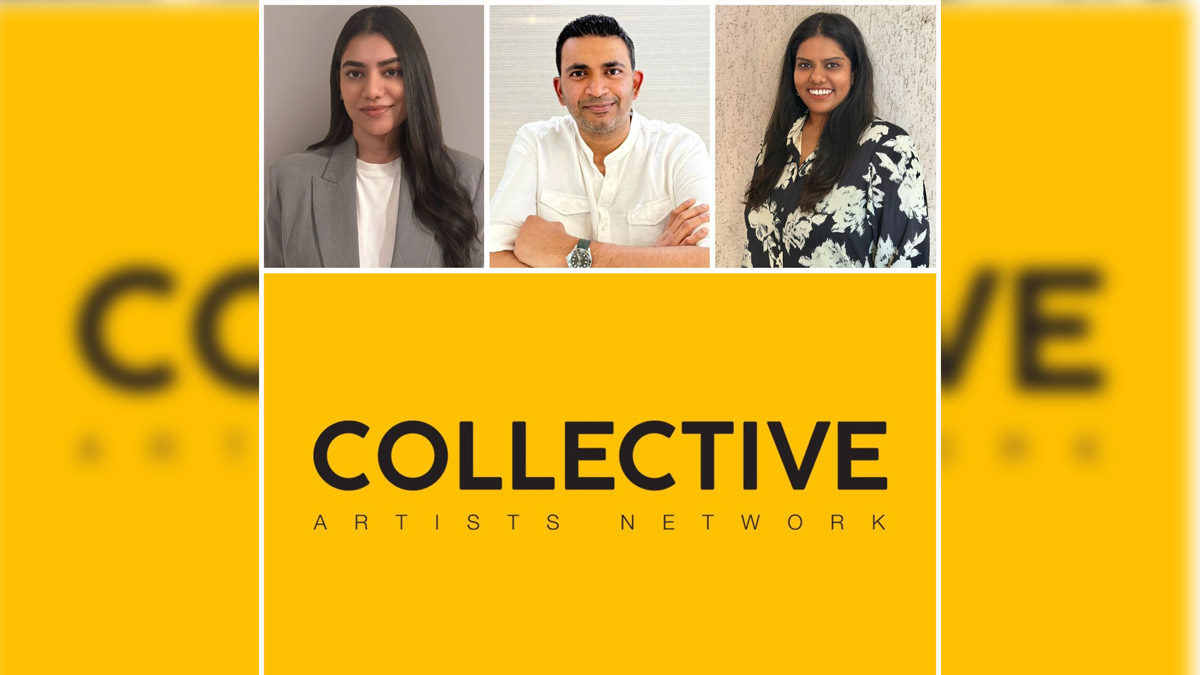
MUMBAI: Collective Artists Network just handed the talent baton to its homegrown stars because when your agents have been building careers this long, it’s time to let them run the show. Collective Artists Network has announced the next phase of leadership for its talent management business, elevating senior agents Fiona D’Souza, Jinal Jhaveri and Arjun Banerjee to expanded roles within the division. The move strengthens the company’s foundational talent arm while it continues to grow into content creation and production-led ventures.
Each of the three has played a significant part in shaping artist careers across films, digital platforms and brand partnerships. Together they now represent the next generation of leadership for Collective’s talent operations, with a continued focus on long-term career building, strong partnerships and adapting representation to a fast-changing media landscape.
Collective Artists Network founder and Group CEO Vijay Subramaniam remains actively involved in guiding artist strategy and key relationships. He said, “Talent management has been the foundation on which Collective was built, and that philosophy continues to guide how we grow the company. As we enter this next phase, it’s important that the people leading this business have both deep context and long-term convictions.”
Collective Artists Network partner and head of talent Janahavi Rawal added, “Collective’s talent business has always been built on trust, long-term thinking, and a deep understanding of where artists want to go next. Fiona, Jinal, and Arjun have each played an important role in shaping the careers of the artists we represent, and this phase is about empowering our senior agents further while building the right support systems around them.”
The leadership evolution reflects Collective’s belief in promoting from within and creating clear ownership across verticals. In a talent world where yesterday’s agent is tomorrow’s partner, Collective isn’t just reshuffling chairs, it’s handing the spotlight to the people who’ve been quietly directing the show all along.