MAM
E-comms ramp up vaccination drive for frontline staff


Mumbai: E-commerce companies have launched a rampant vaccination drive for their frontline staffers and delivery partners who interface with consumers who worry about possible transmission of the newer and more virulent strains of Covid-19.
This comes in the wake of most e-tailer and logistics firms reporting infections among their frontline staffers who are on daily delivery missions of food and essential products such as medicines, healthcare packages and much more.
While these customer interfacing personnel busily operated for the better part of the last 14 months, even in the wake of the pandemic, newer and more virulent strains currently in vogue for their high transmitting potential are a constant source of discouragement for customers who got used to remotely ordering the doorstep delivery of their various needs as they stayed locked down

While the clear and present danger and high risk of infections of these frontline workers got exposed, as they shuttled door-to-door between eateries/ grocery stores/pharmacies and the customers to deliver packages e-tailer and logistics firms have gone into an accelerated mode of ensuring mass jabs for their frontline fleet.
Online food delivery platform Swiggy started inoculations of its delivery agents and frontline staff in Bengaluru since Thursday. Apart from the delivery staff at the grocery delivery service Instamart, even the company’s cloud kitchens executives have been prioritized for getting the jabs.
A few thousand delivery partners across varied age groups already received their first dose of the vaccination; Swiggy has announced and added in a public advisory that with drives planned across all major cities, all delivery partners and frontline staff will be covered over the next few weeks.
VACCINATED! We’re happy to announce that we kicked-off our vaccination drive for our delivery fleet, kitchen staff and other frontline staff in Bangalore. #BreakTheChain pic.twitter.com/vxNiLM7qwf
— Swiggy (@swiggy_in) May 20, 2021
Amid reports that Covid-19’s second wave was adversely impacting online shopping volumes over the past several weeks due to infection fears among consumers, many e-tailer companies are pushing ahead with vaccination drives on scale.
Last week, rival Zomato said it has begun vaccination of its delivery partners in the NCR. Founder Deepinder Goyal took to twitter last Friday and stated, “We are facilitating a free and safe vaccination drive for more than 150,000 of our frontline staff and employees. Thousands of our delivery partners are already vaccinated”:
Last week, we started vaccinating our delivery partners in NCR. In one of the largest efforts of its kind, we are facilitating a free and safe vaccination drive for more than 150,000 of our frontline staff and employees. Thousands of our delivery partners are already vaccinated. pic.twitter.com/HoK1kX7TT3
— Deepinder Goyal (@deepigoyal) May 21, 2021
He added, “Vaccinations in Mumbai and Bangalore start tomorrow and multiple other cities (will be covered by) next week. The safety of our customers is the #1 priority for us as well as (the health of) our delivery partners who have selflessly and safely delivered hundreds of millions of orders during the pandemic.” He also thanked hospital chain Max Healthcare for facilitating the vaccination drive.
Many e-commerce firms have tied up with hospitals and government authorities while some are even procuring vaccines directly from manufacturers. This will, however, be subject to the continued availability of vaccines, as manufacturers prioritise supply obligations to states before meeting demand from private companies.
Flipkart has also kicked off vaccination camps for frontline employees and so has Myntra for its units in Bengaluru. The effects of the current wave have especially hit consumer demand for non-essential segments, both in urban and rural markets, with Fashion bearing the brunt of diminishing orders due to infection fears.
Ecommerce giant Amazon announced earlier this week that it is working to administer vaccines to its frontline teams. Over the coming weeks, it will be hosting on-site vaccination events run by licensed healthcare providers.
Online marketplace for home services, Urban Company Cofounder & COO Abhiraj Singh Bhal also tweeted, “At @urbancompany_UC , our vaccination efforts continue in full swing. We have vaccinated thousands of service partners in the last one week, and are now close to 25% of our fleet having received at least one jab.”
At @urbancompany_UC, our vaccination efforts continue in full swing. We have vaccinated thousands of service partners in the last one week, and are now close to 25% of our fleet having recieved atleast one jab.
Thanks @MaxHealthcare @ApolloHospital_ & others for the partnership pic.twitter.com/8qOWSyrngm
— Abhiraj Singh Bhal (@abhirajbhal) May 21, 2021
As demand slumped for online home delivery service providers amid customer fears of contracting the virus, brands like Urbancompany have begun public announcements declaring the vaccination status of their staff on their online platform.
Other online delivery services like Swiggy and Zomato also plan to introduce Vaccine transparency on their apps, to notify users that the agent of delivery of goods is not a potential carrier of the infectious disease as well by emphasising the individual’s vaccination status.




MAM
One Hand Clap acquires Agenseed to enter distribution space
Creative agency expands into full-stack services with strategic buyout.
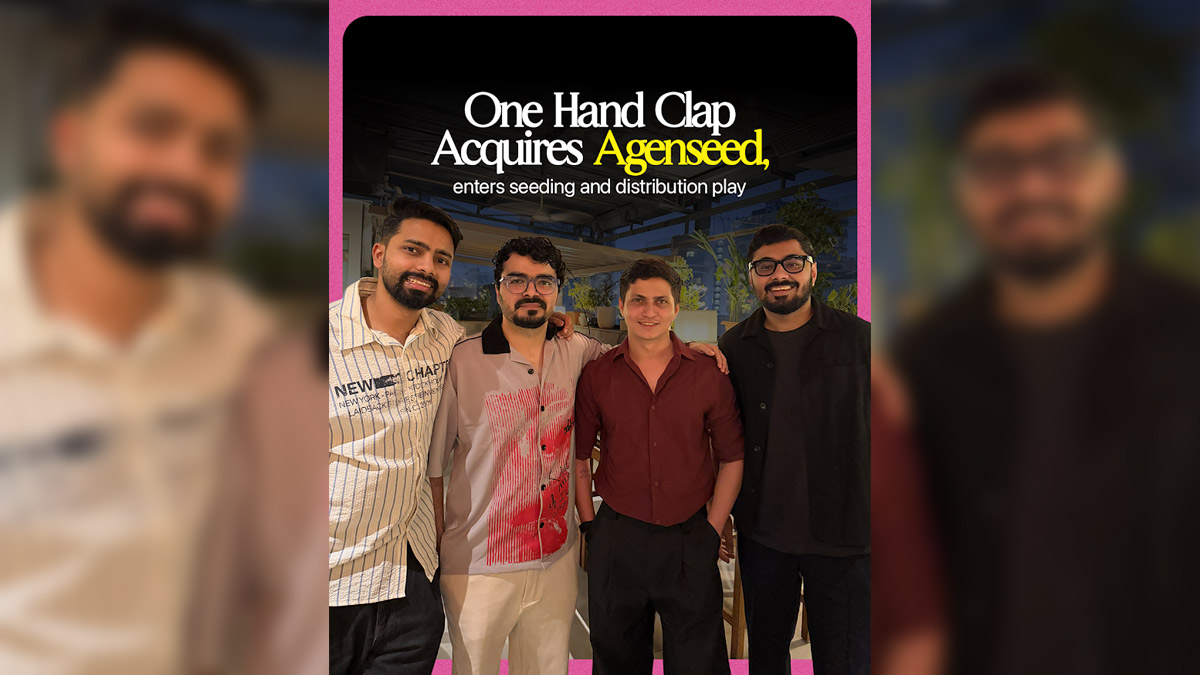
MUMBAI: One Hand Clap has decided to stop just clapping for great ideas now it wants to make sure they actually travel. The leading new-age creative agency and production house has acquired Agenseed, a seeding and distribution firm, marking its formal entry into the distribution segment. The move is aimed at expanding its role across the entire marketing value chain and unlocking new growth opportunities.
One Hand Clap expects the new distribution vertical to contribute up to 15 per cent of its overall revenues over the next 12–18 months, signalling a clear strategic shift beyond pure creative services.
Agenseed, founded by Monish Hardasani and Akram Malik, will function as the agency’s dedicated distribution arm. This acquisition strengthens One Hand Clap’s position as it aims to become a full-stack creative and distribution company in India’s rapidly growing digital advertising market.
With over 90 million posts shared daily on Instagram and brands allocating 25–35 per cent of their digital budgets to distribution and creator-led reach, amplification has become critical to campaign success. By integrating distribution early into the creative process, the agency hopes to help campaigns gain stronger cultural traction and momentum.
One Hand Clap founder Aakash Shah said, “The future of advertising is not just about executing great ideas, but about placing them intelligently. By owning both storytelling and distribution, we can drive greater impact for brands while opening up new revenue streams.”
Agenseed co-founder Monish Hardasani added, “The future belongs to ideas designed to travel. This partnership allows us to integrate distribution thinking at the source.”
Founded in 2019 by former AIB leaders Aakash Shah and Naveed Manakkodan, One Hand Clap has worked with major brands including Swiggy, Google, Netflix India, Crocs, Duolingo, CRED, Bumble, BGMI and Chetak. The agency also secured investment from Zerodha co-founder Nikhil Kamath last year.
In an increasingly fragmented attention economy, this acquisition reflects a broader industry shift where agencies are building end-to-end capabilities to stay competitive. One Hand Clap is clearly clapping louder and ensuring its ideas now reach much further.






