MAM
DPhi appoints Bconnect Communications as its communication partner

Mumbai: Belgium and India based DPhi has appointed a new-age integrated marketing communication agency — Bconnect Communications — to manage its external communication across pan India.
DPhi is an artificial intelligence (AI)-focused community platform. Chanukya Patnaik founded the company in 2020 with the goal of educating and building AI for everyone in order to solve key challenges for humanity.
Headquartered in Delhi, Bconnect Communication will look into the strategic communication for DPhi as it is important to convey the right message to the audience about the brand initiatives.

On its collaboration with Bconnect Communications, DPhi founder Chanukya Patnaik said, “We are glad to onboard Bconnect Communications as our communication partner. We’ve worked with them on a few engagements before getting into this longer collaboration. Neha and her team showed great enthusiasm, ownership, and a keen willingness to make an impact. Most importantly, they are well connected across most Indian media outlets and have shown remarkable results in a short span. This collaboration will help DPhi reach a wider audience, and we are looking forward to it.”
Bconnect Communication founder and director Neha Bahri said, “Business-to-business technology is our core forte. It is the most demanding segment right now in the global and Indian markets. Our strong business acumen in the sector and past experience in the B2B and AI space gives us an edge in working on our strong portfolio of clients. I believe we will be able to deliver through a mix of communication strategies.”
DPhi said that it has fostered AI-driven innovation among several companies and has solved social and business problems, including predicting earthquakes to save lives, safeguarding NFTs, building an AI powered lens for the blind and many others.
DPhi claims to provide free AI and data science courses by industry experts from large tech companies or startups worldwide. It claims that over 100K learners across 150 countries have benefited from its courses in the past two years.






MAM
JioStar unveils ‘The Winning Edge’ playbook for live cricket advertisers
Data-led guide shows multi-screen, sponsorship strategies drive higher impact
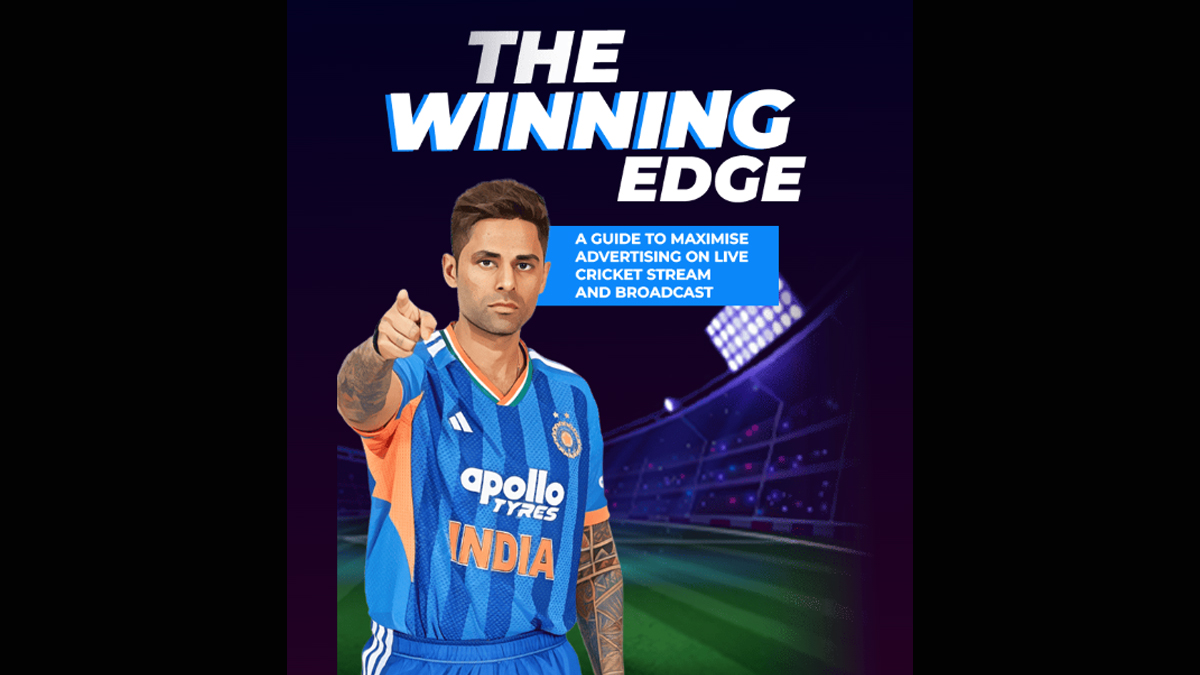
MUMBAI: JioStar has launched ‘The Winning Edge’, a data-backed advertising playbook aimed at helping brands maximise impact on live cricket, positioning the sport as one of the most powerful marketing platforms in India.
Built using billions of impression-level data points across marquee cricket properties and validated through studies by Kantar, the playbook offers practical insights into how brands can drive measurable outcomes such as awareness, recall and purchase intent.
The findings make a strong case for live cricket as a growth engine for both new and established brands. According to the report, new advertisers on live cricket campaigns saw up to 6.9 times higher brand awareness and up to 10.8 times higher purchase intent compared to industry benchmarks. Established brands also recorded gains, with up to four times higher awareness and nearly five times higher purchase intent.
Speaking about the initiative, JioStar head of sales sports Anup Govindan said, “The Winning Edge, developed in partnership with Kantar, is built on rigorous, data-backed analysis of how real brands have performed on our platform across categories, objectives, budgets, formats and tournament phases. The study reaffirms that when it comes to driving real outcomes such as awareness, consideration and purchase intent, nothing matches the intensity, scale and impact of live cricket. The depth of attention and emotional engagement during live moments creates a multiplier effect that non-live environments simply cannot replicate.”
One of the standout insights is the advantage of multi-screen strategies. Campaigns that ran simultaneously across linear TV, connected TV and mobile delivered up to seven times higher purchase intent than single-platform campaigns, with minimal audience overlap ensuring incremental reach.
The playbook also highlights the impact of combining formats. Brands using both video and display formats saw up to 7.4 times higher brand awareness compared to those relying on video alone.
Sponsorships emerged as another key lever. Brands with formal sponsorship deals recorded up to nine times higher purchase intent and up to eight times higher ad awareness than those opting only for standard inventory buys. Adding pre and post live studio programming further boosted aided awareness by up to 2.1 times.
Crucially, the report identifies high-impact in-match moments such as Super 4s, Super 6s, DRS and fall of wickets as prime opportunities for brands. Campaigns aligned with these moments delivered uplifts of up to 10 times in awareness and up to seven times in recall, reinforcing the value of contextual advertising.
Echoing these findings, Kantar managing director and chief client & solutions officer Soumya Mohanty said, “Numerous Kantar Brand Lift Studies have demonstrated the incremental impact of live cricket advertising, with results consistently ranking at the top end of Kantar’s Brand Lift database. This playbook distils those insights into actionable media planning and creative recommendations to help advertisers drive stronger outcomes in live cricket environments.”
With live cricket continuing to draw massive, highly engaged audiences, JioStar is positioning ‘The Winning Edge’ as a blueprint for brands looking to move beyond visibility and towards measurable impact.
As the competition for consumer attention intensifies, the message is clear. In the world of sports marketing, playing smart may matter just as much as showing up.