MAM
Digital signage market likely to reach $27.34 billion by 2022


MUMBAI: A ‘Digital Signage Market by Product (Kiosks, Menu Boards, Billboards, Signboards), Offering (Hardware (Display Panels, Media Players, Projectors), Software, and Services), Application, and Geography – Global Forecast to 2022’, published by MarketsandMarkets says that the digital signage market was valued at $16.88 billion in 2015 and is expected to reach $27.34 billion by 2022, at a CAGR of 6.7 percent between 2016 and 2022. The base year considered for the study is 2015, and the market size forecast is provided for the period between 2016 and 202
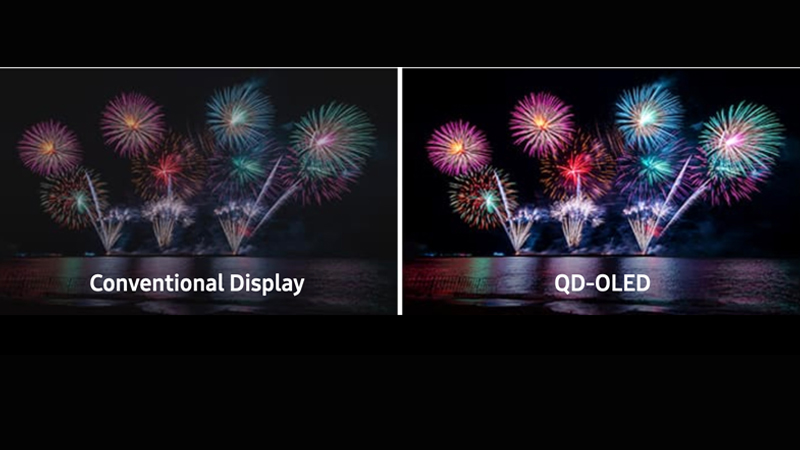
The demand for emerging technologies used in ultra-high definition (UHD), LED-LCD, OLED displays is likely to accelerate the growth of the digital signage market during the forecast period says the report. With the increasing demand for digital signage, improvements in technology offerings, and infrastructure expansion is likely to fuel the digital signage market to continue the positive outlook during the forecast period. In addition, the integration of real-time data management tools, big data analytics, and smart content with multiple presentations and dynamic interfaces would further drive the market for public commercial displays.
The market for software offerings is expected to grow at the highest rate during the forecast period. The expected growth of the digital signage market for software offerings is higher than that for hardware offerings as hardware devices such as displays, media players, projectors, and mounts and other accessories do not require frequent purchases or replacements. The high growth of the market for software offerings is because software licenses need to be regularly updated.

Kiosks held the largest market share of the global digital signage market for products in 2015 and are expected to dominate the market till 2022. Kiosks plays a significant role in the digital signage market for providing access to information and communication, commerce, entertainment, education, and other applications. Kiosks are quick and effective solutions which can be used virtually in all locations.
North America is expected to hold the largest market share and dominate the Digital Signage Market between 2016 and 2022, owing to the large number of suppliers of digital signage technologies and services in the region. The digital signage market in APAC and Europe is expected to have a promising future with tremendous opportunities, especially in commercial and infrastructural sectors.
The major players in the digital signage market include Samsung Electronics Co., Ltd. (South Korea), LG Display Co., Ltd. (South Korea), Sharp Corporation (Japan), Sony Corporation (Japan), and Panasonic Corporation (Japan) among others.




MAM
Lego brings Messi, Ronaldo, Mbappé, Vinicius together
Campaign clocks 314 million views ahead of FIFA World Cup 2026 buzz.

MUMBAI: Four legends, one frame and not a single tackle in sight. Lego has pulled off a crossover few thought possible, uniting Lionel Messi, Cristiano Ronaldo, Kylian Mbappé and Vinícius Júnior in a single campaign ahead of the FIFA World Cup 2026 only this time, they’re building dreams brick by brick.
Titled “Everyone wants a piece”, the campaign features the quartet assembling a Lego version of the World Cup trophy, before placing miniature versions of themselves atop it, a playful nod to football’s ultimate prize. Shared widely across social media, the ad carries a pointed disclaimer: it is not AI-generated, a subtle but telling signal in an era where even reality is often questioned.
The numbers tell their own story. The campaign has already crossed 314 million views on Instagram across the players’ accounts, with fans hailing it as a rare, almost nostalgic moment particularly for the reunion of Messi and Ronaldo, whose last shared campaign ahead of the 2022 World Cup became one of the platform’s most-liked posts.
Beyond the film, Lego is extending the play with exclusive, player-themed sets tied to each of the four stars, part of a broader football-led programme designed to ride the global momentum building towards 2026. The idea, as echoed by the players themselves, leans into the parallels between football and play experimentation, creativity, failure, and triumph.
Messi described the sets as a way to bring on-pitch moments into an imaginative, hands-on world, while Ronaldo called the transformation into a Lego figure a rare honour, blending sport with storytelling. Vinícius, meanwhile, struck a more personal note, recalling childhood moments of building with Lego and framing creativity as a universal language that transcends borders.
The timing is no accident. With the 2026 World Cup set to run from June 11 to July 19 across the United States, Canada and Mexico, and featuring an expanded 48-team format, global anticipation is already building. Argentina, led by Messi, will enter as defending champions, adding another layer of intrigue.
For Lego, the campaign does more than celebrate football, it taps into its mythology. Because when icons become figurines and rivalries turn into play, the beautiful game finds a new kind of pitch. one built, quite literally, by hand.






