MAM
Digital is the key to unlocking Emerging India

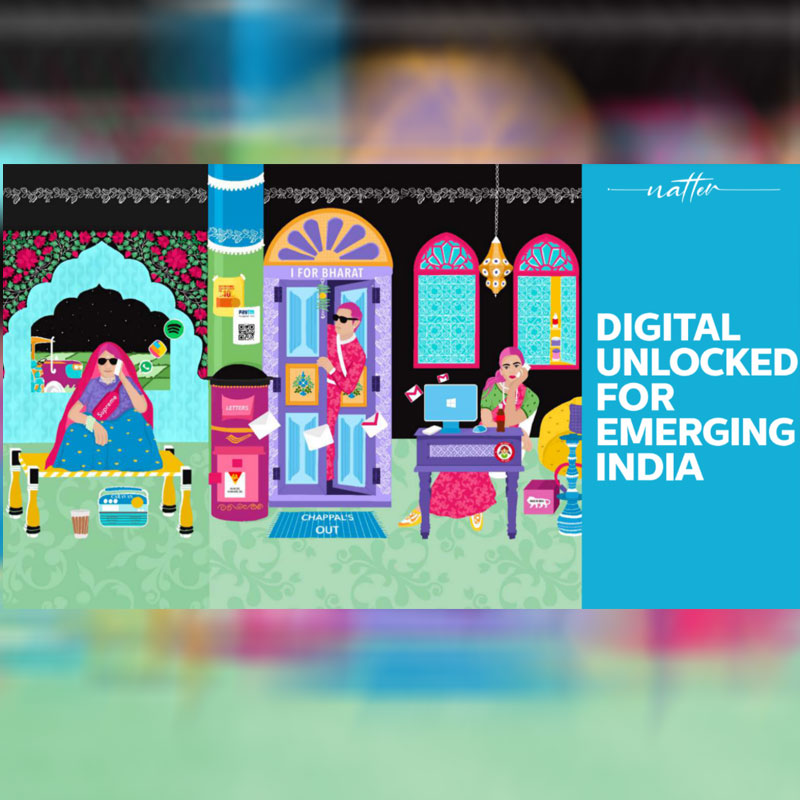
NEW DELHI: The next big market is beyond metros’.
Non-metros, rural, tier 1, 2, & 3 are driving the next wave of consumption in the country. There is no product category on the shelf that does not sell well in this region. However, the consumer and the consumption pattern is also much different from what we see in the metros.
Better known as Emerging India or Real Bharat, the audiences in the region are aspirational and keen to spend on newer experiences. Brands and marketers are very excited about this opportunity and working towards chalking out a strategy to increase its footprint, strengthen the distribution, and create tailor-made range of products for the audiences region. All of them are leveraging digital medium to crack this billion dollar puzzle – ‘Real Bharat’.

Natter, a leading Delhi-based digital marketing agency that has placed itself comfortably between the consumer insights and marketing requirements, is accompanying brands in this journey to crack the Real Bharat code. It undertook a study with 11000 respondents across 10 states to get an indepth analysis on the digital consumption patterns of this new consumer. The new-age agency that aims to position itself as the one-stop solution to all the brand requirements has come up with a report ‘Digital Unlocked for Emerging India’. The report clearly elucidates the role of 'Digital' in Emerging India is not just restricted to advertisements, but it will be the medium to engage, reach and sell.
It further enables the marketers and brands to deep-dive into the consumption & spending patterns, digital penetration, entertainment choices and mediums, language preferences of ‘Emerging India’ across socio-economic groups and geographies.
Some of the key points highlighted in the report are:-
• 43% respondents are taking farming as primary occupation; 21.5% use WhatsApp groups for gathering farming related information; 9.9% farmers watch farming related videos on YouTube
• 37% women access internet for songs, movies; 18% watch funny videos; 16% educational videos;
• Samsung leads in the smartphone & feature phone category
• 50% respondents use Jio followed by Airtel
• Order from E-commerce: Flipkart (46%), Amazon (33%), other local online stores (16%), Snapdeal (5%)
• YouTube: 63% go for entertainment & songs, 12% education related videos, 25% business & farming related videos
• WhatApp: 68.3% use it for connecting with friends, 21.5% use it for farming related information, and 7.5% for buying and selling information.
• Facebook: 65% respondents had profile on Facebook
• Gaming: Time spent on gaming has increased, and increasingly females are also playing more.
Jankana Kaul, Founder & CEO, Natter says, “The focus of report has been to capture the variations in digital consumption patterns & insights on different needs of Digital citizens in Bharat. At Natter we will continue to de-code these differences & capture nuances to help marketers to opt, devise & craft solutions relevant for rural consumers. With more than a decade long brush with Bharat, I have seen a steady pace of digital evolution & now giants entering this space to woo this consumer class. Here we are in next phase of Digitisation – an imperative shift from WHY DIGITAL TO HOW DIGITAL. And at Natter we provide you with the HOW STRATEGY.”
Avinash Joshi, COO Natter says, “We at Natter strongly believe and aim to initiate and catalyze discussions around the significant advancements in adoption of digital across emerging India. In its first edition, the Digital Unlocked report reveals the most significant shift in digital that will be driving marketing strategies, company investment and consumer behaviour. Brands leading the way in engaging and providing the needed value are more likely to significantly exceed their business goals. Digital Unlocked will prove to be a valuable tool for our teams at Natter and marketers across the globe.”
You can download the report here.






Brands
Google secures AP discom licence to power $15bn Vizag AI hub
First-of-its-kind move gives tech giant grid control for massive 1GW campus
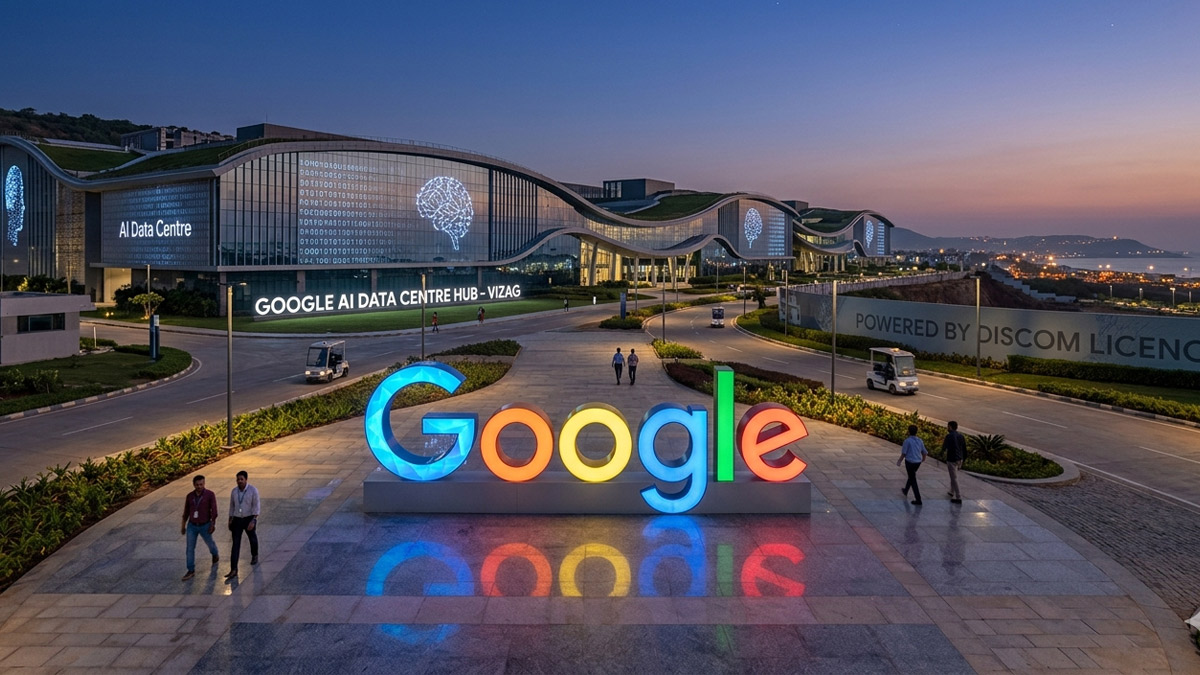
VISAKHAPATNAM: Google has secured a rare electricity distribution company licence in Andhra Pradesh, marking a decisive shift from being just a power consumer to becoming a power distributor for its upcoming mega data centre hub in Visakhapatnam.
The move effectively rewrites the rulebook for hyperscalers in India. Instead of relying on state utilities, Google will be able to procure electricity directly from generators, including its own renewable sources. This not only cuts out intermediaries but also gives the company tighter control over supply, reliability and long-term costs.
For a business where electricity can account for up to 60 per cent of operating expenses, the economics are hard to ignore. Even more critical is uptime. Data centres demand near-perfect reliability, and owning the distribution layer allows Google to manage outages and load balancing with far greater precision.
At the heart of the plan is a sprawling 1-gigawatt data centre ecosystem spread across more than 600 acres in three locations near Vizag. With an estimated investment of $15 billion over five years, the project is set to become India’s largest single foreign direct investment and Google’s biggest AI-focused facility outside the United States.
The campus is being designed with artificial intelligence workloads in mind, housing the company’s custom tensor processing units to power services such as Gemini, Search and Google Cloud. In scale, the planned capacity is comparable to powering a small city.
Google is not building alone. It has partnered with Adani Infrastructure to develop the physical campuses, while Bharti Airtel will set up an international subsea cable landing station. This connectivity backbone is expected to link the hub directly to a dozen countries, ensuring low latency for global data traffic.
Vizag’s coastal location plays a key role in that strategy. It enables direct access to subsea cables and provides the large volumes of water needed for cooling data centre operations. Equally important is policy backing from the Government of Andhra Pradesh, which fast-tracked approvals and granted the uncommon discom licence to anchor the investment.
Groundbreaking is scheduled for April 28, 2026, with phased commissioning expected to begin by July 2028.
The broader signal is clear. As AI workloads surge, hyperscalers are no longer content plugging into existing infrastructure. They are beginning to build and control it. In Vizag, Google is not just setting up a data centre, it is wiring up its own future.







