MAM
Dettol partners Govt of Manipur to launch programme for adolescents

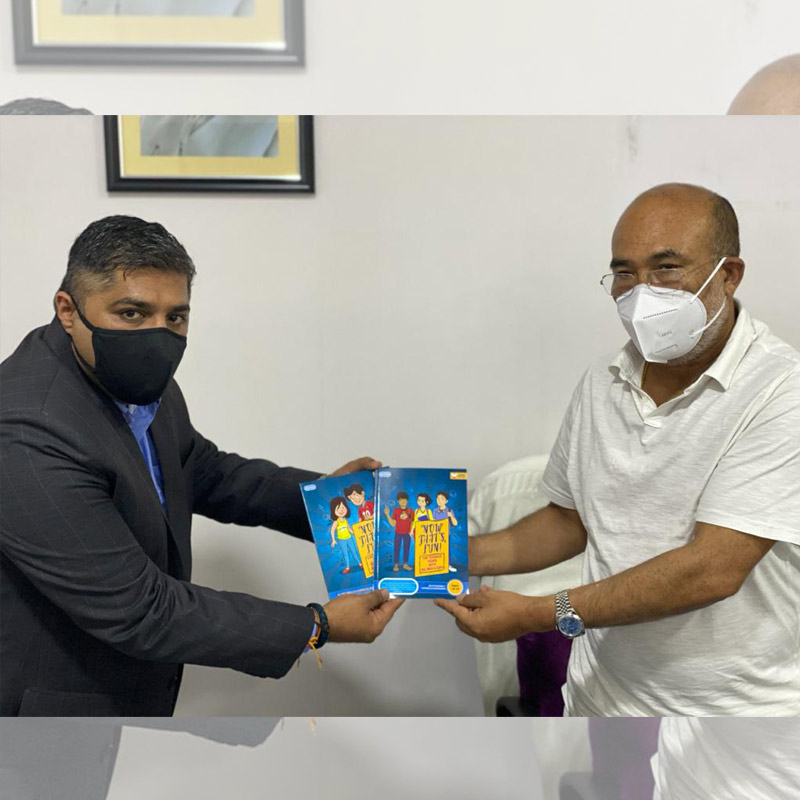
IMPHAL: RB, under its flagship Dettol ‘Banega Swasth India’ in partnership with Primus Partners has launched a unique life skills program for kids, 'Birds and Bees Talk' (BBT). The curriculum was launched for children between the ages of 10-to-19 in Manipur in the presence of chief minister N. Biren Singh and chief secretary Rajesh Kumar.
This comprehensive sexuality education curriculum will help to make children informed with the help of accurate, fact-based and age-appropriate information on growing up, sexuality and life skills amongst adolescent kids.
Manipur chief minister N. Biren Singh said, “We are proud to introduce one of its kind, life skill training modules for adolescent children in partnership with RB’s Dettol ‘Banega Swasth India’ campaign. It is heartening to witness organizations responsibly taking the lead towards contributing to the growth of young minds. Our vision is to work towards transforming the lives of people in India, and this program is a testament of a better and brighter future for the leaders of tomorrow.”

The 'Birds and Bees Talk' program will be executed and implemented across Manipur in government and recognized private schools to ensure maximum reach and beneficiaries. The Manipur government is making sure that apart from its various healthcare and public benefiting programs education should also reach all sections of the society. The state of Manipur is an ideal state to kickstart a program in northeast as the education policy in the state is reformative and has emerged as the education hub in the region. It will reach out to two million children across seven north east states of India.
Commenting on the partnership initiative, Reckitt Benckiser Health AMESA director external affairs and partnerships Ravi Bhatnagar said, “Education is the catalyst to social change and one of the most critical areas of empowerment for children. India needs to focus on comprehensive education which includes life skills as an important part of the holistic curriculum. Currently, it is not a part of the usual school curriculum and most schools, teachers and parents are not qualified to provide the required information to children. With the focus towards betterment of children, we are proud & honored to embark on this partnership with the Government of Manipur to launch BBT, a comprehensive life skill program for adolescent children. Through this curriculum, we aim at creating awareness around the importance of life skills so that every adolescent grows up in a protected environment.”
As stated by UNICEF, the life skills program is an important instrument in shaping the social, economic, physical, and mental well-being of adolescents. To help children with life skills, schools and supporting government bodies should believe in a “growth mindset”. They understand that progress takes time and they keep trying until they succeed.
Addressing the issue, a group of organizations led by Primus Partners has designed a comprehensive curriculum aimed at improving knowledge, awareness, and behaviour among children. Interestingly, the curriculum is in alignment with the National Curriculum Framework and the recently announced New Education Policy 2020, as it follows the guiding principles of the Adolescence Education Program framework.
Under this curriculum, teachers from the enrolled schools will be appointed & equipped with full program essentials including teaching methods & lessons. The training of these teachers will begin shortly to help them better train kids.
The unique design of the program comprises of 27-hour lessons allowing the schools to teach in a staggered format, spread over the year. The program will help in developing key skills like critical thinking, decision-making, and analytics, amongst children.
The 27 lesson plans and student workbooks comprise of animated characters, storytelling, poems, real-life scenario studies, group discussions, simulations, brainstorming and reflective learning. They especially focus on imparting knowledge in an engaging and interactive way to help students understand the physical and emotional changes taking place in their adolescent years.





MAM
Continental Tires appoints Nevin Aslan-Özkan as Managing Director for India
Finance leader to drive growth in passenger vehicle segment from 6 April 2026.
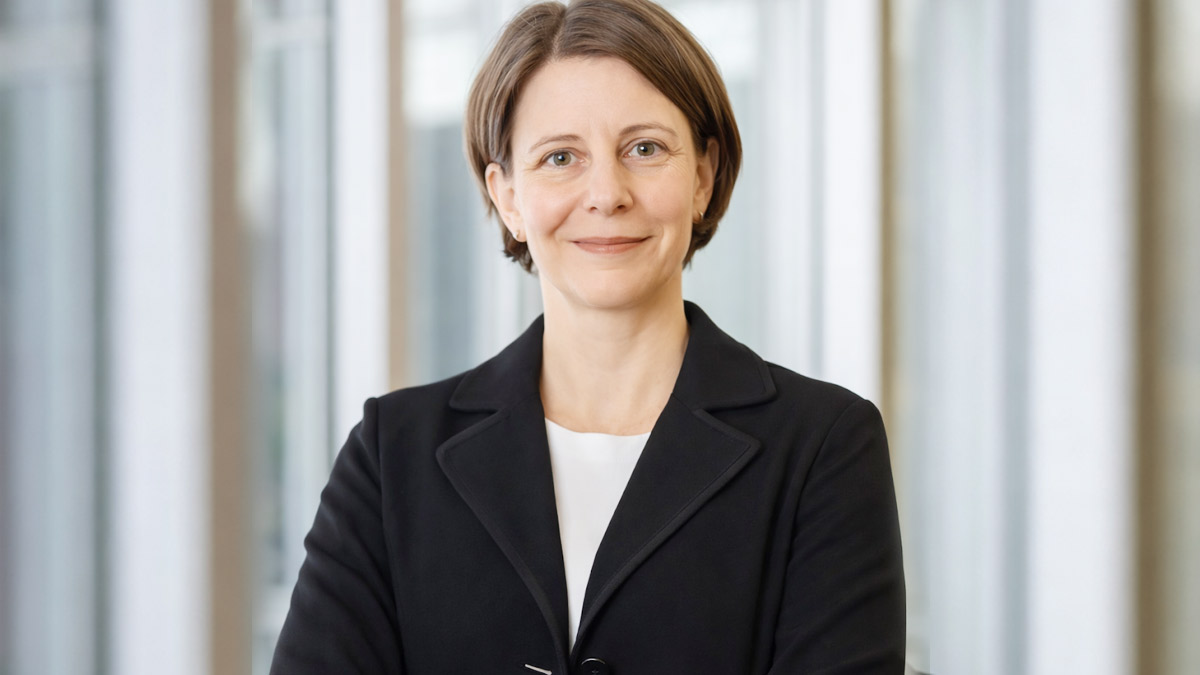
MUMBAI: Continental Tires has put a fresh pair of tyres on its Indian leadership and this time, they’re rolling with strong financial horsepower. The premium tyre manufacturer has announced the appointment of Nevin Aslan-Özkan as managing director of Continental Tires India, effective 6 April 2026. She succeeds Samir Gupta, who stepped down on 5 April 2026 for personal reasons.
Nevin joined Continental in 2017 and has held key leadership roles in Mergers & Acquisitions and Strategy & Business Development across EMEA and APAC. Since May 2025, she has served as Chief Financial Officer for Continental Tires India, shaping the company’s financial strategy and performance.
In her new role, she will lead the company’s growth agenda in India, with a sharp focus on accelerating its presence in the passenger vehicle segment. This appointment comes at a pivotal time, following the recent launch of the CrossContact A/T² tyre, the first market globally to receive this product and a €10.5 million (approximately Rs 100 crore) investment to strengthen Continental’s position, particularly in the ultra-high-performance (UUHP) segment.
Nevin Aslan-Özkan said, “India continues to be a strong focus market for Continental Tires. Guided by our ‘In the Market, For the Market’ approach, we will continue to deliver products and technologies designed for Indian roads.”
Samir Gupta, who joined Continental in 2012 and served as managing director since January 2022, was recognised for his significant contribution to expanding the brand’s footprint in India.
Continental is a leading global tyre manufacturer founded in 1871. The company generated sales of €19.7 billion in 2025 and employs around 78,000 people across 54 countries. Its Tires group sector, which includes premium car, truck, bus, two-wheel and specialty tyres, recorded sales of €13.8 billion in fiscal 2025 and employs more than 56,000 people worldwide.
With Nevin Aslan-Özkan at the wheel, Continental Tires India is clearly gearing up for a smoother and more aggressive drive in one of the world’s fastest-growing automotive markets. The road ahead looks promising.






