MAM
dentsu’s global ad spend report predicts 6.8 per cent growth for 2024


MUMBAI: Advertisers, marketers and media establishments around the globe can bring out the bubbly. dentsu’s latest Global Ad Spend Forecasts has revealed a projected buoyant 6.8 per cent growth in global advertising spend for 2024, reaching $772.4 billion. This growth projection has been revised upwards following the return to double-digit growth (+10.7 per cent) of digital ad spend, the impact of sporting, political events and improved outlooks across the US, UK, Brazil & France.
Ad spend growth is forecast to continue at 5.9 per cent in 2025. The American region is expected to lead in 2025 with 6.3 per cent growth, driven by rich US and Brazilian markets where digital and streaming see sustained investments. The Asia-Pacific market is forecast to increase by 5.8 per cent, with AI-driven ad placements contributing to the increase in digital ad spend in markets like India. Lastly EMEA (Europe, the Middle East and Africa) has projected growth of five per cent, with strong digital performance in key markets including the UK. As the industry enters what dentsu identifies as the algorithmic era, data-enabled advertising will increasingly shape media strategies, with algorithmically enabled ad spend forecast to reach 79 per cent of total ad spend by 2027.
Artificial intelligence (AI) is no longer confined to experimental phases. It has become an integral tool for creating personalised, one-to-one consumer experiences. Generative AI applications like OpenAI’s GPT models are embedding themselves in everyday services, from Duolingo’s AI-driven tutor to Spotify’s personalised AI DJ. These advancements mark a new era of micro-moments that enhance user engagement by delivering tailored interactions at scale.
As algorithms increasingly gatekeep content visibility, brands are tapping into niche communities and fandoms to drive meaningful connections. Influencers, from content creators like Mr Beast to hyper-localised niche experts, are key to cutting through the digital noise. Additionally, connected television’s growing reach provides fertile ground for cross-platform storytelling, combining scale with intimacy. Paid social is forecast to grow by 8.7 per cent in 2025 (7.8 per cent three-year CAGR to 2027), supported by an integrated ecosystem that blends shopping, video, search, and gaming capabilities. This channel remains critical for engaging younger audiences, with 79.7 per cent of gen Z using Instagram monthly and 42 per cent of CMOs planning to boost influencer marketing investments. Paid search is expected to increase by 6.7 per cent (6.5 per cent three-year CAGR 2027), driven by continuous advancements in AI-powered features that sustain relevance amid the rise of social and retail search.

Retailers are stepping beyond traditional advertising, transforming their platforms into data-rich media ecosystems. Amazon leads this charge with a $50 billion ad revenue engine, while others like Walmart and TikTok are innovating through acquisitions and self-serve advertising solutions. This convergence is reshaping how brands measure success and optimize campaigns, fostering a holistic view of the consumer journey. From a media channel standpoint, the report highlighted that digital is expected to remain the fastest-growing channel, with a projected increase of 9.2 per cent in 2025 (8.8 per cent three-year CAGR to 2027) to reach $513.0 billion and capture 62.7 per cent of global ad spend. Significant growth is anticipated across key digital segments, with retail media leading the way at +21.9 per cent year-over-year (19.7 per cent three-year CAGR to 2027) as advertisers capitalise on the high value of retailer consumer data and increasingly invest in offsite advertising, including connected TV.
In a world flooded with content, quality emerges as a non-negotiable factor. Advertisers are increasingly prioritising transparent, sustainable programmatic supply chains and investing in impactful creatives to capture attention in crowded digital environments.
Attention metrics, such as “attentive seconds,” are now as critical as traditional ROI measurements, signaling a shift towards more meaningful audience engagement. Online video advertising is projected to rise by 8.0 per cent as advertisers continue to seek out high attention and trusted environments. Programmatic advertising is set to grow by 11.1 per cent and will account for more than 70 per cent of digital ad spend, with sustained momentum (10.9 per cent three-year CAGR to 2027).
Television ad spend growth is forecast to show marginal growth of 0.6 per cent in 2025, with connected television rapidly increasing (+18.4 per cent) thanks to ad-supported streaming, and broadcast television declining (-2.5 per cent). Meanwhile, print media continues to contract, while cinema and out-of-home (OOH) advertising continue to grow by 3.2 per cent and 3.9 per cent, respectively.
Significant ad spend increases are anticipated in finance (+6.4 per cent), pharmaceutical (+5.8 per cent), and travel and transport (+5.5 per cent) as these sectors adapt to meet evolving consumer needs.
Says dentsu’s global practice president- media Will Swayne: “Our 2025 forecast underscores the pivotal role of media in today’s economy. Data-driven and digital-first media investment strategies continue to reshape how brands connect with consumers. The surge in algorithmic media capabilities will drive fresh opportunities for brands to engage meaningfully and effectively with existing and new customers.Media investment strategy is key to transformation and growth as brands keep pace with evolving consumer behaviors.
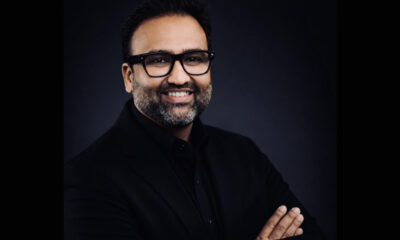
“As digital channels continue to lead the way, the global advertising landscape is entering a new phase of growth and innovation. The projected 9.2 per cent increase in digital ad spend for 2025, driven by segments like retail media and connected TV, underscores the immense value of data-driven strategies. As algorithmic media capabilities take center stage, brands have an unprecedented opportunity to connect with consumers in more personalised and meaningful ways. The future of advertising is not just digital – it’s deeply connected, data-empowered, and poised for transformative growth,” added dentsu chief executive officer – media South Asia Anita Kotwani.
Despite technology’s global proliferation, access remains uneven. From regulatory hurdles to the high costs of advanced AI features, digital divides are becoming more pronounced. Brands must adopt nuanced, locally informed strategies to ensure inclusivity while navigating fragmented markets.
The algorithmic era promises opportunities for innovation in media and marketing. However, success will hinge on a brand’s ability to adapt to evolving consumer behaviors, leverage cutting-edge AI tools, and balance global aspirations with local sensitivities.
This year of impact calls for brands to be bold, innovative, and deeply attuned to the digital zeitgeist. The possibilities are infinite, but the imperative is clear: in 2025, making an impact is not optional—it’s the only way forward.
(Picture generated using Dall-E 3 generative AI tool)






MAM
Network18 reshuffles editorial leadership across platforms
Expanded roles and new reporting lines aim to sharpen focus on growth across digital, social, CTV and linear TV.

MUMBAI: Network18 is giving its leadership structure a fresh edit because in the fast-changing world of media, even the newsroom needs a compelling new headline. The company has announced expanded roles for its editorial leadership across social, digital, connected TV (CTV) and linear platforms. In an internal communication, Rahul Joshi, MD & Group Editor-in-Chief, outlined new reporting structures designed to drive stronger coordination and growth.
Smriti Mehra, S Shivakumar and Mitul Sangani will now report directly to Joshi. Ganesh Iyer and Abhinay Chauhan will continue reporting to him as well.
Prabhat Chatterjee, Business Head of Forbes, and Arun Thapar, President of Content & Communication for AETN-18, will report to Smriti Mehra and lead revenue growth, marketing and product initiatives. Mallika Nath Handa will spearhead the development and scaling of special projects, including new shows and non-linear properties, and will also report to Mehra.
Jayesh Gokalgandhi, CFO for AETN18, will report to Ramesh Damani. Sidharth Newatia, CRO-ILC, will report to Mitul Sangani and focus on expanding reach and revenue across Hindi and regional language markets, with special emphasis on Tier-II and Tier-III regions. Pankaj Soni, Head of Marketing-ILC, will report to Mitul and work functionally with Ganesh Iyer.
The branded content business of Moneycontrol has been consolidated with News18 Studio. Don Zarrar will now collaborate with Shiv in the News18 Studio business while continuing to head his existing Studio/Focus teams at Moneycontrol.
Pranav Bakshi has taken on additional responsibility for the international business, alongside continuing to lead growth in Connected TV and social platforms. Naveen Mathur, who oversees Revenue Management for Network18’s international business, will report to Pranav, who continues to report to Puneet Singhvi.
Rajesh Sharma (Head of Broadcast Technology & IT), Rahul Singh (Head of Events & Technical Operations) and Bhupender Bhardwaj (Head of IT Security) will now report to Puneet Singhvi. Darshil Parekh, Head of Sales Strategy, Planning & Ops, will work directly with Ramesh Damani and Rahul Joshi, while Stanley Cyril, who manages Digital Sales Operations, will report to Darshil.
Jitamitra Mohanty, who leads the viewer and audience-focused Research & Analytics function, will now work with Santosh Menon to convert data on reach and engagement into actionable insights for content strategy, product innovation and sustained viewership growth.
In a media landscape where platforms multiply faster than breaking news, Network18’s latest reshuffle is clearly aimed at keeping its editorial and business engines firing in sync. Expect sharper storytelling, stronger revenue plays, and a more agile approach across every screen that matters.






