Digital
Deloitte India’s GenW.AI puts low code AI on a fast track
Made-in-India platform aims to help enterprises build apps and agents at speed.


MUMBAI: Innovation just got a shortcut key. Deloitte India is set to launch GenW.AI, an indigenous, next-generation low-code platform designed to help enterprises rapidly prototype and deploy applications and AI agents, without the usual complexity that slows big ideas down. GenW.AI will make its official debut at the India AI Impact Summit in New Delhi next week, marking what Deloitte calls a category-first, fully India-built platform that brings low-code development and agentic AI together under one roof.
Built for speed and flexibility, GenW.AI is offered both on-premise and on cloud, giving enterprises full control over their data and intellectual property. The platform is designed to integrate seamlessly with enterprise technologies and a wide range of large language models, allowing organisations to adapt as sovereign and enterprise-grade AI ecosystems evolve.
At its core, GenW.AI is positioned as a democratiser of innovation. From stitching together data scattered across departments to building workflows, dashboards and explainable AI-driven decision tools, the platform aims to let teams build faster, cheaper and with fewer dependencies on large, bespoke technology programmes.

Deloitte South Asia chief operating officer Nitin Kini said enterprises are increasingly moving away from one-off AI projects towards platforms that allow business and IT teams to co-create safely. He noted that GenW.AI is built for leaders who want speed without sacrificing compliance, data privacy or long-term resilience.
The platform brings together a suite of tools under the GenW.AI umbrella. GenW App Maker enables rapid application development with integrations across databases, APIs and third-party services. GenW Playground focuses on data exploration and dashboard creation without the need for code. GenW RealmAI provides a secure, low-code environment to work with generative AI and Retrieval-Augmented Generation, while GenW Agent Builder allows teams to visually create and manage AI agents, from simple chatbots to complex multi-agent systems.
Deloitte India partner and chief disruption officer Jagdish Bhandarkar said the real challenge for enterprises is not whether to adopt low-code or AI, but how to do it with guardrails, scale and speed. He added that GenW.AI is designed to put innovation into the hands of domain experts, enabling them to solve everyday problems while maintaining enterprise-grade oversight.
GenW.AI is built to integrate with enterprise applications and ERPs through pre-built connectors, supports both open-source and enterprise LLMs, and includes security features such as role-based access, encrypted agent-to-agent communication and auditability. Deloitte India has already deployed the platform internally, refining it through real-world use before opening it up to clients.
As enterprises race to turn AI ambition into usable outcomes, Deloitte India’s GenW.AI is positioning itself as a home-grown platform built not just to experiment, but to scale ideas that are ready to work in the real world.





Digital
OpenAI’s Stargate lead Peter Hoeschele exits with two senior leaders
Trio behind compute push set to join new startup amid leadership reshuffle
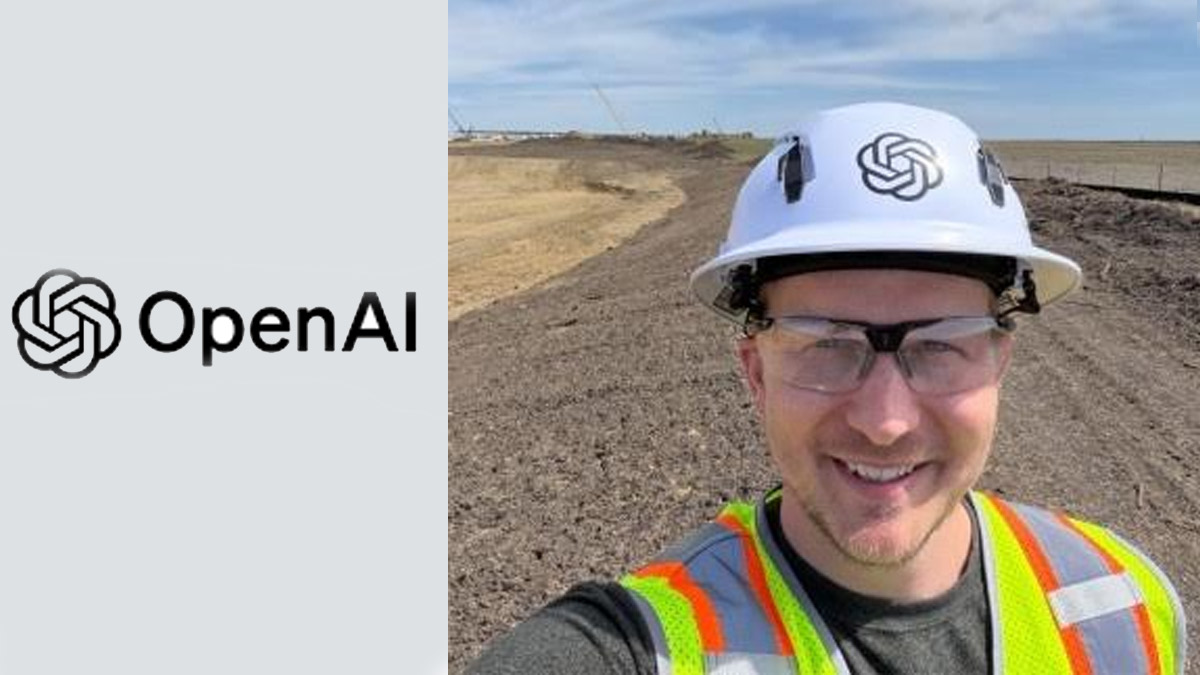
SAN FRANCISCO: Peter Hoeschele, a key figure behind OpenAI’s early Stargate data centre initiative, has exited the company, according to a report by The Information.
The departure is part of a broader leadership shift, with two other senior executives, Shamez Hemani and Anuj Saharan, also set to leave in the coming days. All three are expected to join the same new startup, although details about the venture remain under wraps.
The trio played a central role in OpenAI’s Stargate effort, an initiative aimed at building large-scale data centre capacity in-house to reduce reliance on external infrastructure providers. Their exits mark a notable moment for the company’s compute strategy as it continues to scale rapidly.
OpenAI spokesperson said in a statement to The Information, “We’re grateful for the contributions Peter, Shamez, and Anuj have made to OpenAI and wish them the very best in what comes next.” The company also pointed to the recent appointment of Sachin Katti to lead its industrial compute organisation, signalling continuity in its infrastructure roadmap.
OpenAI has indicated that it does not plan to directly replace Hoeschele’s role, suggesting a possible restructuring of responsibilities within the team.
As competition intensifies in the race to build next-generation AI systems, leadership changes in core infrastructure teams are likely to draw close attention. For now, the spotlight shifts to what this departing trio builds next, and how OpenAI adapts as it scales its ambitions.







