Brands
Decoding brand ‘Kapil Sharma’

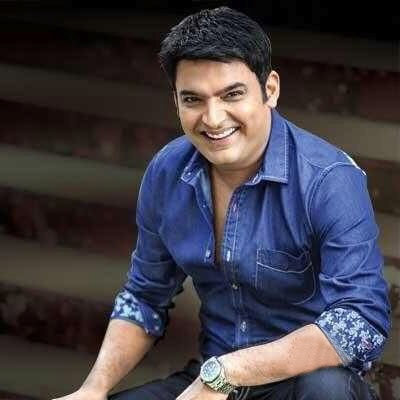
MUMBAI: Between his outrageously funny jokes, bang on comic timing and ‘put-you-at-ease’ smiles, comedy king Kapil Sharma has redefined the genre on television. His quick rise to fame flummoxed several in this entertainment industry as it didn’t follow the generic tropes – a strong Bollywood background, political backing or affluent beginning, Sharma had none.
But it is this ‘guy next door’ image that drove his fandom in the country and compelled brands with big marketing budgets to turn and take notice of him back in 2014. The last two years saw Sharma’s career take some topsy-turvy turns – his heights to fame with the his show Comedy Nights With Kapil, the tiff with Colors TV, and his subsequent departure from the channel, his hiatus from the small screen and finally his re-entry through Sony with The Kapil Sharma Show – and yet brand Kapil Sharma is going strong and how!
As per the data audience research organisation Ormax shared with Indiantelevision.com, Sharma tops the non-fiction characters in Ormax Characters India Loves list. Averaging the data for six months between October 2015 to March 2016, Kapil Sharma of Comedy Nights With Kapil has bagged 36 per cent of popularity, beating Salman Khan at second place with 16 per cent, Rannvijay of the Roadies fame at third place with a 4 percent share, Rannvijay ties it with Anoop Soni from Crime Patrol; and Sushant Singh from Savdhaan India at fourth place with 3 per cent. Here percentages denote the popularity share of each person.

“Because of his ‘non starry’ appeal, his fan base is basically a family audience including women above thirty five years of age. Within the Hindi speaking market (HSM) his core strength is mostly in the northern states. What Kapil has achieved with this fan base is quite remarkable. There have been comedy shows before his, but none could become a household name such as he has,” states Ormax Media founder Shailesh Kapoor.
Kapoor also points out that even though the show went off air, Sharma remained the most popular non-fiction character in the category by quite a large margin. His popularity is evident from the anticipation in the nation for his come back to the small screen with his flagship The Kapil Sharma Show on Sony, which he is producing under his banner of K9 Productions.
Kapil Sharma fame isn’t confined to the television industry alone. His fame competes with the likes of Saif Ali Khan and Sonam Kapoor. He is the only television star who has featured in Forbes India’s top 100 Celebrities list in 2015 at rank no 27 when it comes to popularity, beating Saif Ali Khan, Ranveer Singh, Yo Yo Honey Singh, and even Aishwarya Rai Bachchan for that matter. The same list reports his net income as Rs 15 crore (Rs 150 million). While that’s a jaw dropping figure for any average entertainer, Sharma has a long way to go to rank high when it comes to net income per year. But no, there is no reason to fret for Kapil fans. Judging by how brands are enamoured with him, it’s only a matter of time before he joins the prestigious Rs 100 crore (Rs 1 billion) club.
“When it comes to brand value, Kapil Sharma is one of the few personalities who came without any established filmy baggage and made it really big. In spite of him taking a short hiatus off screen, there hasn’t been a dent in his brand value,” says multi-platform entertainment management company Exceed CEO Uday Singh. “It is amazing how the hysteria and euphoria around Kapil Sharma remains constant since Comedy Nights With Kapil became a hit. I can’t quantify whether it’s a Rs 100 crore, but the familiarity and the relativity that Kapil Sharma gives off to his audience is what makes him a good choice for brands who want to reach the masses,” Singh explains.
So far every brand that has sought Kapil’s help to boost its brand message has cast him as a middle class or upper middle class man, or a guy next door character rather than the star Kapil Sharma is. In 2014, Sharma starred in a digital campaign for Honda Mobilio in which he played a salesman. With a success story of garnering millions of views, it was a perfect fit. As per media reports Honda India paid him Rs 4.5 crore (Rs 4.5 million) for the deal.
But it was his partnership with online classifieds website OLX India that truly took off his endorsement career. OLX India signed him on for Rs 2.5 crore (Rs 25 million) approximately for the campaign. “When the deal between Kapil Sharma and OLX was inked back in 2014, several eyebrows were raised as it was considered too big for a television star like Kapil,” revealed a source who was close to the development. Back then entertainment agencies facilitated the endorsement deals for Kapil Sharma, like most of the celebrities in the industry. Now, Sharma has taken it upon
Like most celebrities, Sharma locks these endorsement deals on a daily rate basis for the number of days he needs to commit to the campaign in a year. Having said that, the norm varies from brand to brand, depending on the nature of the campaign. Being a live performer allows Sharma to be flexible with what he offers to the brands, and his contract may include live engagements and event shows. That naturally adds to the quote he gives the advertiser. As per an industry insider, Sharma demands anything between Rs 3 to 4 crore (Rs 30 to 40 million) from a brand for an endorsement.
On an average, Sharma works on eight to ten different brands at a given time. These have included TVS Tyres, Policy Bazar, Micromax, PaisaBazaar and more. The number is likely to go up once his show goes live again on Sony, on 23 April, provided it makes the mark that it promises to.
“Obviously, if he has to maintain his brand value he needs a show on air. While one or two months haven’t affected the value of brand Kapil Sharma, if he doesn’t have a show for a long time, the audience might move on. Therefore just like a movie star needs to keep coming with movies, a television stars need to have at least one show on air at a time,” Kapoor shares.
Before one-upping his past show with more gripping content remains important for Sharma, brand Kapil Sharma has more pressing matters to handle as The Kapil Sharma Show goes head to head with one of the biggest brands and events in India, the Indian Premier League. Only the coming Thursday’s BARC data will tell us if Sharma has walked out of his show’s premiere with his head held high. His fans – of which there are many – won’t really care. They were the ultimate winners as they got a chance to engage with Kapil and team and roll over with laughter over the weekend .






Brands
India’s food culture takes a bold turn in 2025
From fusion desserts to experiential dining, four trends reshape how the nation eats.
MUMBAI: India’s plates just got a serious upgrade in 2025 because when tradition meets TikTok and fusion meets fitness, even the humble samosa starts feeling trendy. The Godrej Food Trends Report 2025 predicted several shifts in Indian eating habits, and the past year proved the forecasters right. From reimagined desserts to immersive dining experiences, Indian consumers showed they want authenticity, convenience, global flavours and health in equal measure.
Here are four trends that truly came alive in 2025 and are now shaping how India eats and dines:
1. Indian Desserts Get a Modern Makeover Traditional mithai found fresh life through fusion experiments. Cheesecakes, truffles and plated desserts inspired by classics like gulab jamun and rasgulla gained popularity, while chocolate-forward, fruit-led and lower-sugar options appealed to younger diners. According to the How India Eats 2025 report, desserts and ice-cream parlours were among the fastest-growing segments in organised food services. Examples: The Bombay Canteen’s Coffee Rasgulla Sundae and Le Chocolate Cakes and More’s Gulab Jamun Cake. Chef Aarohi Sanghavi of Maki Patisserie noted the shift toward seasonality and fresh Indian produce, while Chef Heena Punwani of Maska Bakery highlighted the appeal of flexible, weekend-special menus.
2. Social Media Becomes the New Menu Food discovery went fully digital. Instagram Reels, YouTube reviews and creator-led content heavily influenced dining choices, with food remaining one of the most consumed categories on social media. Restaurants began designing visually striking dishes specifically for shareability, while many diners found new spots through viral videos rather than traditional advertising. The How India Eats 2025 report revealed that over 75% of marketing spends by leading QSR chains now go toward digital channels. Cafes like Mokai and Candies became creator favourites, and brands such as Bastian Hospitality curated highly shareable pop-ups and events. Kavita Rajwade of IVM Podcasts emphasised how long-form storytelling helps decode food’s cultural and economic layers, while Pranav Joshi of Floydian Cookery admitted his page grew far beyond expectations.
3. Snacking Culture Goes Mainstream India’s love for snacks evolved into a full grazing lifestyle, with many opting for multiple small bites throughout the day instead of three structured meals. This shift spurred innovation in formats—from gourmet chips and fusion street food to protein-packed options. Restaurants responded with small-plate menus designed for sharing. The How India Eats 2025 report noted that late-night orders grew nearly 3x faster than dinner. Brands like The Whole Truth Foods and Green Snack Co. popularised clean-label snacks such as protein bars and roasted nuts. Madhushree Basu Roy of Pikturenama Studios predicted a mix of convenience, health consciousness and global influences, while freelance food writer Sharmila Vaidyanathan observed that consumers want the best of both worlds healthy options for routine snacking and traditional treats for special occasions.
4. Dining Becomes an Experience, Not Just a Meal The most noticeable shift was the rise of experiential dining. Consumers increasingly sought restaurants that offered more than good food, they wanted immersion, storytelling and chef-driven concepts. Venues like Papa’s in Mumbai (intimate tasting menus), Bombay Daak (theatrical regional flavours) and Masala Library (modernist presentations) turned meals into memorable events. Tasting menus, themed pop-ups and chef collaborations became more common, transforming dining out into entertainment. The How India Eats 2025 report highlighted how experience-led formats and storytelling are key to attracting younger diners. Chef Karan Upmanyu of ParTTwo in Bengaluru observed that new outlets are breaking away from rigid formats, focusing instead on creating relaxed spaces where people simply enjoy spending time.
As 2026 unfolds, these trends suggest India’s food culture is no longer just about what’s on the plate, it’s about how the plate makes us feel, connect and remember. From a quick Reel-inspired snack to a full theatrical dining experience, Indian diners are voting with their forks for food that is both rooted in tradition and unafraid to experiment. The table, it seems, has never been more exciting.








