Brands
Dave & Buster’s levels up the city’s fun quotient

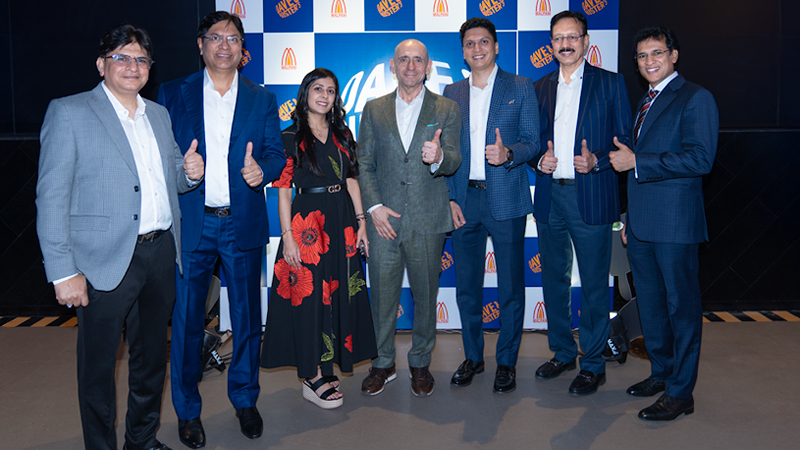
MUMBAI: Roll the dice, raise a toast, and get your game face on, Dave & Buster’s is all set to serve up Mumbai’s most eclectic indoor experience yet. After making waves in Bangalore, the global entertainment dining chain is gearing up for its second Indian outing, this time in the bustling heart of Andheri West, with a brand-new venue at Infinity Mall, launching this June.
Spanning 27,000 sq. ft., the flagship Koramangala location quickly became one of Bangalore’s buzziest hangouts. Now, the Malpani Group, the masterminds behind Dave & Buster’s India and creators of theme park giants like Imagicaa is taking the fun up a notch, as Mumbai becomes the next playground for its high-octane mix of food, drinks, and arcade madness.
Staying true to its global philosophy of “Eat. Drink. Play. Watch.”, the new outlet promises a vibrant, immersive venue where diners can bite into global flavours, sip on inventive cocktails, and play everything from vintage arcade games to modern digital challenges. Think loaded nachos and joystick duels, burgers with a side of buzzer-beaters all under one neon-lit roof.

“Following the phenomenal success in Bangalore, Mumbai was the obvious next destination,” said Malpani Group director Shreya Malpani. “We’re not just opening another venue, we’re creating a city-wide hotspot where culture meets competition and celebration meets social energy.”
With the backing of Malpani Group’s legacy in delivering entertainment that sticks from theme parks to now upscale indoor gaming the Mumbai launch is part of a larger game plan to turn metro venues into multi-sensory entertainment hubs.
Whether you’re in it for the food, the flippers, or the full-throttle fun, one thing’s for sure: Dave & Buster’s is about to make Mumbai play like never before.






Brands
Dunkin’ Donuts to exit India as Jubilant FoodWorks ends 15-year franchise deal
The quick service restaurant giant is ending a 15-year franchise partnership with the American doughnut chain, even as it renews its Domino’s agreement for another 15 years
NOIDA: Dunkin’ is done in India. Jubilant FoodWorks Ltd, the country’s leading quick service restaurant operator, has decided not to renew its franchise agreement with the American coffee and doughnut chain, and will wind down its Indian stores in a phased manner before December 31, 2026, bringing a 15-year partnership to a quiet, loss-laden close.
The decision, approved by JFL’s board on March 30, 2026, ends a relationship that began with a Multiple Unit Development Franchise Agreement signed on February 24, 2011. JFL will now evaluate and undertake what it described in a regulatory filing as the “rationalisation and/or cessation of certain operations and/or sale, transfer or disposal of assets and/or assignment or transfer of franchise rights,” all in consultation with Dunkin’s brand owners and strictly within the terms of the original agreement.
The numbers tell the story bluntly. In the financial year 2024-25, Dunkin’ India posted a revenue of Rs 37 crore against a loss of Rs 19 crore — a haemorrhage that was always going to test the patience of a parent company recording revenues of Rs 6,104 crore and a profit of Rs 194 crore in the same period. Doughnuts, it turns out, were never going to move the needle.
The contrast with JFL’s handling of its other marquee franchise could hardly be sharper. Even as it walks away from Dunkin’, the company has just doubled down on Domino’s, signing a fresh Master Franchise Agreement on March 31, 2026, granting it exclusive rights to develop and operate Domino’s Pizza stores in India for 15 years, with an option to renew for a further 10.
JFL, incorporated in 1995 and promoted by the Bharatia family, operates a network of more than 3,500 stores across six markets — India, Turkey, Bangladesh, Sri Lanka, Azerbaijan and Georgia. Its portfolio includes Domino’s and Popeyes on the global side, and two home-grown brands: Hong’s Kitchen and COFFY, a café brand in Turkey.
For Dunkin’, India was always a stretch. The brand never quite cracked the cultural code in a market where filter coffee and chai command fierce loyalty and where the doughnut remains, at best, an occasional indulgence rather than a daily habit. Fifteen years, mounting losses and a parent with better things to spend its capital on was always going to be a difficult equation to solve.
The doughnut has had its last day. The pizza, however, is staying.






