MAM
Competing with consumer activities not brands: Kingfisher’s Sheikhawat

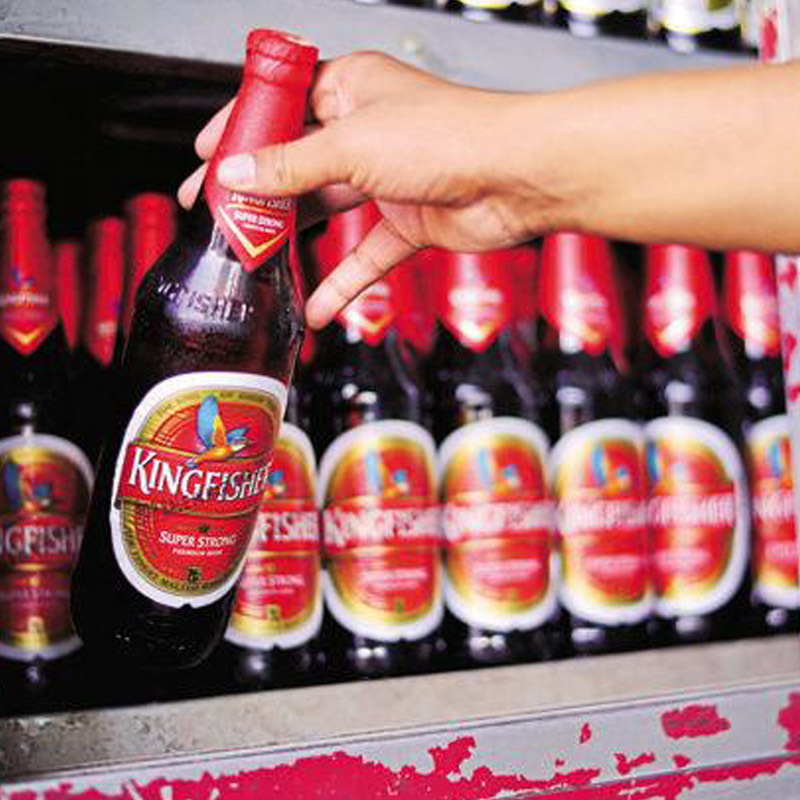
MUMBAI: The liquor market is witnessing major upheavals with umpteen number of alcohol brands battling it out for a slice of the market. The fight is tough since consumers can choose from a wide variety of beer brands – Tuborg, Kingfisher, Bira and Heineken among other local beer brands.
Craft beers and microbreweries are niche concepts in India but have been growing rapidly for the past few years. The trend is certainly attracting middle-class Indians, particularly the ones from urban areas who do not mind spending a few extra bucks for a smooth beer. The craft beer market in India is currently pegged at Rs 280 crore and is expected to grow to Rs 4400 crore by 2020.
Today, India is the third-largest liquor market in the world with an overall retail market size of USD 35 billion per annum. The annual consumption rate has been increasing steadily over the past six years and stood at 8.9 per cent in 2017.

Beer in India is dominated by the off-trade channel (wine-shops), which accounts for 79 per cent of volume sales. Companies, however, are now increasingly focusing on sales through the on-trade channel by associating with music festivals and sponsoring other events.
United Breweries (UB), which manufactures India’s most-loved Kingfisher beer, controls 60 per cent of the total manufacturing capacity for beer in India and is the market leader with the national market share in excess of 50 per cent. This explains the company’s major investments and association with various events, sports and other entities. The brand has been associated with the Indian Premier League for over 10 years and continues to engage fans and customers via various on-ground and other marketing initiatives. The company refreshes the labels of all its products every three to four years in order to provide a fillip to the product’s image.
Typically, consumers always evolve faster than brands and, hence, brands have to keep up with consumers’ them. Today, India has the world’s most popular beer brands available in the market.
UB spends 20 per cent of its marketing budget on television and a mere 10 per cent on digital but that is changing, and the company now has a separate team assigned for digital along with a separate digital agency on board. The company leverages all social media and digital platforms while also creating user-generated content. “The audience today is not interested in brand advertising or brand stories but are only interested in stories that suit their line of thinking, and are looking for content and narratives that involve them,” says UB CMO Samar Singh Sheikhawat.
Kingfisher beer is manufactured across 31 breweries in India, which means the time between brewery to market is extremely less resulting in fresher and chilled beers for consumers to sip after a tiring day at work.
While the beer brand’s market share has been dropping over the last two quarters due to microbreweries, craft beers and other new entrants in the market, Sheikhawat is optimistic about Kingfisher’s legitimate consumers who still vouch for the product’s peculiar taste and flavour. “We are not competing with any other beer brand but are competing with anything a consumer wants to do. We are competing with a consumer wanting to go watch a movie or go out partying because, at the end of the day, there are multiple beer occasions. We should ideally be available in cinema halls but in India, you are not allowed to sell inside the cinema hall. Hence, we should be available at all major restaurants near cinema halls.”
UB launched Kingfisher Storm in May last year. Targeted at the stylish, urban, confident, independent consumer with swag, the beer comes in an electrifying blue colour bottle with ring pull cap. The alcohol content in Storm is slightly low as compared to other Kingfisher products. “A huge base of our consumers still prefers the taste of Kingfisher Strong but the urban audience is looking for a change. We wanted to launch a new product for consumers who love the brand but given an occasion, want to try something different,” says Sheikhawat.
Currently available in Karnataka, West Bengal, Maharashtra and Orissa, Storm will soon be available nationally over the next 18 months.
UB also launched a new brand under malt-based ready-to-drink beverage called Kingfisher Buzz in 2016 which has only 4.8 per cent alcohol content. Available only in two flavours – Berry and Lychee, Kingfisher Buzz competes directly with Bacardi Breezer, which is a market leader in this segment. Although the original idea for Kingfisher Buzz was conceived 10 years back, it was launched only in 2016. Sheikhawat says, “Buzz is a small brand and we expected it to be a small brand that is targeted at young adults who don’t like the taste of beer but want to consume something.”
Out of the total portfolio of UB, the company has 20 per cent of its revenue from non Kingfisher brands that are regional or power brands including London Pilsner, Kalyani, UB Export, Bullet, Zingaro and Cannon 1000.
United Breweries has also begun exporting its products to other countries where Kingfisher Strong and Premium have been the star performers for the brand. Though UB Global is a small business, it is growing rapidly as the company exports to 70 countries including US, UK, New Zealand, Germany, Middle East, South East Asia and Singapore.
Also Read :
Surrogate liquor advertising: Time for change?
Why do we lack animated ads despite their popularity
Cinema advertising begins to take centre stage
Digital takes centre stage on tepid Valentine’s Day for brands




MAM
Lego brings Messi, Ronaldo, Mbappé, Vinicius together
Campaign clocks 314 million views ahead of FIFA World Cup 2026 buzz.
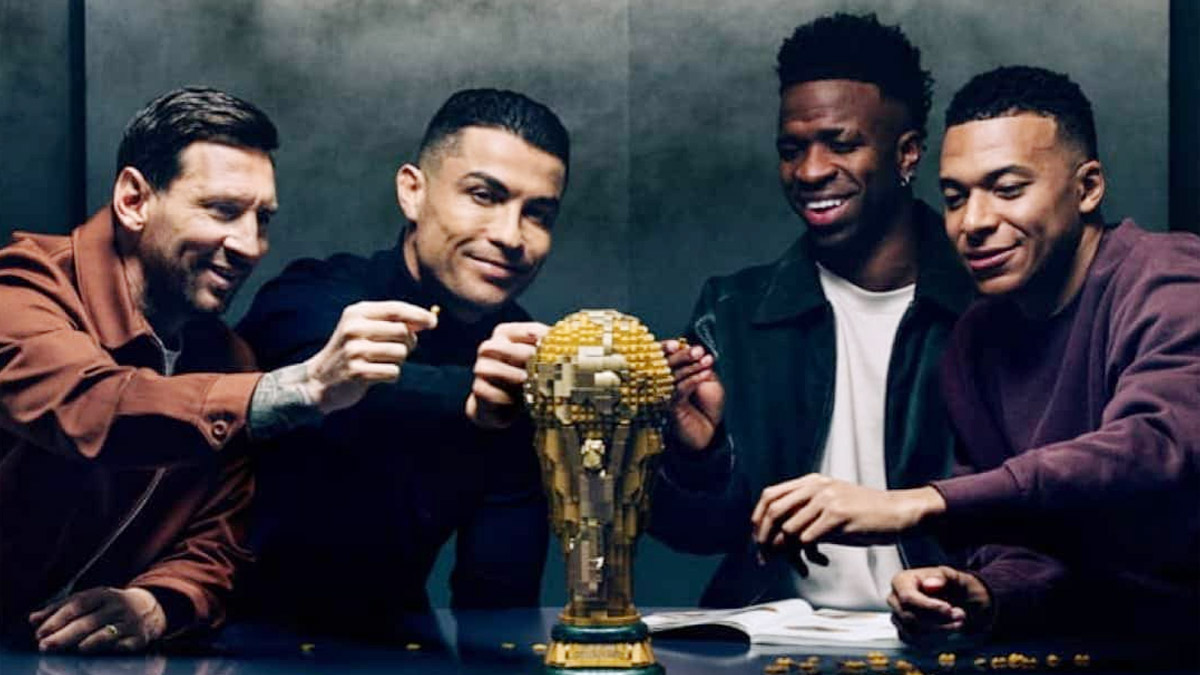
MUMBAI: Four legends, one frame and not a single tackle in sight. Lego has pulled off a crossover few thought possible, uniting Lionel Messi, Cristiano Ronaldo, Kylian Mbappé and Vinícius Júnior in a single campaign ahead of the FIFA World Cup 2026 only this time, they’re building dreams brick by brick.
Titled “Everyone wants a piece”, the campaign features the quartet assembling a Lego version of the World Cup trophy, before placing miniature versions of themselves atop it, a playful nod to football’s ultimate prize. Shared widely across social media, the ad carries a pointed disclaimer: it is not AI-generated, a subtle but telling signal in an era where even reality is often questioned.
The numbers tell their own story. The campaign has already crossed 314 million views on Instagram across the players’ accounts, with fans hailing it as a rare, almost nostalgic moment particularly for the reunion of Messi and Ronaldo, whose last shared campaign ahead of the 2022 World Cup became one of the platform’s most-liked posts.
Beyond the film, Lego is extending the play with exclusive, player-themed sets tied to each of the four stars, part of a broader football-led programme designed to ride the global momentum building towards 2026. The idea, as echoed by the players themselves, leans into the parallels between football and play experimentation, creativity, failure, and triumph.
Messi described the sets as a way to bring on-pitch moments into an imaginative, hands-on world, while Ronaldo called the transformation into a Lego figure a rare honour, blending sport with storytelling. Vinícius, meanwhile, struck a more personal note, recalling childhood moments of building with Lego and framing creativity as a universal language that transcends borders.
The timing is no accident. With the 2026 World Cup set to run from June 11 to July 19 across the United States, Canada and Mexico, and featuring an expanded 48-team format, global anticipation is already building. Argentina, led by Messi, will enter as defending champions, adding another layer of intrigue.
For Lego, the campaign does more than celebrate football, it taps into its mythology. Because when icons become figurines and rivalries turn into play, the beautiful game finds a new kind of pitch. one built, quite literally, by hand.






