MAM
Companies pin hopes on monsoon season to lift the ‘Covid-gloom’


MUMBAI: Monsoons are critical for the revival of consumer demand in our agri-dependent country, both in rural and urban regions. In a market already marred by the pandemic, how’s the sentiment this monsoon season? To gauge the marketing mood in this season of renewed hope, IndianTelevision.com spoke to a few marketers and industry stakeholders on the opportunities and challenges during the season in the backdrop of the pandemic, the marketing strategy adopted by brands to reach out to customers, and more.
The outbreak of the pandemic and the subsequent turn of events has not only crippled daily life but also hit industries and the economy hard. After the long, harsh summer, companies are now exuding hope of business gaining momentum from the second quarter of 2021-22 with the onset of monsoon. The steady decline in Covid cases and the relaxation in lockdown restrictions in some states has led to some cautious optimism in the consumer market.
“Our efforts are to revamp the market sentiment, which has been affected due to the deadly second wave, and in doing so we stand strong. Catering to over 18,000 pin codes and having 550 service centres across India, we have worked on a robust supply chain and logistics to ensure that there are no seasonal factors that impact our operations and the overall consumer experience of the brand,” says Super Plastronics Pvt Ltd (SPPL) – the Indian licensee for French Electronics’ brand Thomson – CEO Avneet Singh Marwah.

Last June the company announced it would invest Rs 1,000 crore in the next five years to expand its manufacturing capacity and strengthen its presence in the consumer electronics and appliances segment. The firm is also making a foray into the home appliances segment with washing machines and cooling product categories under brand Thomson, as part of its expansion plans. As part of its strategy, the company said it would continue to focus on affordability with aggressive pricing and harness the potentials of e-commerce channels.
“At Thomson, our commitment is to provide ‘Friendly Technology’ to the discreet online shopper, who wants ‘global technology at competitive prices. Our e-shoppers can benefit and avail various bank offers and discounts this monsoon season too, as we put out offers every season on Flipkart,” says Marwah, adding that it would always remain a D2C brand, with a consumer-centric approach.”
FMCG has traditionally been among the sectors that tend to benefit from a good monsoon. With IMD’s forecast of a normal monsoon, there are indications of salvaging the sector from the pandemic’s impact.
Consumer confidence for urban Indians has also shown mild recovery in June 2021 with a slight uptick of 1.4 percentage points, over the previous month, according to the monthly Refinitiv-Ipsos Primary Consumer Sentiment Index (PCSI). It had shown a steep drop in May due to the aggressive second wave impact.
Backed by positive consumer sentiment, Oil processing company Modi Naturals Ltd CMO Shardul Bist says, ”Typically, during the monsoon, consumption for most food and cooking brands goes up. These are the crucial months for edible oil brands like us to build volumes and reach out to consumers. We had already planned our marketing calendar, which had to be revised due to the pandemic for the second consecutive year. We have planned it in three phases – Critical, Recovery, and Stabilizing to match the mood of the consumers as we move through the year.”
According to Bist, consumers’ preferences generally move towards fried food during the rains, and thus the usage of oil increases. “We have to plan our media strategy keeping the pandemic into consideration. We are bullish on our marketing spends and have planned a strong 360-degree marketing campaign during Q2 which includes TV, Print, and Digital with our brands, Oleev and Pipo. Along with the media, we are planning to diversify into healthy food categories and are planning to launch new products in Q2,” he says.
Unsurprisingly, the demand for Health and immunity boosters has also shot up. “In the last few months, the demand for multivitamin and mineral supplements has seen an upward growth”, says Mankind Pharma’s Joy Chatterjee. “We changed our strategy at the right time and ‘Health OK’ was shifted into the OTC category. This has generated demand, need, and revenue for us. We are growing in double digits, and we give a lot of stress upon building brand equity as well. With strong brand equity, one can enjoy all benefits of the value chain. Going further, we expect the percentage to increase.”
Chatterjee says that the Pharma brand’s marketing strategy remains the same, which is basically to make people aware of the product and its benefits. “We are taking on a 360-degree approach to reach our target audience, we can’t just rely on one medium- because our product is such that it caters to different age groups. So, we decided to be available across marketing channels- whether it is TV, print media and even focusing on regional newspapers. However, TV is still our number one choice because of its reach and impact.”
The brand recently released a TVC featuring Health Ok tablets brand ambassadors Anil Kapoor and Ranveer Singh. “Other than this, we are highly active on social media platforms too and collaborating with popular influencers from different speaking markets. We are also increasing our budget on digital to capture the attention of the audience in the digital space,” he added.
dentsumcgarrybowen India EVP & head- planning & strategy, Vishal Nicholas says that apart from health, a few other categories that do get activated during the monsoons are Tyres, Auto Insurance, and Food-delivery apps. Talking about how marketers can leverage it he says, “This category (tyres & auto insurance) sees a lot of traction during monsoons as roads get slippery. This time around though, many vehicles would have been lying unused, and hence, with the unlock process beginning across the country, the tyres would be more susceptible to under-performing in the monsoons. Tyre brands and even auto insurance brands can sensitise consumers to these potential concerns and even direct them to the nearest place of redressal.”
On how brands can indulge the spike in food cravings during this season he says, “Food-delivery brands can use the first-party data creatively here as well as their own real estate. They can use location data and intersect it with weather data to highlight geographies and customers where it is raining. Once identified, push notifications on their own platform can nudge the consumer to order his cravings.”
DViO Digital founder & CEO Sowmya Iyer agrees that the pandemic has certainly changed the overall marketing landscape and that monsoon campaigns are no exception. “Nevertheless, the brands don’t want to let go of that sense of normalcy and marketers are putting in efforts to appreciate the beauty that lies in the weather while being mindful of the safety concerns and sensitive towards the current situation,” she says, adding that the pleasant, nostalgic and romanticised setup of the season is often leveraged by brands for promoting product features. Sharing about the success of a recent digital promotional campaign that the agency curated for Universal Music’s VYRLOriginals, Iyer says it is a testament that immersive and creative campaigns have excellent engagement on digital and social.
A looming threat of a possible third wave, however, means that we are not out of the woods yet, and treading with caution will need to be the key.





Brands
Boeing appoints Barun as head of FP&A for global engineering function
Seasoned finance leader to steer budgets and strategy across global centres
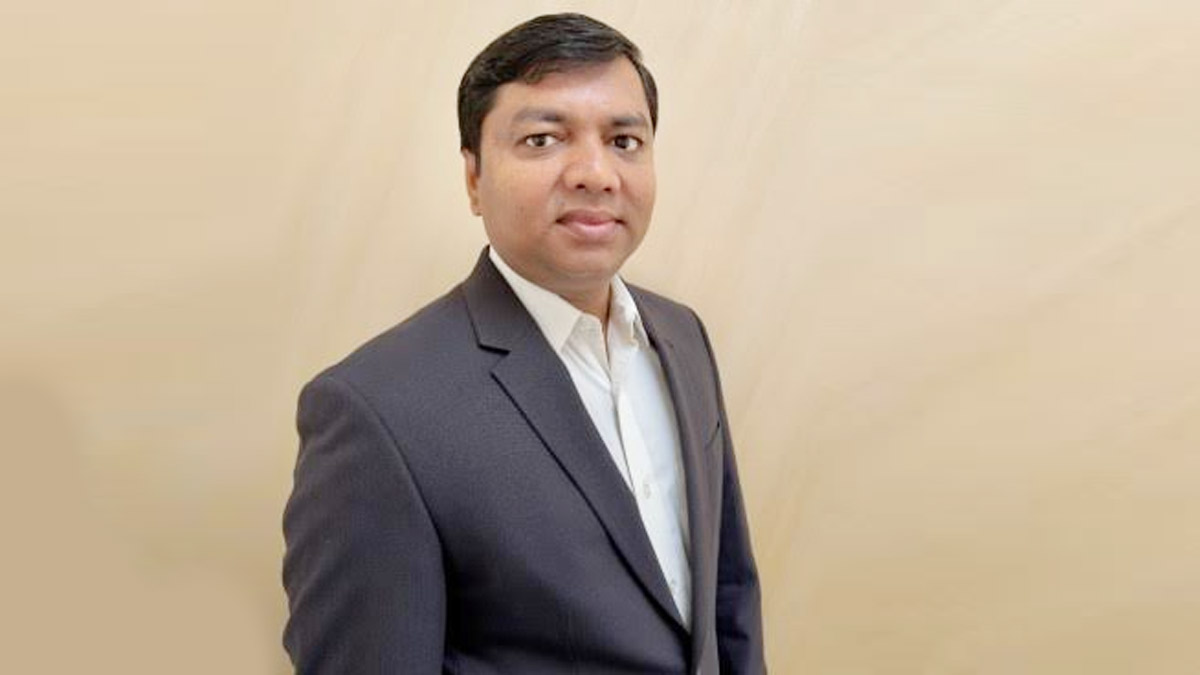
BENGALURU: Boeing’s finance cockpit has a new pilot, and he is no stranger to turbulence or transformation. Boeing has appointed Barun as head of FP&A for global engineering, placing him at the centre of financial strategy for its worldwide engineering and technology operations.
Based in Bengaluru, Barun steps into a role that is as expansive as it is critical. He will serve as the primary finance lead for Boeing’s Engineering and Technology Centers globally, working closely with executive leadership to shape financial decisions, manage complex budgets, and design scalable finance processes that support the company’s growing engineering footprint.
In a note announcing his move Barun said, “I’m excited to share that I’ve joined Boeing Global Engineering. This opportunity is incredibly meaningful to me not just from a professional standpoint, but also for what Boeing represents globally.” He added that he looks forward to contributing to an organisation that continues to shape the future of aerospace and innovation.
Barun’s mandate spans strategic financial leadership, operational oversight, and stakeholder engagement. From directing large-scale budgets and schedules to influencing long-term organisational goals, the role blends financial discipline with business foresight. He will also lead cross-functional teams and partner with finance colleagues worldwide to support engineering programmes across geographies, including India.
The appointment caps a long stint at Juniper Networks, where Barun spent over a decade, most recently as finance senior manager. There, he led FP&A for global product business units and G&A functions, driving budgeting, forecasting, and long-range planning. He also played a key role in enterprise-wide transformation, including spearheading an Oracle to SAP ERP migration and building advanced analytics capabilities using tools such as Tableau and SAP Analytics Cloud.
His earlier career includes finance leadership roles at Sony India Software Centre, Cognizant Technology Solutions, and Mphasis, where he focused on financial planning, governance frameworks, and operational efficiency across global delivery centres.
A chartered accountant from the Institute of Chartered Accountants of India, Barun brings nearly two decades of experience across financial planning, digital transformation, and analytics-led decision making.
His appointment comes at a time when global engineering operations are becoming increasingly complex and distributed, requiring sharper financial oversight and agile planning. With Barun at the helm of FP&A for engineering, Boeing appears to be tightening its financial playbook as it looks to scale innovation with discipline.






