MAM
Collaboration is the way forward for media agencies: Sam Balsara

MUMBAI: “I’m not going to give a Media Review but a Media Proview, if any such word exists,” said Sam Balsara at the first ever Media Review organised by the Advertising Club Bombay.
According to him, the way forward for media agencies is collaboration rather than back to bundling. “Life is coming full circle. Holding companies around the world are now talking of getting the creative and media businesses back under one function. But what is required is a greater collaboration between the creative and the media businesses,” said Balsara.

Balsara quoted the then septuagenarian Bobby Kooka (the creator of the Air India mascot Maharaja) from his speech at the Ad Club Silver Jubilee in 1980, who had said — “Advertising in my time was different. It was a lot of fun. Now it has become complex and almost a science.”
That was in 1980. “Since then what has changed is nothing except the rate of change. In 1995 Proctor & Gamble introduced us to the idea of an AOR (agency of record) and now 10 years later media indeed has arrived. It has become dynamic with accelerated speed of change. The basic reason for that is that for advertisers, the market is becoming more complex and the return on media investment if made the conventional way is going down sharply,” said Balsara.
He went on to say that for advertisers to succeed, they need to have a consumer insight. Outlining how the media thinking had evolved over the years, Balsara said, “The first step was creating awareness and earlier the major focus of media was to reach maximum people at the minimum cost. Thus evolved the concept of CPT (cost per thousand), duplication and GRPs (gross rating points). As media became more expensive, the concept of eliminating wastage came in. Now coming to the present, as media inflation hits us, thanks to the buoyant economy and drop in TVRs (television ratings) due to fragmentation, we need to upgrade ourselves to finding the customers and reaching them.”
Negotiation powers increased and to combat clutter and noise, media agencies came to ‘innovations,’ which adds genuine and substantial value to all the parties involved, Balsara pointed out.
“For adding genuine value to our clients, we need to find mediums that connects with the prospective users better and something which they can relate to in a stricter and valuable way. Media clutter is going to make it difficult for big advertisers to advertise and hence they will be forced to narrowcast,” he opined.
He also stressed on the fact that media professionals need to find more and more creative ways of using the broadcast medium because the 30 second commercial was still going strong.
“Technology and the future is threatening to turn our world topsy turvy. There is a range of new technology like IPTV and Mobisodes, which are going to enter the market soon and is going to be the way forward,” Balsara said.
What needed to be done was: (i) formation of a media agencies industry body, (ii) higher remuneration standards, (iii) more creativity from media agencies, (iv) co-relation between what is charged and what is delivered.
Balsara urged media agencies to put greater emphasis on understanding the clients’ business and on research and innovation.
He also listed out 12-point plan to strengthen the media function, which involved:
People: Ensuring steady stream of new entrants with certain abilities like being bold, imaginative and understanding the business.
Commercial: Everybody’s interests would be better served of media agencies looked upon themselves as professional consultancies rather than a business.
Media agency remuneration: He made a case to advertisers for re-looking at media agency remuneration saying that we started with a low base using a western model and applied same percentages used in a market of Rs 8600 billion to a market of Rs 100 billion.
Rates versus value: Buyers and advertisers should move away from rates to value. In a time of media proliferation, focusing on rates would not serve the advertisers’ purpose.
It’s no good, if it can’t be measured: Media planners should adopt a holistic view using both quantitative and qualitative parameters.
Collaborate: Media agencies should understand and appreciate disciplines of direct marketing, PR, in-film, rural and collaborate among themselves to establish healthy business practices.
Rediscover: Media planner would have to find ways of doing things, faster, better cheaper and more accurately and more innovatively. If not, media boutiques will spring up on the lines of creative boutiques.
If it’s risky, it’s safe: People should take risks. Rich payoffs only come when one is buying anticipated performance.
Responsibility to advertiser and media: Media agencies must show to advertisers the importance of media in achieving their corporate goals and sensitize media owners to advertisers concerns and goals.
The advantage of multimedia: A multimedia plan works much better than a single medium plan, however cost effective the latter may be.
Media planners must consume media: Media planners must regularly watch television, read newspapers, listen to radio, which will enable them to do their job better.
Media sellers must track the ‘pull’ of a campaign in their medium: Whilst media-selling had grown as a discipline, it must now evolve to the next stage wherein a campaign is tracked in terms of impact when it appeared in one’s own publication or channel.
“Only those who are open and ready to accept the change will succeed. The others will be killed,” Balsara concluded.






MAM
PwC India announces leadership change in Deals practice
Shashank Jain steps down as co-leader after nearly three decades with the firm.
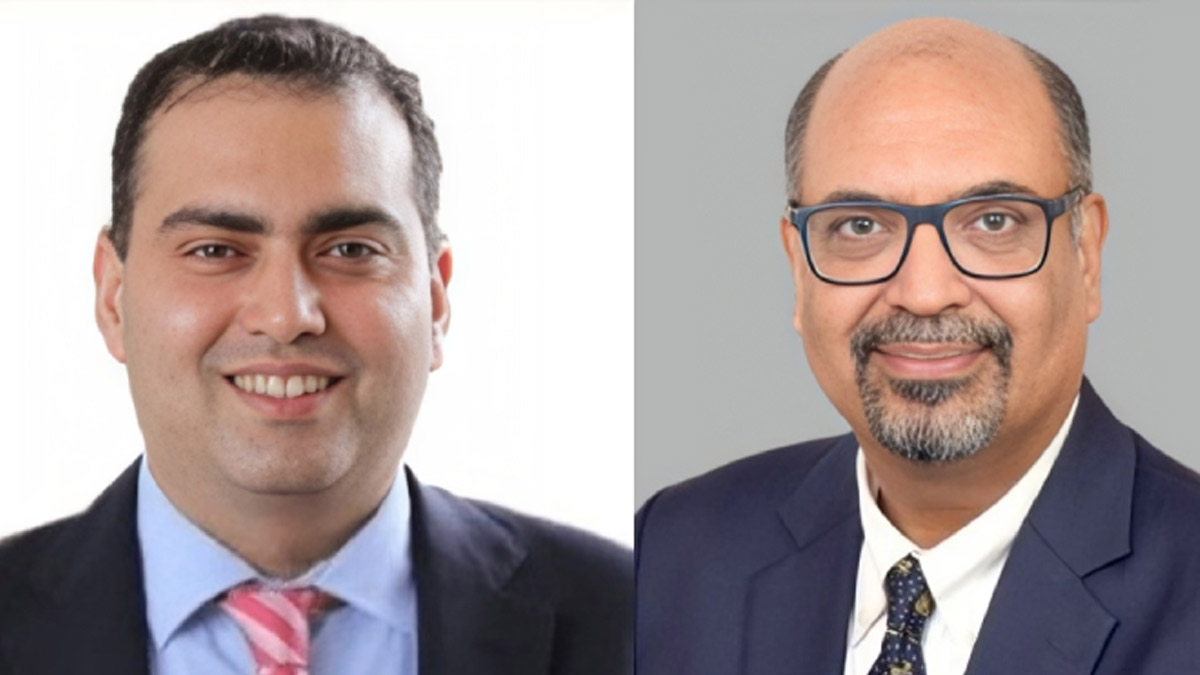
MUMBAI: When one dealmaker steps off the pitch, another is ready to take the baton because in the fast-moving world of transactions, the game never really stops. PwC India has announced a leadership transition in its Deals practice, with Shashank Jain stepping down from his role as co-leader to pursue an opportunity in the industry. The practice will continue to be led by Mohit Chopra, ensuring continuity and sustained growth momentum.
PwC India partner and leader for advisory dinesh Arora paid tribute to Jain’s contributions. “We deeply appreciate the significant contributions made by Shashank over close to three decades he has spent with PwC, particularly his defining role in shaping and strengthening our Transaction Services practice in India,” he said. Arora highlighted Jain’s support for clients through some of the most complex and significant transactions in the Indian market, noting his deep technical expertise, sound judgment and nuanced understanding of the evolving M&A landscape.
The Deals practice remains a key growth driver for PwC India, and the firm expects continued expansion under Mohit Chopra’s leadership. He will continue to guide clients through complex transactions and transformational business moments, building on the strong foundation established over the years.
Reflecting on his journey, Shashank Jain said, “I have had an exceptional journey at PwC. I owe my growth and learning to the nurturing environment and leadership development that PwC provided.” He added that he had been working closely with Mohit and the larger team to ensure a smooth transition and expressed confidence that Chopra would take the Deals practice to newer heights.
From intern to respected deals leader, Shashank Jain has clearly closed many successful transactions and now, it seems, he’s ready to strike a new deal of his own.