MAM
Chat Bots, VR/AR, Drones; When marketing marries technology


MUMBAI: From Tata Motors taking India on its first ever virtual drive using Google Cardboard, Facebook allowing brands to message users using chat bots, to drones covering live gig at concerts –the last few months have been exciting in brand land. By themselves these events maybe little pockets of wonder, but they also point towards a larger paradigm shift in the way products will be hawked, how methods to attract consumers have evolved and are evolving.
If marketers in the country haven’t been taking notes, they better catch up as technology is fast changing how consumers interact with brands just like a friend after marriage. On the one hand it poses countless possibilities for innovation, on the other, there’s an impending threat of becoming irrelevant. It’s either adapt, adopt or perish. “Brands can surely become the tissue between consumers and technology. We will see emergence of many technology led marketing solutions more so because business are challenged to break open the walls and digitally transform,” points out triggerbridge co founder and future facing marketer S. Yesudas.
The best part about these emerging technologies is that they give equal opportunities for brands, small and big to be firsts in many ways. Given the accessibility options available, there is a more democratic penetration of some of these technologies across the globe, putting India at an advantage in many cases. “If you watch the trends that are making the waves in the marketing communities, some are happening faster in India while others will take time to penetrate here. For example mobile and smartphone based technologies will no doubt see a more rapid boom in India just for the sheer utility and scale that the country presents,” explains Kyoorius founder Rajesh Kejriwal. According to him, while mobile and social media aren’t ‘new’ technologies, the way they are used to target and interact with consumers will see a sea change in the upcoming recent years.

To some marketers who love to dabble in technology wearable technologies like ‘smart watches’ are on top of the list of marketers, though they do admit that India hasn’t caught on to their full fervor as yet. Location based marketing that makes optimum use of geo tagging will be the next phenomenon in local and regional markets. “They are not just tech but a source of data, very precise and targeted data,” quips Kejriwal. This is at a time when brands are paying millions to get hold of data and analyse them.
As per the inputs from creatives, agencies, planners, startups, techies, gadget freaks, and brand managers, top emerging technologies that marketers should watch out for are —
Read on:
Virtual Reality/ Augmented Reality: VR/AR seems to be the martech buzz word for 2016. It is evident from the number of technology and smartphone brands that have come out with their own headgears in the past few months — Facebook, HTC, Samsung Huawei just to name a few. Globally several brands have awed their peers with a brilliant use of VR in marketing. India isn’t a late bloomer in this sphere and has churned out some awe inspiring work for the home market. Why use it? “Firstly, VR helps brands with a significant amount of credibility through immersive experience, which otherwise is not possible as effectively. Secondly it also allows to communicate the entire value chain with the customer, through multiple channels — be it retail, or post sale etc; from the factory to the showroom and then road,” says Happy Finish APAC CEO Ashish Limaye.
Tata Motors initiated a virtual drive for its flagship car Tiago through a newspaper ad on the front page of a leading daily. It mass distributed 2.3 million (23 lakh) branded Google Cardboards, digital campaign and print ads in The Times of India, across the highly potential automotive markets of Mumbai, Delhi/NCR and Bengaluru.

Drones: While government restriction has given a limited exposure to drones in India, they are quite a craze in more mature markets like the US, South Asia and Europe. “Consumer drones offer the ability to capture a unique perspective that previously required either a higher cost (helicopters), a more intense set-up and time (custom-made quadcopter or aerial rigs) or a mixture of both. Our drones create the right mix of affordability, stability and ease of use that allows small-to-medium-sized enterprises (as well as large ones) to create unique marketing campaigns based around this new perspective, at a cost effective alternative,” explains drone manufacturing giant DJI’s director of Strategic Partnerships Michael Perry.
However, India is not alone in facing restrictions when it comes to a commercial field – the solution is that these platforms must be treated according to their weight classification, as a 2 kg quadcopter with minimal payload abilities should be governed by different rules as compared to a 10 kg quadcopter with a sizeable payload, shares Perry.
Jaguar and DJI recently teamed up to showcase how drones can help change film car chase sequences and the future of such sequences.
Chat Bots: After disruption, convenience is the name of the game and that is exactly what chat bots are banking on. The recent announcement by Facebook last week, allowing brands to have their chat bots in the Facebook messenger has been a revolution of sorts, and brand owners in India have yet to get the feel of it. The biggest impact is expected in the service industry. There was a time when brands became apps, and now it’s time for them to become bots.
So how are chat bots different? “Chat bots are a game changer because they are much simpler to use. Everyone is already on their messaging apps. If instead of having to go to a website, or an eCommerce site or download an app, consumers could simply access all their brands through their messengers, imagine how convenient it would be. Unlike AR and VR which need marketers to create an infrastructure to reach full potential, chat bots have a ready playing field,” shares cloud messaging platform Gupshup’s co founder and CEO Beerud Sheth, while he was in India to create awareness on chat bots for brands. From ordering pizza to booking flights, nothing is impossible for these smart chat bots.

3D Printing: More than its utility in marketing, why brands and advertisers need to pay attention to the fast growing market for 3D printing and its quick evolution, is how it empowers consumers. With 3D printing becoming a household product, the entire manufacturing industry will see a drastic change. The rules of game will change for them and so will it for marketers who are promoting the products.
“The beauty of 3D printing is that it will take advertising from computers and graphics into making into real physical products. You customise the product and it will be immediately made for you. It will revolutionise advertising as none of the advertising has so far given us a product. Plus 3D printing will affect every pillar in the industry, like distribution, parts manufacturing, merchandising,” shares iPropect India MD Vivek Bhargava.

Videos: India has seen a huge boom in video consumption, which is only expected to grow bigger as the internet penetration expands and strengthens within the market. As per a Carat report in 2016, “The continued growth of digital is driven by mobile, online video and social media, increasingly becoming more prevalent components of advertising investment. Mobile continues to show the highest spend growth across all media in 2016, with a year-on- year estimated increase at +37.9 per cent in 2016.
Therefore videos will play a major role, especially live video streams. Facebook understands this well, and anticipates the trend before it has hit us by launching Facebook Live. It will open up new vistas for pushing one’s service and product. Infact, in the words of Facebook Creative Shop APAC head Fergus O’ Hare , “The dying breed of salesmen will find a renewed motivation with Facebook Live as they can make calls to consumers at specific relevant times of the day when they are most likely to buy the product. Brands can call you any time of the day when it matters the most.”

Somewhere down the line all these separate technological advancements will be connected, and what will connect them are Big Data and Internet Of Things. That is why Big Data and The Internet of Things will revolutionise technology, marketing and human lifestyle even. Ai or artificial intelligence, which falls in the purview of the former, is also making ripples in the brand space.
But Yesudas throws a note of caution for aspiring ‘martech’ users. Care needs to be taken about over dependency on technology or going overboard with it. “Brand owners need to understand digital transformation is not about technological gimmicks. They need to ensure humans are put before technology, using it only to accentuate human behaviour. Brands that will crack this code will lead the marketing charge in the digital era.




Brands
Samsung certifies 1,000 Maharashtra students in AI and coding
The South Korean electronics giant marks its first large-scale skilling push in the state, with women making up nearly half the national programme’s enrolment
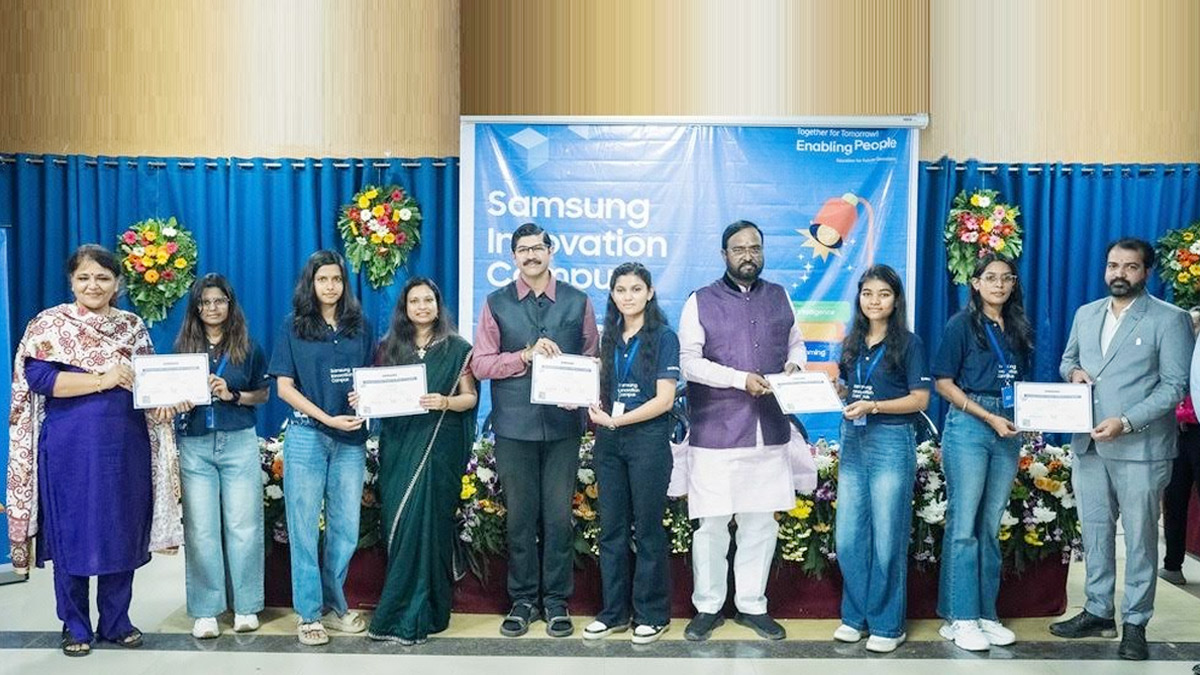
PUNE: Samsung has put 1,000 students in Maharashtra through a certified training programme in artificial intelligence and coding, the largest such drive the South Korean electronics company has run in the state and a signal that corporate India’s skilling ambitions are moving well beyond the boardroom brochure.
The certifications were awarded under Samsung Innovation Campus (SIC), the company’s flagship corporate social responsibility programme, which launched in India in 2022 with the stated aim of democratising access to future-technology education. The 1,000 graduates were drawn from four institutions: 127 from Savitribai Phule Pune University, 373 from Pimpri Chinchwad University, 250 from D.Y. Patil University’s Ramrao Adik Institute of Technology and 250 from Anjuman-I-Islam’s Kalsekar Technical Campus. All completed training in either AI or coding and programming, the two disciplines Samsung has identified as the critical pillars of the digital economy.
The programme does not stop at technical training. Soft-skills development and career-readiness modules are baked into the curriculum, a deliberate attempt to close the gap between what universities teach and what employers actually want.
“India’s digital growth story will ultimately be shaped by the quality of its talent pipeline,” said Shubham Mukherjee, head of CSR and corporate communications at Samsung Southwest Asia. “As technologies like AI move from the periphery to the core of industries, skilling must evolve from basic training to building real-world capability. This milestone in Maharashtra reflects how industry and academia can come together to create a future-ready workforce that is both globally competitive and locally relevant.”
The Maharashtra drive sits within a rapidly scaling national effort. Samsung Innovation Campus trained 20,000 young people across India in 2025, hitting its stated target for the year. Women account for 48 per cent of national enrolments, a figure the company cites as evidence of its push for an inclusive technology ecosystem. The programme is implemented in partnership with the Electronics Sector Skills Council of India and the Telecom Sector Skill Council.
Samsung, which is marking 30 years in India this year, runs SIC alongside two other initiatives, Samsung Solve for Tomorrow and Samsung DOST, as part of a broader effort to build what it calls a generation of innovators with both the technical depth and the problem-solving mindset to thrive in a fast-moving digital world.
A thousand certified students is a tidy headline. Whether they find jobs that match their new skills is the harder question, and the one that will ultimately determine whether corporate skilling programmes like this one are genuine pipelines or well-photographed gestures.






