MAM
Challenge status quo through experiential marketing


MUMBAI: As brands around the globe are grappling with the Covid2019 pandemic, it has also raised questions about the future of experiential marketing, also known as the touch-and-feel marketing.
In this new age of experiential marketing, the challenge before brands is to showcase that their products are better than the rest in the most creative and unique manner. It is more about engaging with your audiences on a personal level. But with social distancing and lockdown can anything be experiential? How is the industry redefining itself and what are the skillsets that industry practitioners need to equip themselves with?
To discuss all these scenarios, The Advertising Club of Bangalore hosted a webinar with a theme "Experiential Marketing – The Next Pivot." The panellists included Group M APAC head experiential marketing Dalveer Singh, Geometry Encompass Roshan Abbas, Brand Aid Events and FanTam Brands founder and director Vipul Mathur, DEIVEE co-founder Darshan M.

About how experiential marketing will reinvent itself, Abbas said: “As experiential marketers we need to embrace the change quickly. If you are just entering into this industry don’t jump into it directly. Take a pause and understand this situation, challenge the status quo and let the creator play with their mind. This is how television, radio and Netflix came into play.”
Darshan said that it was always about being Instagram-ready. Marketeers have been wary of adapting this but now there is no choice but to adopt this. He adds that the second screen has always existed but now it has become the primary screen.
Elaborating more on the changes seen in experiential marketing during pandemic, Dalveer says, “I think now home will become the epicentre of everything. It is not like everything in experiential will become digital, you may be able to do many things which are physical. The way to look at it is not purely virtual or digital but what is the best way to connect with the needs of the consumer.”
Vipul Mathur who comes from an apparel background where touch and feel is the most important thing feels that even if people are buying stuff online, differentiating between products is still a challenge.
Everything from artificial intelligence to virtual reality to augmented reality is being tried out, but we need someone to orchestrate well between industries and create that 360 degree experience and urgency for consumers to buy the product.
Abbas explained that while some of them had the fear of technology, others were ready for the experiment. They wrote a play that is contextual with Supriya Pilgaonkar and Radhika Madan. After the show Abbas focussed more on the interactivity process. They included chats, poll and multiple other formats in their system. From the experiment stage Abbas has now come to the revenue stage. The company now has close to 12,000 people interacting on Instagram which has invited a lot of brands to invest.
Dalveer who has done a lot of work at the rural level said that the last two to three months were very challenging for the rural audiences. It has been difficult for people staying in the rural market as well as those migrants who have been on the move.
“The next transformation in the rural experiential market is pin code marketing. We have got 21000 pin codes across the country. And we use the simple formula of three V. The idea is how I can reach the people who use smartphones through video, voice and above all you put the vernacular piece to it. Because there are 14 languages and many dialects. We have done a couple of pilots which is helping brands reach the audiences,” he further added.
The panellists agreed upon a point that this pandemic will also bring a lot of event technologists and people who will increase time span, who will build loops and feedbacks within their programme which will eventually help others. They were of the opinion that people who have fresh ideas and can produce cost-effective solutions will survive.



Brands
Charlotte Tilbury opens first flagship store in India
Luxury beauty brand bets on immersive retail as India expansion gathers pace
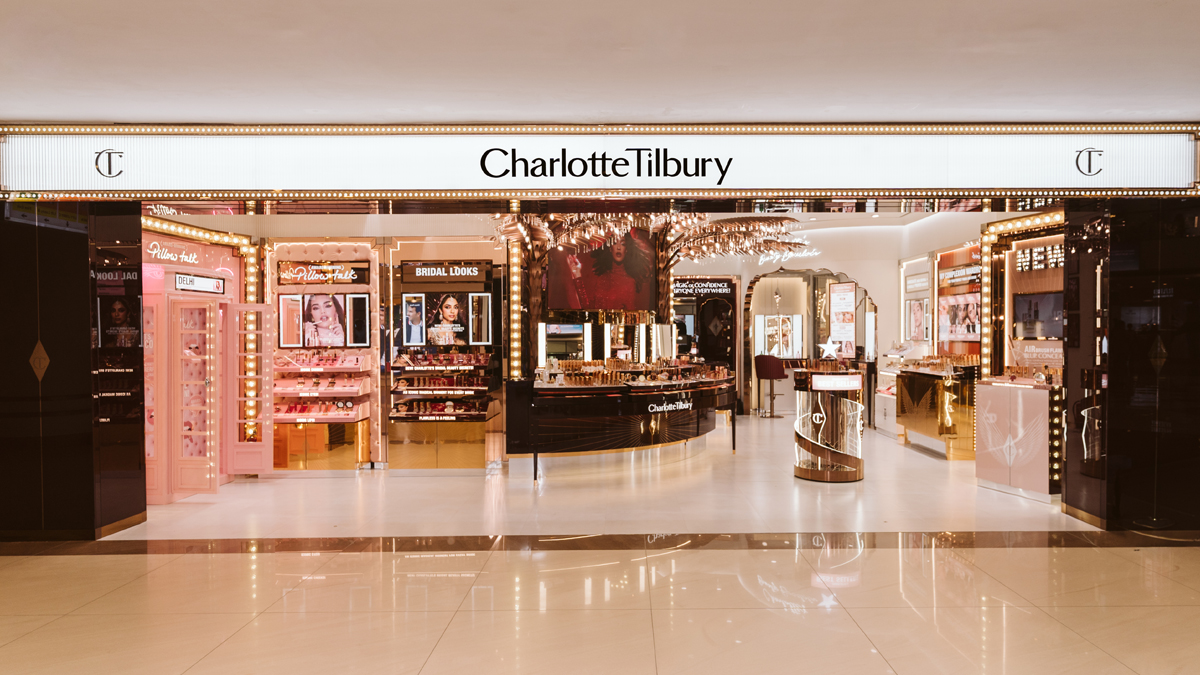
NEW DELHI: Charlotte Tilbury has opened its first flagship Beauty Wonderland in India, planting a high-glamour marker in New Delhi as global beauty brands double down on the country’s fast-growing premium market.
Located at Nexus Select Citywalk in Saket, the store is operated end-to-end by Nykaa, deepening a partnership that began with the brand’s digital launch in India in 2020 and has since scaled across retail, marketing and distribution. The opening signals a shift from marketplace presence to standalone brand environments as companies chase long-term equity and consumer loyalty.
The launch was marked by an event on April 9 featuring actor Sobhita Dhulipala, the brand’s first beauty muse in India, underscoring Charlotte Tilbury’s growing cultural push in the market.
“Darlings, I am so excited to open my first-ever flagship Beauty Wonderland in India, in its vibrant and iconic capital, New Delhi,” said Charlotte Tilbury. “This is such a magical milestone for the brand as we continue to grow in one of the world’s most dynamic and exciting beauty markets.”
Tilbury highlighted the brand’s connection with Indian consumers. “India has always been a place of incredible beauty, celebration and transformation. I have been so inspired by the artistry, creativity and passion of our community here. They are true beauty connoisseurs that appreciate next-generation formulas,” she said.
The store is designed as an immersive retail experience, blending the brand’s Art Deco and old Hollywood aesthetic with local cues. A bespoke Royal Indian Arch anchors the space, alongside personalised makeup services tailored to Indian trends and occasions. A dedicated bridal looks wall nods to the country’s strong wedding-led beauty market, while interactive elements such as the Pillow Talk photowall and in-store masterclasses aim to drive engagement.
For the first time in India, the full Charlotte Tilbury portfolio is available under one roof, spanning makeup, skincare and fragrance, including the Fragrance Collection of Emotions and bestsellers such as Magic Cream, Airbrush Flawless Blur Concealer and Pillow Talk products.
Nykaa, which operates 57 doors for the brand alongside its app and website, will now lead end-to-end management of Charlotte Tilbury’s exclusive boutiques in India, covering retail operations, staffing, supply chain, marketing and omnichannel integration.
“Charlotte Tilbury has been one of our most successful and strategic global partnerships,” said Anchit Nayar, executive director and chief executive officer, Nykaa Beauty. “The launch of the first exclusive boutique, fully operated by Nykaa, is a natural next step and reflects our shared long-term commitment to building the brand in India.”
Nykaa’s broader beauty playbook, built on digital-first entry followed by omnichannel scale, now reaches over 42 million consumers and has become a template for global brands entering India. The retailer currently serves 52 million customers through its platforms and runs 276 offline beauty destinations, reinforcing its position as a gateway for international labels.
Charlotte Tilbury, founded in 2013, now operates in over 50 markets with more than 3,000 employees and 500 products across categories, with over 3,000 distribution points globally.
A second standalone store is slated to open at Mall of India in Noida in May 2026, signalling an aggressive retail push.
In a market where beauty is fast turning from aspiration to everyday indulgence, Charlotte Tilbury is not just selling products. It is building theatre, and betting that Indian consumers are ready to buy into the spectacle.






