Brands
CFTI launches Cup of Care to boost rural women’s menstrual health

MUMBAI: Centre For Transforming India (CFTI) has rolled out its new campaign, The Cup of Care, aiming to provide low-income women in Raigad with sustainable menstrual hygiene solutions. The initiative seeks to tackle menstrual poverty and promote dignity through affordable, medically tested silicone cups.
Menstrual hygiene remains a challenge across India, with 42 per cent of women in Maharashtra relying on unhygienic methods. In states like Uttar Pradesh, Bihar, and Madhya Pradesh, the numbers rise sharply above 60 per cent. High costs of sanitary products often prevent women from accessing safe options. Menstrual cups, which are GST-free, offer a long-term and eco-friendly alternative, giving up to 12 hours of leak-proof protection and reducing risks of infections and discomfort, especially for women working in agriculture or informal sectors.
CFTI’s campaign not only addresses health and hygiene but also environmental sustainability. India produces over 113,000 tons of sanitary napkin waste annually, much of it unmanaged in rural areas. The Cup of Care blends affordability, health, dignity, education, and practicality into a single initiative.

CFTI founder Chitralekha Patil said, “True transformation begins with giving women the dignity and freedom they deserve. The Cup of Care is not just a campaign; it is a movement towards long-term empowerment and change. Our goal is to reach every village still struggling and ensure that no woman compromises her health due to financial constraints. This campaign marks the start of a larger national effort, inviting citizens, organisations, and policymakers to build a future where menstrual hygiene is a right, not a privilege.”
The campaign encourages open conversations, promotes eco-friendly choices, and empowers women to take control of their menstrual health.
CFTI, established in 2009 and recognised by NITI Aayog, has transformed rural communities through education, skill development, water and sanitation projects, women’s empowerment, and healthcare initiatives. Its work has reached over 85,000 lives, built sustainable homes, improved school infrastructure, strengthened water security, and enhanced community well-being through skill and sports programmes. Partnerships with organisations such as PPFAS Asset Management, Vodafone Foundation, JSW, and Swades Foundation have amplified the impact, helping CFTI scale its solutions to the most underserved communities.
With The Cup of Care, CFTI continues its mission to blend dignity, health, and sustainability, ensuring rural women can manage menstruation safely, confidently, and sustainably.







Brands
Samsung certifies 1,000 Maharashtra students in AI and coding
The South Korean electronics giant marks its first large-scale skilling push in the state, with women making up nearly half the national programme’s enrolment
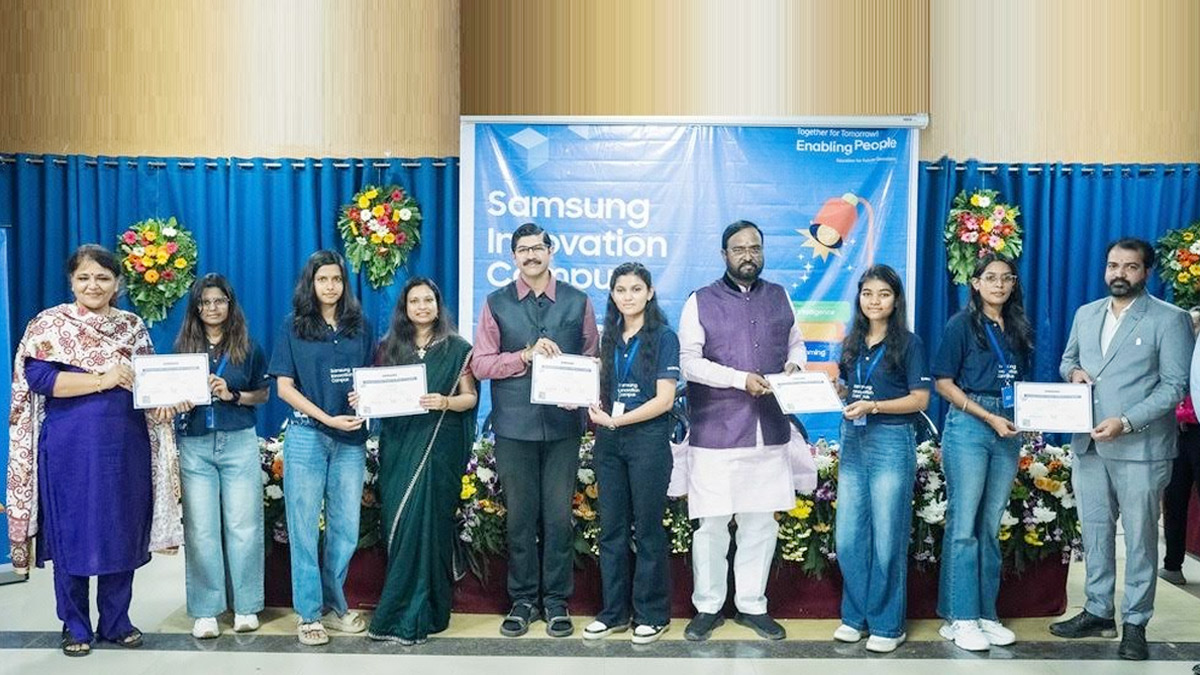
PUNE: Samsung has put 1,000 students in Maharashtra through a certified training programme in artificial intelligence and coding, the largest such drive the South Korean electronics company has run in the state and a signal that corporate India’s skilling ambitions are moving well beyond the boardroom brochure.
The certifications were awarded under Samsung Innovation Campus (SIC), the company’s flagship corporate social responsibility programme, which launched in India in 2022 with the stated aim of democratising access to future-technology education. The 1,000 graduates were drawn from four institutions: 127 from Savitribai Phule Pune University, 373 from Pimpri Chinchwad University, 250 from D.Y. Patil University’s Ramrao Adik Institute of Technology and 250 from Anjuman-I-Islam’s Kalsekar Technical Campus. All completed training in either AI or coding and programming, the two disciplines Samsung has identified as the critical pillars of the digital economy.
The programme does not stop at technical training. Soft-skills development and career-readiness modules are baked into the curriculum, a deliberate attempt to close the gap between what universities teach and what employers actually want.
“India’s digital growth story will ultimately be shaped by the quality of its talent pipeline,” said Shubham Mukherjee, head of CSR and corporate communications at Samsung Southwest Asia. “As technologies like AI move from the periphery to the core of industries, skilling must evolve from basic training to building real-world capability. This milestone in Maharashtra reflects how industry and academia can come together to create a future-ready workforce that is both globally competitive and locally relevant.”
The Maharashtra drive sits within a rapidly scaling national effort. Samsung Innovation Campus trained 20,000 young people across India in 2025, hitting its stated target for the year. Women account for 48 per cent of national enrolments, a figure the company cites as evidence of its push for an inclusive technology ecosystem. The programme is implemented in partnership with the Electronics Sector Skills Council of India and the Telecom Sector Skill Council.
Samsung, which is marking 30 years in India this year, runs SIC alongside two other initiatives, Samsung Solve for Tomorrow and Samsung DOST, as part of a broader effort to build what it calls a generation of innovators with both the technical depth and the problem-solving mindset to thrive in a fast-moving digital world.
A thousand certified students is a tidy headline. Whether they find jobs that match their new skills is the harder question, and the one that will ultimately determine whether corporate skilling programmes like this one are genuine pipelines or well-photographed gestures.






