MAM
Celeb endorsements of tobacco products- On whom does the onus lie?

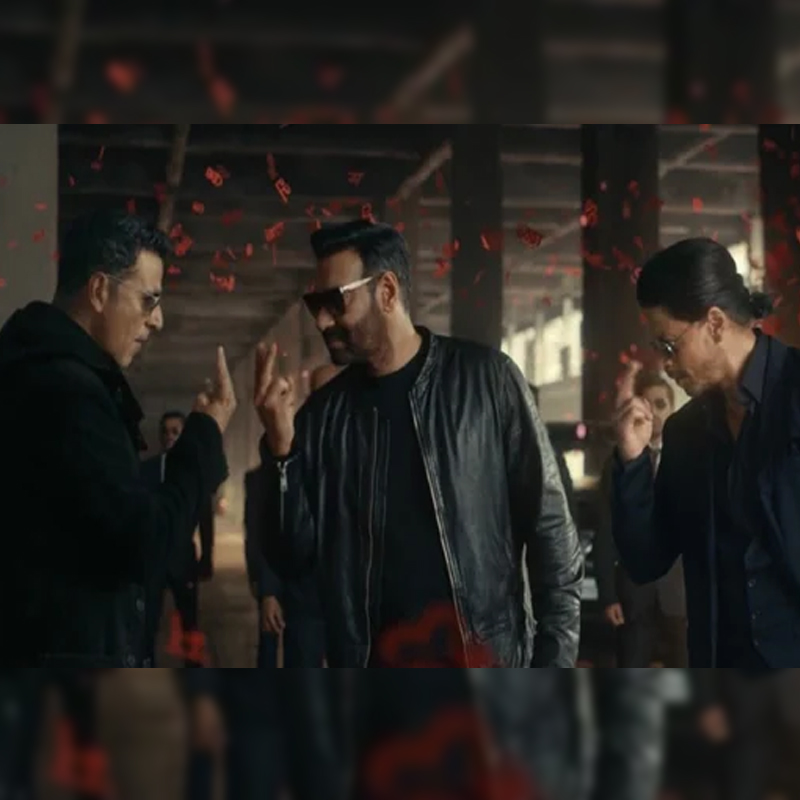
Mumbai: With the ‘World No Tobacco Day’ well and truly behind us, it is perhaps time to chew on the undeniable reality that pan masala is among India’s biggest industries, with a market estimated at over Rs 40,000 crore. According to a recent report by Expert Market Research, aided by vigorous marketing campaigns by the industry players, the market is expected to witness further growth and is projected to reach well above Rs 70,000 crore by 2026. Despite an existing ban on direct tobacco advertisements, celebrity-led advertising is immensely popular among these brands that collectively spend hundreds of crore rupees on advertising via surrogate means, with several A-listers of Bollywood routinely featuring in pan masala ads.
The recent list of celebrity endorsers of premium pan masala brands includes names such as Amitabh Bachhan, Akshay Kumar, Ajay Devgn, Shah Rukh Khan, Ranveer Singh, Saif Ali Khan, Hrithik Roshan, Priyanka Chopra Jonas and Anushka Sharma, among others who currently or at some point endorsed brands like Vimal, Signature, Baba Elaichi and Pan Bahar. The association has drawn much censure for the actors from netizens & general public for promoting tobacco products via surrogate advertisements. Following backlash from fans, Amitabh Bachhan and most recently, Akshay Kumar withdrew their endorsements.
Recently, a case was also filed against actors Shah Rukh Khan, Ranveer Singh, Ajay Devgn and Amitabh Bachchan for promoting these unhealthy tobacco products.

In this scenario, the question arises: On whom does the onus lie? Is it on the celebrity brand endorsers who perhaps owe a moral/ethical responsibility to their fans? Or, is it on the policy makers for allowing such thinly veiled surrogate ads for tobacco products in the first place, by seemingly turning a blind eye? Should the laws be made more stringent on such advertisements, with perhaps a blanket ban on tobacco promotions in all forms- surrogate or otherwise- being the only solution? We asked some marketing and advertising industry insiders for their take on the matter, and this is what they said.
According to Pulp Strategy founder and managing director Ambika Sharma, stars will get many offers but as part of their stardom, there is a responsibility toward the well-being of their fans. “The law does not prevent the advertising of surrogates, but the ethical compass should. In my opinion, the responsibility of the messaging lies with the delivery equally. Why just the stars, there is media also involved,” she says, adding that while the policy for surrogates is in place, the law should be changed based on the current needs and future assessments.” It should be expanded to cover all tobacco products including close monitoring of surrogates,” she believes.
Surrogate advertising, for the unversed, is a form of advertising which is used to promote banned products, like cigarettes/tobacco and alcohol, in the disguise of another product. Pan masala is a generic term for modern areca nut products that fall under the category of smokeless tobacco commodities. The pan masala industry is known to spend huge amounts on the promotion of these tobacco brands by adopting various marketing tactics.
According to Grapes executive creative director Priyank Narain, the very idea of surrogate advertising seems quite strange. “Everyone knows what’s being advertised. You may as well ban the brand being advertised or the actual product. This middle path is just a strange way for some people who want to earn money but also have a conscience.”
While acknowledging that celebrity brand endorsers do owe a lot to their fans, Narain asks why should the onus lie on the celebrities alone? “Doesn’t the government also have a moral responsibility towards the health of the nation? And if they do, why allow the manufacturing and sales of such products in the first place?.” Adding that, “if the government is fine to have these products manufactured because it can earn some money, it should be fine for a few celebrities to earn a little more.”
Citing Akshay Kumar’s example who initially made big promises of never endorsing a tobacco brand only to then appear in one, Narain says that it’s obvious “we are living in times where profits and economics make more sense than anything else and morals are low. Hence, it’s up to the consumer to be smart enough and make a conscious decision.”
Akshay Kumar is the latest entrant in the Vimal universe. After the Bollywood actor featured in the pan masala brand’s latest ad, alongside Devgn and Khan, he was heavily trolled for going back on his earlier stance of never endorsing harmful products such as gutkha.
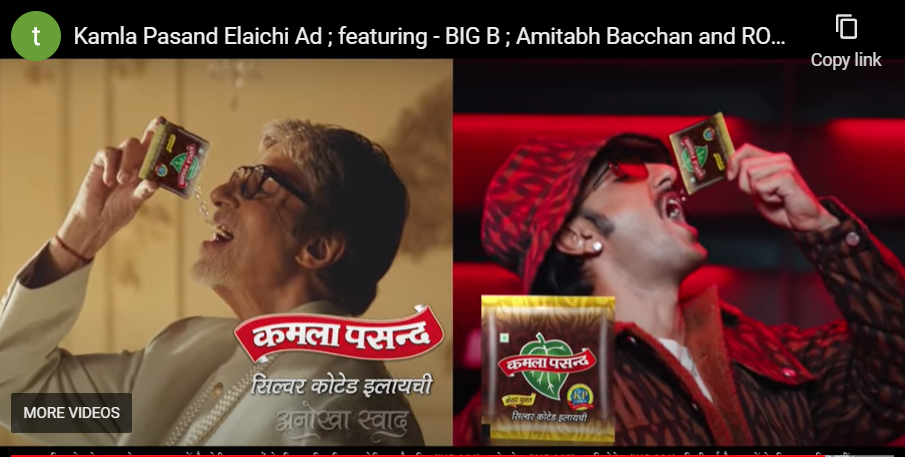
Earlier last year, Megastar Amitabh Bachchan faced flak for featuring in an advertisement for pan masala brand, Kamla Pasand, following which the big B announced his withdrawal from the advertising campaign. Bachchan initially defended his stance, calling it part and parcel of the entertainment business that employs many but later backtracked. The move came after the national anti-tobacco organisation also requested him to refrain from endorsing pan masala as it could help prevent youngsters from getting addicted to tobacco.
Thought blurb Communications managing director and CCO Vinod Kunj, strongly believe, “there should be a blanket ban – not on the advertising, but the manufacturing and sale of all tobacco products. Until that decision is taken these futile debates and arguments will continue.” However, he feels that will not happen, “because, that would mean a huge drain on the coffers of the people who make these quixotic policies.” They compensate for that by making surrogate terms and conditions whose very purpose is for them to be circumvented, he continues, questioning, “why to blame hapless stars and starlets when our policies are dystopian in the first place.”
On the flip side, Jigsaw Brand Consultants founder Rutu Mody Kamdar doesn’t think it is a lawmaker’s job alone to impose a blanket ban. Lawmakers are one stakeholder who can create guardrails but it is a multi-pronged approach to deal with this issue with various people committing to do their bit, she feels, adding that the onus lies on everyone. “On account of a flourishing industry, there are multiple stakeholders who are choosing to benefit. But on account of a larger societal and ethical issue which honestly is everyone’s responsibility, the brands, celebrities, media and consumers are all responsible for propagating it in some way or the other,” she explains.
What does the law say?
By law, tobacco advertising is not allowed. The Cigarettes and Other Tobacco Products Act, 2003 or COTPA, 2003 is an act of Parliament of India enacted in 2003 to prohibit the advertisement of, and to provide for the regulation of trade and commerce in, and production, supply and distribution of cigarettes and other tobacco products in India.
The ad industry regulator Advertising Standards Council of India’s (ASCI) guidelines also clearly state that celebrities should not participate in advertisements for products that by law require a health warning in their ads or packaging.
While this debate can go on and on, Zee Studios head marketing Neeraj Joshi believes that bans are not a solution. “Bans are usually against the grain of democracy and defeat the purpose of a competitive market. If the product is being sold, banning its communication is not necessarily going to curb consumption.” And product bans don’t achieve much and possibly cause more harm; as in the case of Bihar, he adds.
According to Joshi, in an open market scenario, celebrity endorsements are bound to be aggressively pursued by brands. “Celebs endorse a range of products and services. Making them accountable for everything is a bit unfair.” Such a thought process also “infantilizes the consumers,” he concludes.




MAM
Lego brings Messi, Ronaldo, Mbappé, Vinicius together
Campaign clocks 314 million views ahead of FIFA World Cup 2026 buzz.
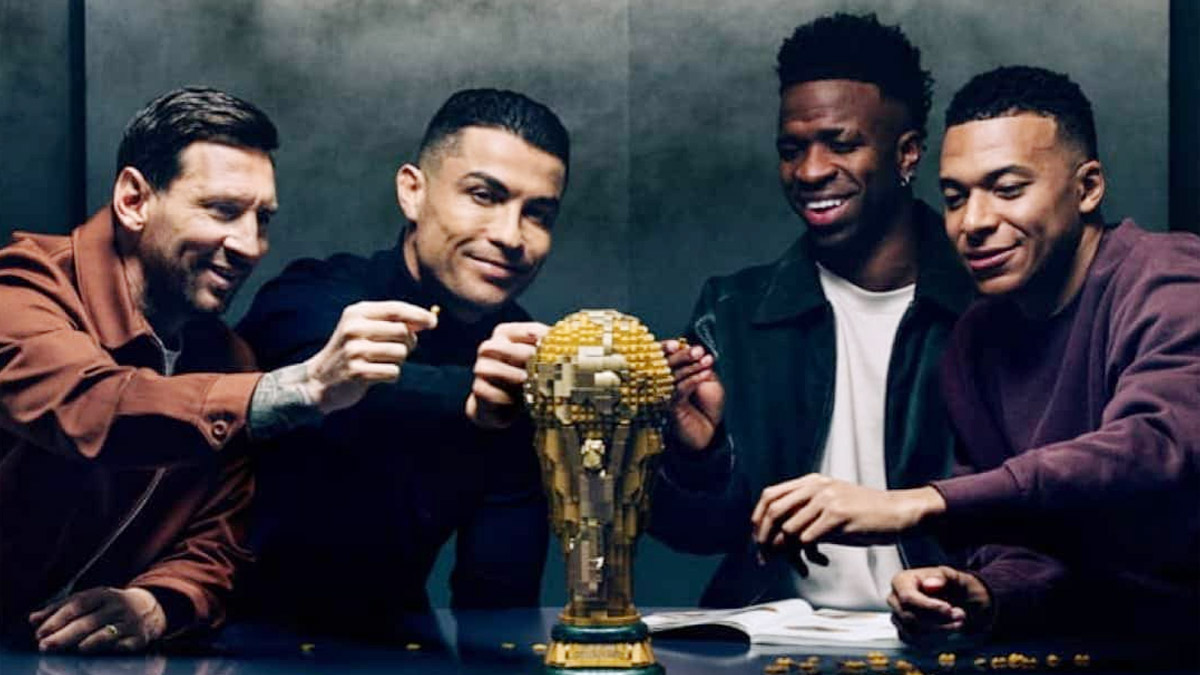
MUMBAI: Four legends, one frame and not a single tackle in sight. Lego has pulled off a crossover few thought possible, uniting Lionel Messi, Cristiano Ronaldo, Kylian Mbappé and Vinícius Júnior in a single campaign ahead of the FIFA World Cup 2026 only this time, they’re building dreams brick by brick.
Titled “Everyone wants a piece”, the campaign features the quartet assembling a Lego version of the World Cup trophy, before placing miniature versions of themselves atop it, a playful nod to football’s ultimate prize. Shared widely across social media, the ad carries a pointed disclaimer: it is not AI-generated, a subtle but telling signal in an era where even reality is often questioned.
The numbers tell their own story. The campaign has already crossed 314 million views on Instagram across the players’ accounts, with fans hailing it as a rare, almost nostalgic moment particularly for the reunion of Messi and Ronaldo, whose last shared campaign ahead of the 2022 World Cup became one of the platform’s most-liked posts.
Beyond the film, Lego is extending the play with exclusive, player-themed sets tied to each of the four stars, part of a broader football-led programme designed to ride the global momentum building towards 2026. The idea, as echoed by the players themselves, leans into the parallels between football and play experimentation, creativity, failure, and triumph.
Messi described the sets as a way to bring on-pitch moments into an imaginative, hands-on world, while Ronaldo called the transformation into a Lego figure a rare honour, blending sport with storytelling. Vinícius, meanwhile, struck a more personal note, recalling childhood moments of building with Lego and framing creativity as a universal language that transcends borders.
The timing is no accident. With the 2026 World Cup set to run from June 11 to July 19 across the United States, Canada and Mexico, and featuring an expanded 48-team format, global anticipation is already building. Argentina, led by Messi, will enter as defending champions, adding another layer of intrigue.
For Lego, the campaign does more than celebrate football, it taps into its mythology. Because when icons become figurines and rivalries turn into play, the beautiful game finds a new kind of pitch. one built, quite literally, by hand.






