MAM
Cannes Lions 2014: HUL’s ‘Kan Khajura Tesan’ campaign brings glory to India!


MUMBAI: While there have been many discussions around the reach and effectiveness of mobile in the marketing eco-system, not many brands have captivated this platform for impressive communication.
Looks like it’s time to rethink. HUL has gone ahead to prove that mobile marketing in India too can create a lot of noise. ‘Kan Khajura Tesan,’ a campaign rolled out by HUL was an effort to reach out to the media dark areas. ‘The Kan Khajura Station’ a 15 minute free, on-demand, entertainment channel introduced by HUL was a service where people could call and get entertained for free.
The brand created a new media through a rudimentary mobile phone that brought people out of media darkness and connected them with the world. According to the brand, this activity was done at a cost of under 4 US cents per person. This campaign was executed in Bihar and Jharkhand.


This particular work bagged a Gold in Mobile Lions category at Cannes this year. This is the first time an Indian mobile marketing campaign has received a Lion in this category. Introduced in 2012, the mobile category rewards the best creative work which lives on or is activated by a mobile device, app or mobile web.
The creative agency for this campaign was Lowe and Partners, India, while PHD India was the media agency. Lowe and Lintas which submitted this work under the Mobile Lions got a Gold.
It can be noted that for this campaign both PHD India and Lowe & Partners have been listed as winners in Media Lions category too. The two Gold Lions have been won under the sub-categories of use of audio and use of mobile devices.
Another work that bagged a Bronze Media Lion is O&M campaign for The Akanksha Foundation (Schools). Overall, 92 Media Lions were given away. McCann Lima’ ‘Happy ID’ campaign for Coca Cola grabbed the Grand Prix in this category.
In the outdoor category McCann Worldgroup India bagged two Silver and two Bronze Lions. The Silver Lion was awarded for the campaign for Big Babol’s ‘Tangerine’, ‘Mango’ and ‘Pear’ entries. The agency won two bronze Lions for Premier Kitchen Tissues’ ‘Cat’, ‘Bear’ and ‘Camel’ campaign series.
|
|
|
|
|
|
|
|
|
|
|
|


A total of 129 awards have been given in Outdoor Lions this year. Whybin/TBWA Group Melbourne won the Grand Prix for its entry ANZ Gaytms for ANZ Bank under this category.






Brands
Google secures AP discom licence to power $15bn Vizag AI hub
First-of-its-kind move gives tech giant grid control for massive 1GW campus
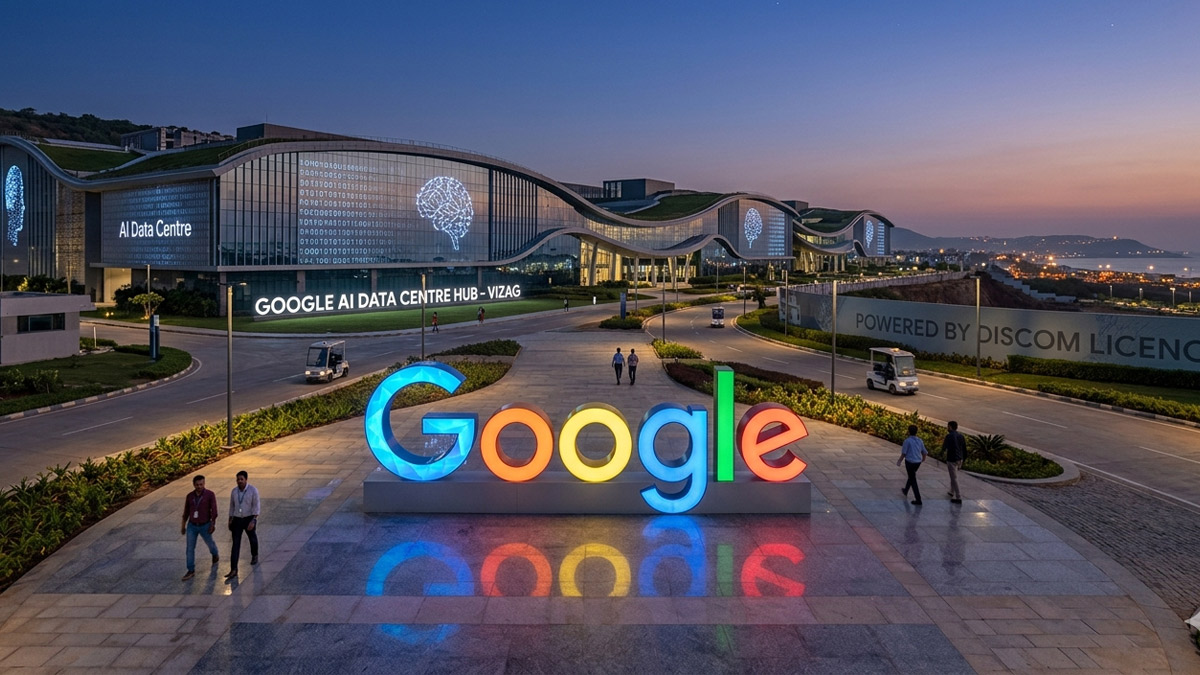
VISAKHAPATNAM: Google has secured a rare electricity distribution company licence in Andhra Pradesh, marking a decisive shift from being just a power consumer to becoming a power distributor for its upcoming mega data centre hub in Visakhapatnam.
The move effectively rewrites the rulebook for hyperscalers in India. Instead of relying on state utilities, Google will be able to procure electricity directly from generators, including its own renewable sources. This not only cuts out intermediaries but also gives the company tighter control over supply, reliability and long-term costs.
For a business where electricity can account for up to 60 per cent of operating expenses, the economics are hard to ignore. Even more critical is uptime. Data centres demand near-perfect reliability, and owning the distribution layer allows Google to manage outages and load balancing with far greater precision.
At the heart of the plan is a sprawling 1-gigawatt data centre ecosystem spread across more than 600 acres in three locations near Vizag. With an estimated investment of $15 billion over five years, the project is set to become India’s largest single foreign direct investment and Google’s biggest AI-focused facility outside the United States.
The campus is being designed with artificial intelligence workloads in mind, housing the company’s custom tensor processing units to power services such as Gemini, Search and Google Cloud. In scale, the planned capacity is comparable to powering a small city.
Google is not building alone. It has partnered with Adani Infrastructure to develop the physical campuses, while Bharti Airtel will set up an international subsea cable landing station. This connectivity backbone is expected to link the hub directly to a dozen countries, ensuring low latency for global data traffic.
Vizag’s coastal location plays a key role in that strategy. It enables direct access to subsea cables and provides the large volumes of water needed for cooling data centre operations. Equally important is policy backing from the Government of Andhra Pradesh, which fast-tracked approvals and granted the uncommon discom licence to anchor the investment.
Groundbreaking is scheduled for April 28, 2026, with phased commissioning expected to begin by July 2028.
The broader signal is clear. As AI workloads surge, hyperscalers are no longer content plugging into existing infrastructure. They are beginning to build and control it. In Vizag, Google is not just setting up a data centre, it is wiring up its own future.







