MAM
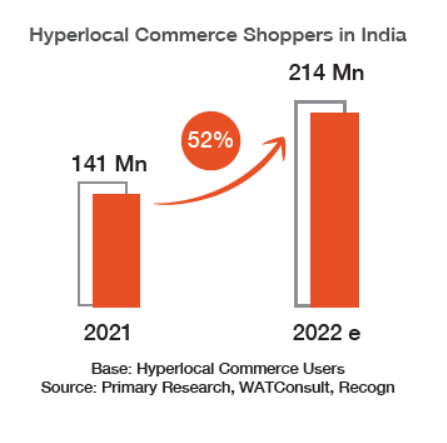
By 2022, hyperlocal commerce shoppers to grow by 52% to reach 214 mn: WATInsights


Mumbai: WATConsult, an Isobar Company and the globally awarded hybrid digital agency from dentsu India, has released the fifth report of WATInsights – digital commerce series. Titled ‘Digital Commerce in India – Hyperlocal Commerce’, the report is by WATConsult’s research division, Recogn. The report shares insights on the demand for hyperlocal delivery, the effects of the pandemic on the hyperlocal usage and captures the benefits & challenges of the model.
The hyperlocal space has seen a rise in the number of niche brands across categories like home décor, home services, groceries, essentials and pharmaceutical sectors. Since the country has witnessed growth, traditional brands have shifted their focus towards hyperlocal and direct-to-consumer business models. This transition has been accelerated further due to increased internet usage and evolved consumer behaviour.
It is pertinent to note here that the hyperlocal approach enables the brands to reach out to their target customers directly, removing the middlemen and retail stores as part of the traditional business model. This provides customers with a better shopping experience as it offers convenience and quick delivery, especially in the areas of logistics, food, pharmaceutical and groceries. Some examples of hyperlocal commerce include Dunzo, 1mg, UrbanCompany, BigBasket, to name a few.

According to the report, this format of e-commerce has seen a huge surge of customers in both metros and beyond. Currently, there are around 141 million hyperlocal commerce shoppers in India, which is 48 percent of all e-commerce users. This number of hyperlocal commerce shoppers will increase by 52 percent to reach 214 million by the end of 2022.
 The report further reveals that while Zomato tops the list of the most used hyperlocal apps, SwiggyGo, Amazon Fresh & BigBasket are some of the popular choices among consumers. This is followed by 1mg, Grofers and UberConnect.
The report additionally sheds light on the consumer demographic of the hyperlocal commerce users. While most females have used services from Zomato, BigBasket and Grofers, some males have used services like Zomato, SwiggyGo, BigBasket and 1mg, highlighted the study. On the other hand, the majority of young customers belonging to the age groups of under 18 years, 18 years to 24 years and 25 years to 34 years, have been seen using Zomato, SwiggyGo, and Amazon Fresh.
Commenting on the latest issue of WATInsights – Digital commerce in India – Hyperlocal commerce, Isobar India group CEO Heeru Dingra said, “Hyperlocal businesses have been rapidly growing with the potential of expanding exponentially. There has been an increase in the number of brands emerging in this space and it will consolidate even further, over the next few years. Hyperlocal’s collaboration with local stores and the connection they build with their customers digitally is benefitting all the stakeholders as now they are all connected to the supply chain model.”
The hyperlocal space has seen a rise in the number of niche brands across categories like home décor, home services, groceries, essentials, and pharmaceutical sectors. Since the country has witnessed growth, traditional brands have shifted their focus towards hyperlocal and direct-to-consumer business models. This transition has been accelerated further due to increased internet usage and evolved consumer behaviour.
WATConsult managing partner Sahil Shah added, “Businesses, more than ever, are leveraging digital channels to reach out to consumers with a faster go-to-market, controlled brand perception, and increased direct-to-consumer (D2C) interactions. The pandemic has impacted many sectors and as a result, India’s retail market has gone through many changes; the biggest change being the adoption of technology in enabling more digital touchpoints. Amidst this shift, hyperlocal has been one of the top priorities for all D2C brands as well as marketplace-heavy businesses. This new model of hyperlocal has enabled local retailers to increase their market share. Especially the FMCG brands have been able to push their inventories and effectively scale the business.”
It is pertinent to note here that the hyperlocal approach enables the brands to reach out to their target customers directly, removing the middlemen and retail stores as part of the traditional business model. This provides customers with a better shopping experience as it offers convenience and quick delivery, especially in the areas of logistics, food, pharmaceutical, and groceries. Some examples of hyperlocal commerce include Dunzo, 1mg, UrbanCompany, BigBasket, to name a few.




Brands
ITC Sunfeast Farmlite launches Sugar Free Cookies range
New variants offer guilt-free indulgence for health-conscious snackers.
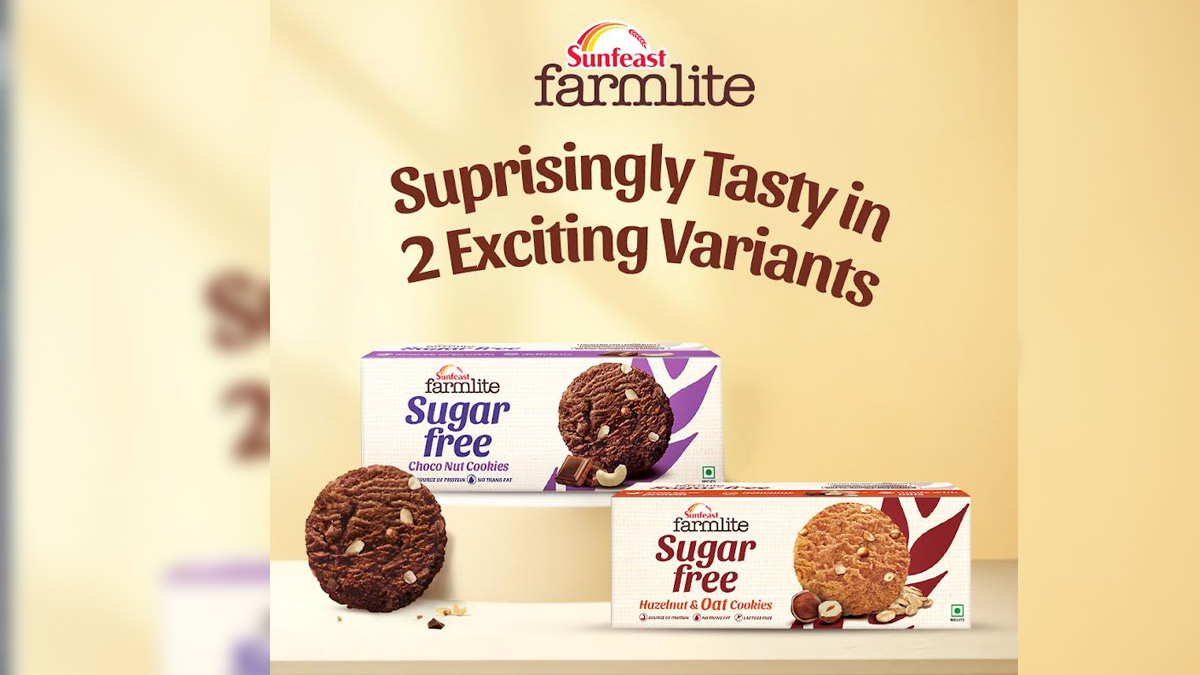
MUMBAI: ITC Sunfeast Farmlite is sweetening the deal for biscuit lovers who want to have their cookie and eat it too without the sugar. The better-for-you biscuits range from ITC Foods has expanded its portfolio with the launch of an all-new Sugar Free Cookies line, aligning with the company’s vision of ‘Help India Eat Better’. The range is designed for consumers who are rethinking sugar in their daily snacking but refuse to compromise on taste and indulgence.
The collection debuts with two tempting variants: Choco Nut Cookies and Hazelnut & Oats Cookies. Both are a source of protein and contain no trans-fat, while the Hazelnut & Oats variant is also lactose-free.
ITC Ltd. vice president (marketing), biscuits, foods division, Suraj Kathuria said, “At Sunfeast Farmlite, we believe mindful snacking should never come at the cost of indulgence. With this launch, we are catering to the growing need for guilt-free snacking while delivering a rich, satisfying cookie experience.”
ITC Ltd. vice president & head of food sciences for foods division Dr Shantanu Das added, “We have applied robust food science to develop cookies that are sugar-free while preserving the taste and texture consumers love.”
Each cookie comes in convenient single-serve packs to maintain texture and freshness. Both variants are available in 100g packs priced at ₹100 and can be found on quick-commerce platforms including Blinkit, Swiggy Instamart, and Zepto.
In a market increasingly leaning towards healthier choices, ITC Sunfeast Farmlite’s new Sugar Free Cookies prove that cutting sugar doesn’t mean cutting joy. For the health-conscious yet indulgent snacker, this could be the perfect bite-sized solution.






