Ad Campaigns
Bumble unveils bold new brand identity and global marketing campaign

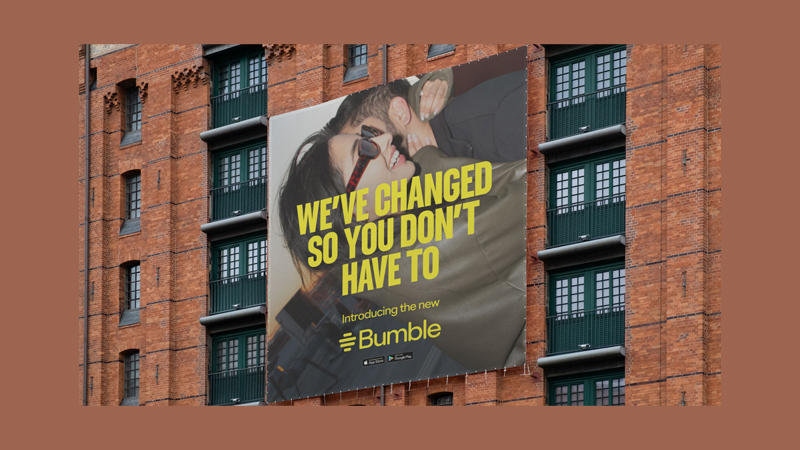
Mumbai: Women-first dating app Bumble has unveiled a refreshed visual identity and a new global campaign, underscoring the company’s continued commitment to making dating better for women. The campaign coincides with the dating app expanding upon its signature ‘Make The First Move’ functionality with the launch of Opening Moves.
After a decade of revolutionizing the way women date, Bumble is stepping into an exciting new era by launching a feature that gives women more choice in how they make romantic connections. Opening Moves gives women the option to set a question that their matches can respond to, adding more ways to open a conversation while keeping women in control. Women can use one of Bumble’s recommended Opening Moves, or craft their own. According to Bumble’s research*, nearly half of women (46 per cent) surveyed on Bumble shared that having more ways to start a conversation would make their dating app experience even better.
This brand and product evolution marks a pivotal moment for Bumble, brought to life by a global marketing campaign with high-impact digital and physical out-of-home (OOH) in more than 10 countries, with messaging such as “We’ve changed so you don’t have to.” Bumble’s campaign also features a new video that recognizes the exhaustion some women feel with online dating when their needs and experiences are not prioritized, and the women-first solution Bumble provides.

“We have always taken our lead from the amazing women in our community. Today, they are looking for more choice and ease in their dating life and with the launch of Opening Moves, Bumble is continuing to put women’s experiences first,“ said Bumble’s chief marketing officer Selby Drummond. “With this new global campaign, we wanted to take a fun, bold approach in celebrating the first chapter of our app’s evolution and remind women that our platform has been solving for their needs from the start. As we roll out these exciting updates to our product, our core principle remains the same: empowering women in every connection and in every relationship.”
In the days leading up to the announcement, Bumble teased the global launch with a renaissance-style campaign hinting at the fatigue some women feel online dating. This teaser campaign also featured larger-than-life cloud-themed beds via augmented reality, nodding to the campaign’s tired theme, short-form content, projection mapping of the ads onto landmark locations, and social media memes.
Closer to home in Asia, the same teaser video was featured on @bumble_india’s Instagram, and the account’s profile picture was changed to an imagery of a ‘sleepy girl’. The campaign also features ‘Flip It’, a video hinting at the new changes coming up to enhance women’s online dating experiences, while still keeping them in control. In India, the launch will be featured in an OOH campaign in the later half of May in Mumbai, over Bandra’s biggest signal and wrapping up malls like DLF Cyber City, and DLF Promenade in New Delhi.
Bumble is also rolling out a new app identity which includes a new logo, bolder fonts, and refreshed colors and illustrations. Bumble’s data shows that three in four* (75 per cent) women surveyed say the look and feel of a dating app is important to their overall experience and 65 per cent say that the visual identity of a dating app can make it easier to use.
The global campaign and new app design was executed in-house by Bumble’s creative studio.
*All data was commissioned by Bumble of 6,138 women on Bumble globally ages 23-35 between 5-12 April 2024.






NATIONAL: Amazon Ads has laid out a sharply tech-led vision for the advertising industry in 2026, arguing that artificial intelligence, streaming TV and creator partnerships will combine to turn brand building into a more precise, performance-driven business.
At the heart of the shift, the company says, is the fusion of AI with Amazon’s vast trove of shopping, browsing and streaming signals, allowing advertisers to move beyond blunt reach metrics to campaigns designed around real customer behaviour.
“The future of advertising is not about reaching more people, but the right people with messages that resonate,” said Amazon Ads India head and vice president Girish Prabhu. “By combining AI with deep customer insights, we help brands move from broadcasting campaigns to having meaningful conversations wherever audiences spend their time.”
One of the biggest changes, according to Amazon Ads, will be the collapse of the wall between media planning and creative development. Retail media, powered by first-party data, is increasingly shaping everything from brand discovery to final purchase, pushing marketers to design campaigns around audience insight rather than internal instinct.
AI is also moving from a support tool to a creative engine. Agentic AI, which automates and accelerates production, is expected to make high-quality creative accessible even to small businesses, compressing weeks of work into hours and giving challengers the ability to compete with larger brands on speed and scale.
Behind the scenes, AI-driven analytics will take on a bigger role in campaign optimisation, identifying patterns, spotting opportunities and recommending actions that would previously have required teams of analysts.
Streaming TV is another big battleground. With India’s video streaming audience now above 600 million and connected TV users at 129.2 million in 2025, advertisers are set to treat streaming not just as a branding channel but as a performance engine, measured increasingly by sales, sign-ups and bookings rather than just reach.
Finally, Amazon Ads sees creators and contextual advertising reshaping how brands tell stories. Creators will act less like influencers and more like long-term partners, while scene-aware ads on streaming platforms will allow brands to insert hyper-relevant offers into the flow of what viewers are watching.
Taken together, Amazon Ads argues, these shifts mark a move towards advertising that is both more human and more measurable, where AI handles the complexity, and creativity does the persuading.






