MAM
Broadcasters want Trai to reinitiate dialogue on ad regulation

NEW DELHI: Worried about the implications of the Telecom Regulatory Authority of India‘s (Trai) ad regulation policy on their business models, television industry‘s apex body Indian Broadcasting Foundation (IBF) has urged the government to engage in discussion with the stakeholders of the broadcast industry and roll back the regulation for the time being.
The IBF suggested that like content the government should encourage self-regulation that is in line with global standards rather than pushing the regulation down the throats of broadcasters who are already reeling due to ad slowdown.
“IBF calls for withdrawal of the notification and re-initiation of a participatory dialogue that helps make self-regulation of advertising minuteage in line with global standards a reality,” the IBF said in a statement.

It added, “The IBF has been working with Trai over the last several months to arrive at a way forward on the quantum of advertising duration. Its fundamental stance has always been to self-regulate, aligned with globally practiced standards.”
The IBF said that the industry is in agreement with the objective of the regulation that is better viewing experience for consumers without being frequently disrupted by advertisements, but the regulation must take into account the economic sustenance of the broadcast business.
“The staging of doing this has to be in line with economic sustenance of the broadcasting business and is best aligned to the full value of digitisation becoming a reality.”
The broadcast industry is still dependent on ad revenue as the primary source of income and the trickle down benefits of the much-hyped cable digitisation has not yet been realised even as carriage fees continue to be a burden.
“The trickle back effect from the first stage of digitisation is yet to begin. Carriage fees introduced in 2008 remain a burden, especially for the more than 500 smaller channel operators. Cable TV tariffs remain frozen at 2005 rates. HD TV and pay channel revenues are just about beginning to happen and will take time to start providing economic value.
Unless these issues are dealt with by the government it would be unfair on part of the government to bring ad regulation as the business model of broadcasters would go haywire.
“These factors need concomitant addressing. Regulation on just advertising minuteage will have a severe impact on the survival of the broadcasting industry from amputation of a critical arm of the fourth estate,” the IBF averred.
It opined that the broadcasting industry is yet to fully recover from the shocks of 2008 recession that had slowed down ad growth.
“Like several industries that continue to reel from the after effects of the global economic recession, India‘s television broadcasting industry has been suffering too. The industry is largely dependent on advertising revenues for its economic sustenance,” the IBF contended.
The Trai had on 22 March notified the Standards of Quality of Service (Duration of Advertisement in Television Channels) that caps the ad duration at 12 minutes per hour. The authority had even amended the main regulation that was issued on 14 May last year.
The amended version of the regulation was watered down by doing away with clauses but that has still not helped in pacifying the broadcasters who have united to pressure the Trai to halt the implementation of the ad regulation.






MAM
Crocs and Lego launch new collaborative collection in India
Iconic brands bring playful creativity to footwear with first drop on 13 April 2026.
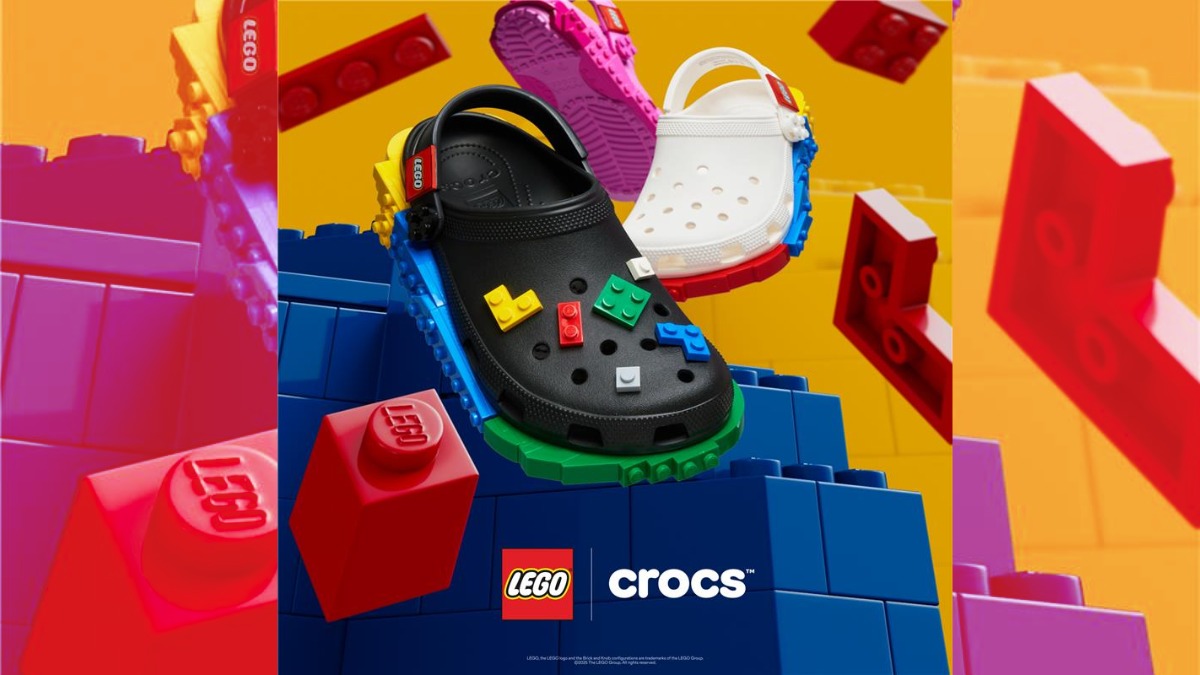
MUMBAI: Crocs and Lego have clicked together once again and this time, the bricks are heading straight for Indian feet. The global footwear brand Crocs has announced the India launch of its latest Crocs x Lego Group collection, following the excitement of their multi-year global partnership unveiled earlier this year. The collaboration celebrates creativity, play, and individuality, merging Crocs’ signature comfort with Lego’s iconic building-block spirit.
The collection will roll out in two phases. A digital-exclusive pre-launch begins on 13 April 2026 on crocs.in, featuring four styles: the Lego Masterbrand Creativity Clog, Lego Midnight Garden Creativity Clog, Lego Creativity Clog, and Kids’ Lego Creativity Clog. Each pair purchased during this phase will include an exclusive Lego minifigure as a collectible bonus.
From May 2026, the full collection will be available across select Crocs stores, VegNonVeg, and Foot Locker outlets nationwide.
The designs playfully blend Crocs’ classic clog silhouette with Lego brick-inspired details, complete with custom Jibbitz charms on the upper and sole. The collection encourages wearers to treat their footwear as a canvas for personal expression, without any set instructions just an open invitation to build, explore, and have fun.
Crocs chief marketing officer Carly Gomez said, “The Lego Group’s boundless imagination makes them the perfect match to Crocs’ wonderfully unordinary spirit. We are both brands that pride ourselves on being built different, celebrating self-expression and fuelling creativity.”
LEGO Group, head of licensing & extended line design & partnerships Satwik Saraswati added, “Our common mission to enable self-expression and wear it with pride only marks the beginning of a journey with endless possibilities.”
The campaign will extend beyond the product launch through creator-led seeding, elevated visual merchandising, and exclusive on-ground previews, supported by a deeper partnership with the Lego India team.
In a market that loves both comfort and fun, Crocs and Lego have built something special, a collection that lets every step feel like playtime. Get ready to click your heels (or rather, your clogs) because this collaboration is set to be a blockbuster hit with Indian fans.