MAM
Broadcasters get breathing space as Tdsat stays Trai’s ad cap rule

MUMBAI: Broadcasters have earned a five-week vacation from the upsetting regulation of limiting ad time on their networks, as Tdsat has stayed the Trai notification till the hearing comes up on 17 July.
For a while, broadcasters will at least not have their ad revenues hanging by a thread, its future determined by a 12-minute ad cap per hour fixed by the Telecom Regulatory Authority of India (Trai). Stressed by a slowdown in the ad economy and anxious about the implementation of cable TV digitisation, the least they want to do is cut down on commercial time and take up the troublesome task of upping advertising rates.
True, none of the broadcasters are willing to obey the Trai order as they feel that the broadcast watchdog is overreaching its powers by regulating TV ad time.

Still, the Tdsat’s stay order comes as a major source of relief at a time when the least that the media industry wants is more headaches.
“We got a stay from the Telecom Disputes Settlement and Appellate Tribunal (Tdsat) today. The hearing is due mid-July,” says Star India chief executive officer Uday Shankar.
News broadcasters have horrible woes. If there is a way for them to wriggle out of the mess that they have themselves created by coughing out high distribution costs, cutting ad rates amidst competition amongst themselves and living under high staff costs, it is by giving more commercial time to advertisers.
Hindi TV news, the most fragmented of the lot, dedicates on an average 20-24 minutes of ad time per hour. Even with this abundant supply, news broadcasters find their ad revenues crawling at below 10-per cent growth and their profitability under attack.
Zee News Ltd (ZNL) chose a different path to tread this year, cutting the commercial time of its flagship Hindi news channel, Zee News, by 30 per cent while upping the ad rates by 40 per cent. However, the ‘Maximum News, Minimum Break‘ journey from 2 April has been a bumpy one.
“The ratings have not seen much impact. And we have ended up producing more content. Perhaps, this experiment needs more time to yield results. We will wait for a couple of quarters more before we take a call on whether we want to go back to our old route,” says Zee News Ltd chief executive Barun Das.
Let‘s not forget that Zee News’ slash in ad time of eight minutes for every half-hour slot is still above the ceiling of Trai’s prescription of 12 minutes of commercial time per clock hour. So imagine the misery news broadcasters will be in if they have to swallow Trai‘s medicine!
In the tangled financial problems that the news broadcasters face, it is the timing of Trai’s regulation that comes under question. News channels need more time to weed out the ad inventory flab that they have created due to economic compulsions, much to the irritation of the TV audiences.
Says TV Today Network CEO Joy Chakraborthy, “Trai’s so-called radical step would jeopardise the business models of news channels. Less ad time would mean more content costs. Besides, scaling back on ad inventory by 40 per cent (from our average of 20 minutes per hour to 12 minutes) would mean demand outstripping supply and, hence, higher costs. This will discourage small and local advertisers, who form a fair bulk of clients for news channels, to come on board. These steps suggested by Trai should come when the digitisation rollout is complete. We can’t fight on all fronts.”
The ad time on news channels varies from month to month.TV Today Network, for instance, offered 22 minutes of commercial time per hour in March. This came down to 18 minutes in April.
News and sports broadcasters consider another regulation by Trai as retrograde at this stage of maturity: the ban on part-screen and drop-down advertisements.
“We use scrolls on a positive sense. For Olympics, we, for instance, will run scrolls. We earn Rs 120-140 million from the part-screen and drop-down ads,” says Chakraborthy.
Trai’s ad regulation will also pinch hard the sports broadcasters. According to the broadcast regulator’s prescription, the ads during live broadcast of a sporting event should be only during the breaks in the sporting action.
A clock hour measurement system, however, does not suit this genre of channels as live content is seasonal and limited to a specific period.
Entertainment TV networks have also objected against the capping of ad duration on their channels.
“It looks like Trai is linking digitisation to shrinkage of advertisement space. There is no logic in this and it is very untimely,” says the head of a broadcasting company on condition of anonymity.
Trai’s control in ad diet is something that TV viewers would, indeed, love to have. Broadcasters, however, feel that the best route to maturity is self-regulation in content and ad inventory management.
“Trai’s order is ridiculous. It is like putting the camel’s nose in the tent. Every independent player should decide on what course of action to take. Market forces know best how to play the balancing role,” says Times Television Network MD and CEO Sunil Lulla.





You have spent weeks researching, test driven a few options, finalised the colour and variant, and are now days away from taking delivery of your new car. It feels like the hard part is over. But there is one step that most buyers skip entirely, and it is the one that protects everything else. Understanding what PDI meaning covers and why it matters could save you from discovering a Rs 20,000 to Rs 80,000 problem after you have already signed the papers.
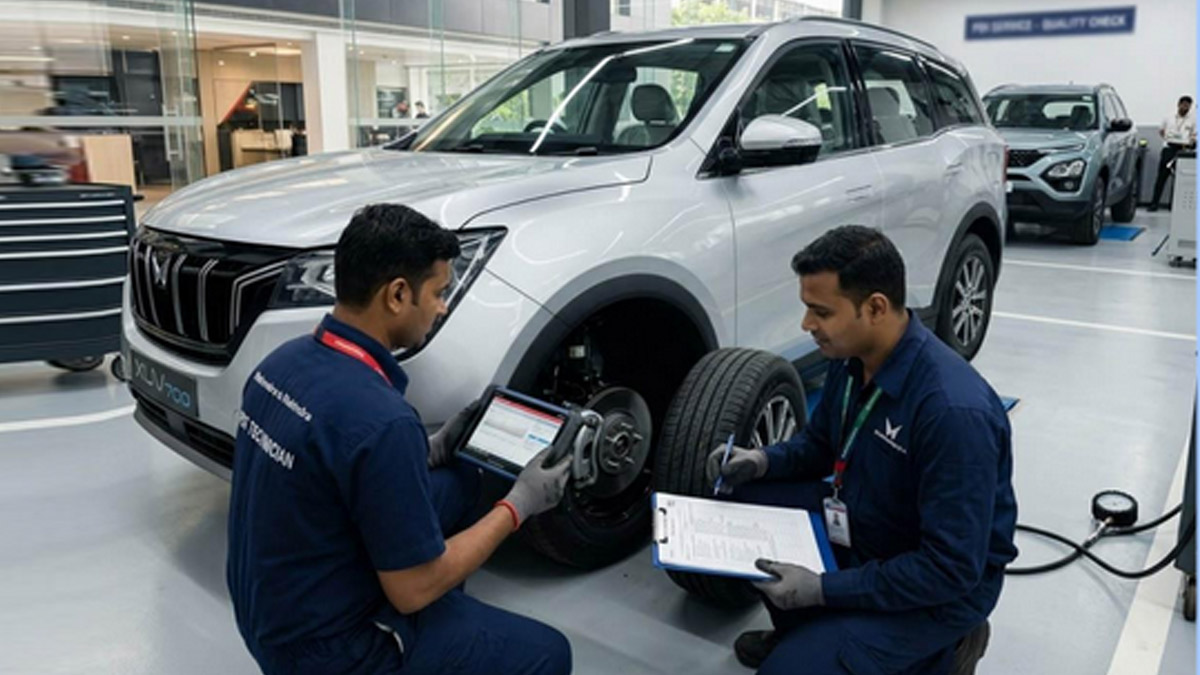
PDI stands for Pre-Delivery Inspection. It is a structured check that happens before your car is handed over to you. A proper PDI car service covers everything from paint quality and panel alignment to electrical systems, fluid levels and tyre pressure. Dealers are supposed to conduct this before delivery, but the depth of the check varies widely. And if the buyer does not know what to look for, problems slip through.
What Does a PDI Actually Cover?
A thorough PDI checks the car across four broad categories:
| Category | What Gets Checked | Common Issues Found |
| Exterior | Paint quality, panel gaps, glass, lights, tyres | Paint chips, uneven panel alignment, scratched glass |
| Interior | Seat upholstery, dashboard, AC, infotainment, switches | Loose trims, non-functional buttons, squeaks and rattles |
| Mechanical | Engine bay, fluids, battery, brakes, steering | Low fluid levels, minor leaks, battery not fully charged |
| Electrical | All lights, windows, central locking, sensors | Malfunctioning sensors, flickering displays, USB ports |
Each of these categories can hide issues that are minor at delivery but expensive if left unaddressed. A small paint chip near a door edge, for example, can lead to rust in a humid city like Mumbai or Chennai within 12 to 18 months.
What It Can Cost You to Skip the PDI
Here is a realistic look at what buyers have discovered after delivery that a proper PDI would have caught before:
• Paint defects requiring respraying: Rs 8,000 to Rs 25,000 depending on the panel
• Misaligned panels or doors that need workshop adjustment: Rs 3,000 to Rs 8,000
• Non-functional infotainment unit needing replacement: Rs 15,000 to Rs 40,000
• Scratched windshield that needs full replacement: Rs 6,000 to Rs 18,000
• AC not cooling properly due to low refrigerant: Rs 2,000 to Rs 5,000
• Tyre with a slow puncture from storage damage: Rs 3,000 to Rs 6,000
The total exposure from a single missed PDI can range from Rs 5,000 for minor issues to Rs 80,000 or more if multiple problems are found post-delivery. More importantly, proving that a defect existed before delivery becomes significantly harder once you have taken the keys.
Why Dealer PDIs Are Not Always Enough
Most dealerships do conduct a pre-delivery check on their own, but the process is not always as rigorous as it should be. There are a few reasons for this:
High Delivery Volumes
During festive season or at the end of a financial year, dealerships handle a surge in deliveries. When a service team is processing 15 to 20 cars a day, the depth of each check inevitably suffers.
Incentive Misalignment
Dealership staff are often incentivised on delivery speed and customer satisfaction scores. Finding a defect and sending a car back for rework delays delivery and affects scores. The incentive to look harder is not always present.
Buyer Unawareness
Most buyers arrive at delivery excited and in a hurry to leave. Without knowing what to look for, they miss things that a trained eye would catch immediately. Dealers know this, and the pressure to be thorough is lower when buyers are not asking questions.
What You Should Check Yourself at Delivery
Even if the dealer has completed their PDI, spend 20 to 30 minutes doing your own check at delivery. Here is a quick reference:
Check How to Do It Time Required Walk around in daylight Check all panels for scratches, chips and dents 5 minutes Open every door Check seals, check for rattles, test all windows 3 minutes Check interior thoroughly Test every button, switch and screen 5 minutes Start the car Look for warning lights, check AC, check all lights 5 minutes Check the boot Look for spare tyre, tools, jack and damage 2 minutes Inspect tyres Check pressure and look for sidewall damage 3 minutes
The Bottom Line
A PDI is not a formality. It is the last line of defence between you and a problem that the manufacturer or dealer should have fixed before you paid for the car.
Take the time to understand what the check involves, ask your dealer for confirmation that it has been completed, and do your own walkthrough at delivery. Twenty minutes of attention at this stage can save you weeks of workshop visits and tens of thousands of rupees down the line.