Brands
Brands have to take a back seat and tell human interest stories

MUMBAI: At a time when the world is moving towards the digital medium, can advertising be far behind?
Indeed, the last couple of years have seen several brands and agencies falling back on this space to reach out to their consumers.

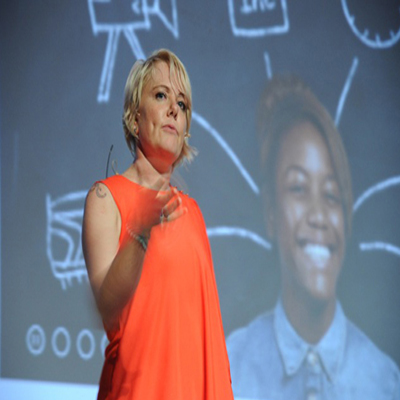
D&AD’s CEO Tim Lindsay and president & Dare CD Laura Jordan Bambach who are in the country to address the forthcoming seminar (organised by Kyoorius) on Building Brands via Digital Media, shared some valuable insights on the subject with indiantelevision.com.
On the fast blurring line between traditional and digital advertising in India, Tim quips: “Probably there are other markets which are further ahead when it comes to digital; and this is simply to do with the penetration of tablets, laptops and smart phones. Mobile is highly developed in this country and will only amplify. Therefore, digital advertising and marketing will develop in a separate way in India.”
Still to recover from jet lag, Laura adds: “It is quite an exciting time and I can see the behaviour change and there is a more digital approach in various campaigns; which is more worldwide, but it is there here as well. The change in advertising message is becoming more purposeful.”
Speaking about the trend of viral videos, Laura says they would work better if people had an interesting story to tell rather than the brand putting forth its message. “The brand has to take a back seat and tell a human interest story. Not all viral campaigns are good, there are many bad ones as well because they don’t tell you the story you want to hear,” she says, pointing out that videos which are entertaining, funny and have a human angle are likely to click with the viewers.
Also the co-founder of SheSays, an international volunteer organisation encouraging women to take up digital creative careers, Laura feels things are changing now as more and more women are not only entering the field but also reaching high positions. “There are a quite a few women in the higher ranks and the things are looking up in India as well,” she says.
Asked to point out the two important advertising trends of 2013, Tim talks about ads and campaigns having moved more towards story-telling apart from the increased engagement of people through branded content and added efforts by companies to take their CSR activities more seriously. He cites the example of Unilever’s latest Project Sunlight (Unilevers Project Sunlight promises a brighter future) . “In India, HUL’s Lifebuoy campaigns have been very successful. Be it the village one or the stamped rotis,” he says.
In the coming year, Tim feels there will be more acquisitions including digital acquisitions of smaller agencies which will only serve to increase their credibility and sustainability.
Both Tim and Laura feel that hereon, the digital space is only set for a further boom, with agencies milking the medium to reach out to as many people as possible.





Brands
Samsung certifies 1,000 Maharashtra students in AI and coding
The South Korean electronics giant marks its first large-scale skilling push in the state, with women making up nearly half the national programme’s enrolment
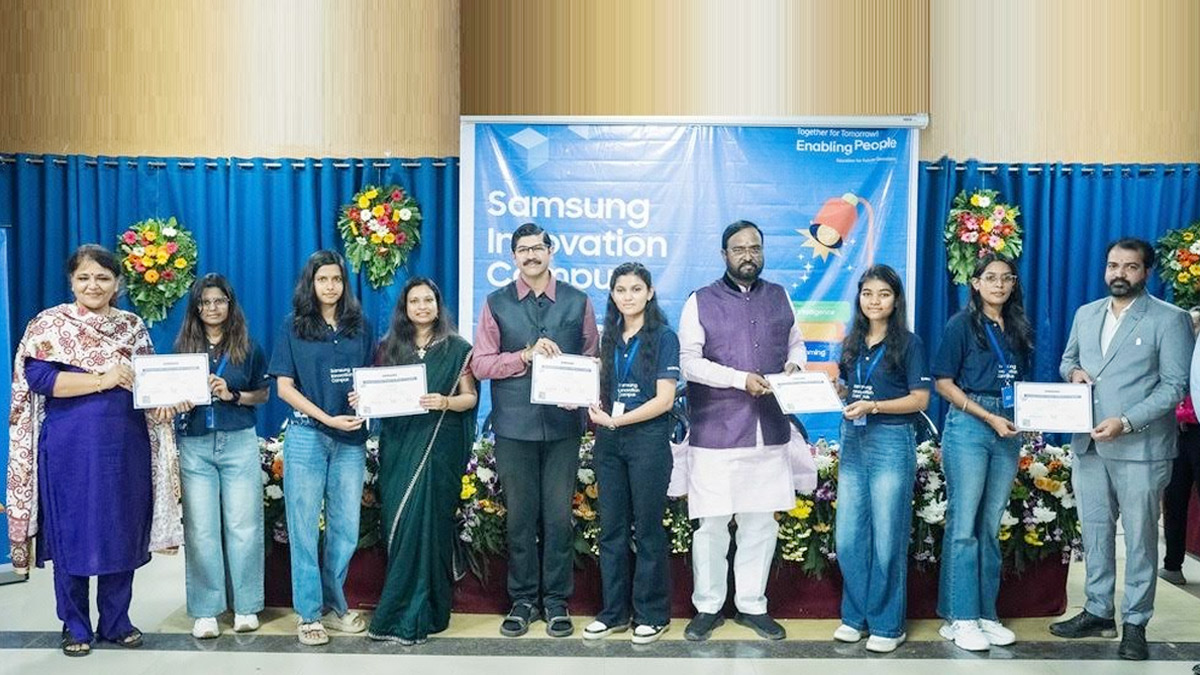
PUNE: Samsung has put 1,000 students in Maharashtra through a certified training programme in artificial intelligence and coding, the largest such drive the South Korean electronics company has run in the state and a signal that corporate India’s skilling ambitions are moving well beyond the boardroom brochure.
The certifications were awarded under Samsung Innovation Campus (SIC), the company’s flagship corporate social responsibility programme, which launched in India in 2022 with the stated aim of democratising access to future-technology education. The 1,000 graduates were drawn from four institutions: 127 from Savitribai Phule Pune University, 373 from Pimpri Chinchwad University, 250 from D.Y. Patil University’s Ramrao Adik Institute of Technology and 250 from Anjuman-I-Islam’s Kalsekar Technical Campus. All completed training in either AI or coding and programming, the two disciplines Samsung has identified as the critical pillars of the digital economy.
The programme does not stop at technical training. Soft-skills development and career-readiness modules are baked into the curriculum, a deliberate attempt to close the gap between what universities teach and what employers actually want.
“India’s digital growth story will ultimately be shaped by the quality of its talent pipeline,” said Shubham Mukherjee, head of CSR and corporate communications at Samsung Southwest Asia. “As technologies like AI move from the periphery to the core of industries, skilling must evolve from basic training to building real-world capability. This milestone in Maharashtra reflects how industry and academia can come together to create a future-ready workforce that is both globally competitive and locally relevant.”
The Maharashtra drive sits within a rapidly scaling national effort. Samsung Innovation Campus trained 20,000 young people across India in 2025, hitting its stated target for the year. Women account for 48 per cent of national enrolments, a figure the company cites as evidence of its push for an inclusive technology ecosystem. The programme is implemented in partnership with the Electronics Sector Skills Council of India and the Telecom Sector Skill Council.
Samsung, which is marking 30 years in India this year, runs SIC alongside two other initiatives, Samsung Solve for Tomorrow and Samsung DOST, as part of a broader effort to build what it calls a generation of innovators with both the technical depth and the problem-solving mindset to thrive in a fast-moving digital world.
A thousand certified students is a tidy headline. Whether they find jobs that match their new skills is the harder question, and the one that will ultimately determine whether corporate skilling programmes like this one are genuine pipelines or well-photographed gestures.






