Brands
Brands eager to be part of the story today

MUMBAI: The content industry is in a massive flux. Norms and rules turn redundant in months now and the need for good quality content that can attract a global audience is at an all-time high, thanks to the advent and massive growth of OTT platforms like Netflix and Amazon Prime. Brands and marketers have rolled up their sleeves to cash in on this boom.
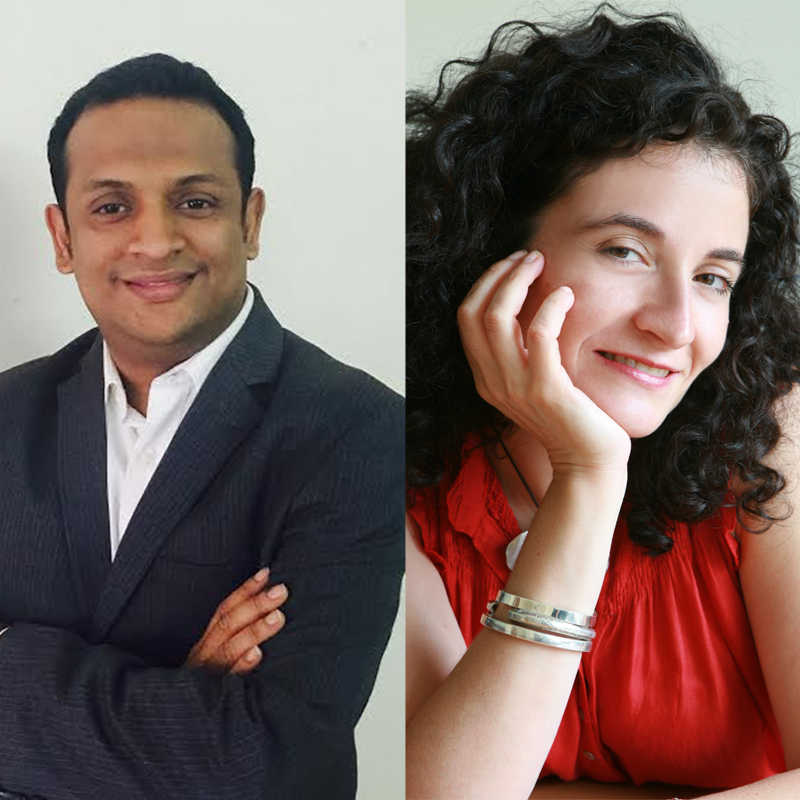
The Story Lab, a global content specialist from Dentsu Aegis Network, started its Indian operations just a few years back and is considering to support this highly creative ecosphere in expanding further with its excellence backed by learning from the many international markets including the US, the UK, Russia, and Australia. Its global head of formats Fotini Paraskakis, who was recently in India to meet the team, joined by India head Kumar Deb Sinha had an exclusive chat with the Indiantelevision.com, highlighting the aspirations of the team and some of its strategies.
Fotini, who had joined the team just a few months back, in September, after a long stint with Endemol Shine, mentions that working with The Story Lab is very exciting for her because it is platform-and client-agnostic. She adds, “I have been working in the Asian region, including India, for the past 20 years and I am very familiar with the content. When I was previously coming to India, it was very traditional for me. We had three or four shows that we pitched to the top GECs but now, it is the creator’s game. I always thought that India was extremely creative and that creativity is coming out now.”

She added, “Working with The Story Lab, I think we are able to support these creators and producers helping them create forward-thinking innovative ideas and take them to partners and platforms that we already have the leverage of and have strong relationships with. It is interesting for me to see how we can build this strong kind of premium content house.”
Echoing her thoughts, Kumar says, “At this point in time there is a huge opportunity for content in India. Most of it is OTT but traditional television is also changing its programming in a big way. It is because platforms like Netflix have changed the consumption patterns of the audience. With global content in global language at easy reach, people want more from the content industry. So, being an international network, we can easily execute newer trends in India. It is also faster to grow in India as people are just hungry for content right now.”
Coming from the head of a content team that is a part of an agency framework, many would like to believe that this zeal is towards creating branded content only, but Kumar contends, “That’s exactly where The Story Lab is extremely different from other players in the market. While others are talking branded content, we are talking about a big content play, not limited to whether a brand funds it or not.”
While branded content might not be at the core of The Story Lab philosophy, the leadership still believes that brands can anyway benefit from this boom of creative content in the industry. Kumar mentions, “When you talk about brands leveraging on content, it is not today’s thing. In fact, it started several decades back with P&G when they started sponsoring the whole afternoon soap band. It’s called ‘soap’ because P&G started it.”
He added, “Probably, earlier they were more focussed on brand visibility. But today, they have taken a leap and want their brands to play a role in the story. I would say, in the last one or two years, there has been cutting-edge work done by the brands in digital content space. Interestingly, most of this has been done by start-up brands. Pepperfry, Epigamia, and Furlenco are a few examples.”
Fotini shares an interesting insight into the global scenario saying, “In other territories, we are seeing brands going a step ahead, in fact. They just want to be associated with good stories. They don’t necessarily need their products in something. The brands now have a better foresight of associating with content that can create talking points for them. And that’s where The Story Lab, again, can play an important role by connecting brands who just want to support a good story with the right content.”
On being quizzed whether this whole new paradigm will affect the traditional advertising industry in the long run, Kumar denies any such possibility. “The reason being the roles of both are very different. While traditional advertising has a clear role of reach and awareness, content is more about engagement.”
He further notes, “The budgets, obviously, are very different for both. What might happen is clients start earmarking a certain part of their marketing budget as content budget. Whether that money will come from the advertising budget; I am not very sure about.”
While both Kumar and Fotini are very eloquent about their plans to support the content market in India, they are still not revealing much about their own marketing strategies. While Kumar notes that it’s still very early to disclose the strategies, Fotini gives some scoop into what the action plan of The Story Lab has been in the global market.
She elaborates, “So what we do in the UK; we go looking out for talent. We have started a creative programme where we, for example, invite a few people from the industry to share, learn, and work with other creators. There are no strings attached but we develop a good network of potential talent, people who we would like to work with. Also, sometimes we do pitching sessions regarding particular resources we have been looking for. Sometimes, we just support the industry. In the UK we also have a separate fund, purely to shore up production.
“Basically, what I am saying is that Dentsu as a company is invested in content. They have different funds and a kind of creative collaboration that we fund directly. Or we pitch creators, producers, and writers together to talk about ideas, and share knowledge. So, these are the kind of things that we want to start replicating in our key territories including India.”
Fotini sees the Indian market as a highly creative space, which is also willing to spend more on production and distribution. She shares, “Most people might not think like that, but there’s a quite lot of money in the production space in India. It is far ahead of other Asian markets except China. If you look at other Asian territories, their budgets are much lower because the markets there are very ad-driven. Sure, the entry of platforms like Amazon and Netflix is now plowing in a lot of money, so that trend is changing. But they are still behind India.”
On being asked where does India stand globally in its willingness to allocate funds, Fotini mentiones that there is no comparison because the models across are quite different. “The UK and the US are completely different markets because they have restrictions on advertising. In the US, traditionally there has been no branding and all the money comes from broadcasters. And there has been a lot of money. In the UK, there has been a lot of content and it is very creative as well. But what’s happening there recently is that the broadcasters' budgets have been cut. They are now looking for partners to make up this deficit. Sometimes it’s The Story Lab, sometimes someone else. They are not allowed to do branded content.”
“In India, on the other hand, quite often the money is made out of brands. We are used to working with limited budgets. And also the people are very creative in terms of thinking alternates; if we can’t do this then let’s try doing that. The way creators and producers think is very different here.”
Both Fotini and Kumar are very positive about the opportunities that the Indian market has for them right now. Fotini, with extreme confidence, wraps up the conversation saying, “The Story Lab is here to stay. We want to create long-term partnerships with creators, producers, and distributors. We already have long-term partnerships with different platforms and we want to bring them a good lot of content opportunities. Everything is in place already and we are going to build it strong and take it forward.”






Brands
Tessolve lands a semiconductor veteran to drive its next big push
Ravi Kumar Chirugudu, who started his career at ISRO and has spent 35 years building chips and companies, joins the Bengaluru-based firm as president and chief operating officer
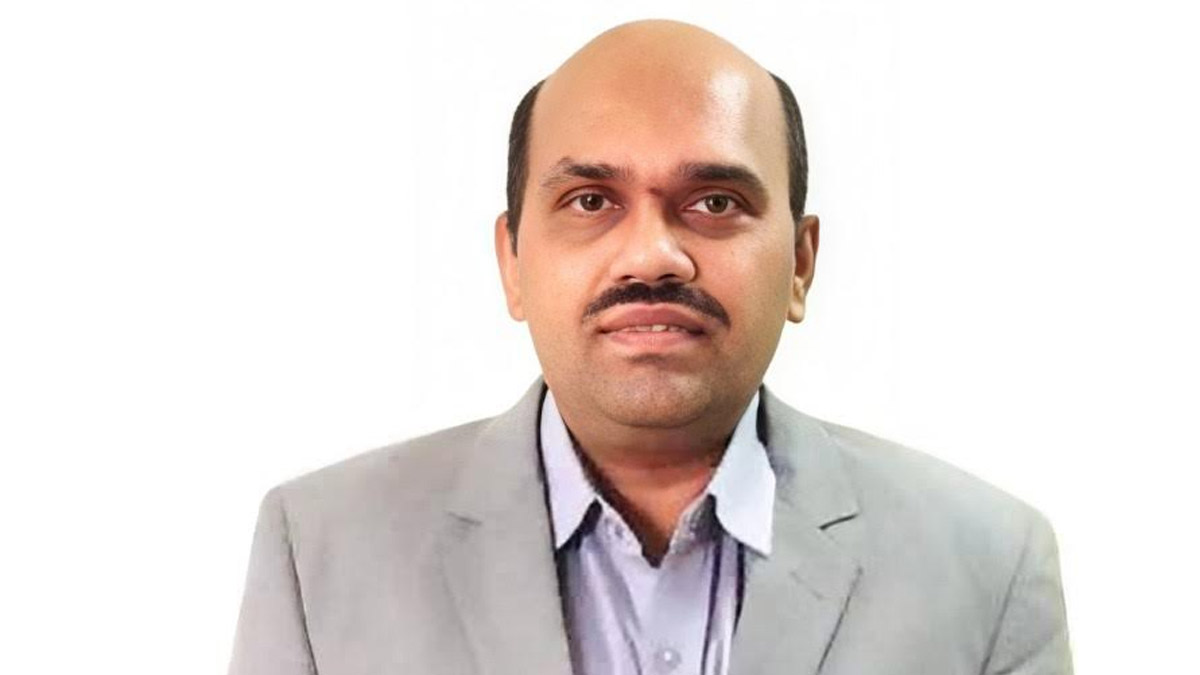
BENGALURU: Tessolve has never been shy about its ambitions. The Bengaluru-based engineering services firm already counts 18 of the world’s top 20 semiconductor companies among its clients, employs more than 3,500 engineers across 12 countries, and last year pocketed a $150m investment from TPG. Now it has hired the executive it believes can turn those assets into something bigger. Ravi Kumar Chirugudu, a 35-year semiconductor veteran who once built satellite payloads for ISRO and has since scaled engineering organisations across three continents, joins as president and chief operating officer, effective immediately.
THE MAN AND THE MANDATE
The appointment is, by any measure, a serious hire. Ravi Kumar Chirugudu comes to Tessolve after senior leadership stints at HCL Technologies, Altran and Wipro, where he managed large profit-and-loss portfolios and oversaw cross-regional teams. Over the course of his career, he has been instrumental in bringing more than 1,000 new products to market across the high-tech, energy and manufacturing verticals. Before the private sector claimed him, he began his working life as a scientist at the Indian Space Research Organisation, contributing to research and development in charge-coupled device technology and satellite payloads, a foundation that shaped everything that followed.
In his new role, he will lead Tessolve’s global growth strategy: expanding its engineering capabilities, deepening customer relationships and accelerating innovation across semiconductor and high-performance computing domains. The brief is broad, but the context is specific. Tessolve operates in the $550 billion global semiconductor market, and its recent moves, the acquisition of Germany’s Dream Chip Technologies and the TPG funding round, have sharpened both its reach and its expectations.
Srini Chinamilli, co-founder and chief executive of Tessolve, is characteristically direct about why Ravi Kumar Chirugudu was the choice:
“As we scale our global semiconductor and system engineering capabilities, Ravi’s appointment marks an important step forward. As global semiconductor demand continues to accelerate across industries, it is creating significant opportunities across the semiconductor lifecycle, from design, packaging, validation and systems integration. Ravi’s deep knowledge and leadership in this ecosystem brings the right mix of industry expertise, customer connect and execution capability, which will play a key role in strengthening our position as a trusted global engineering partner and reinforcing our market leadership.”
THE NEW ARRIVAL SPEAKS
Ravi Kumar Chirugudu, for his part, frames the move in terms of timing and culture, two factors that veteran executives tend to weigh as heavily as title or compensation:
“I am happy to join Tessolve at a time when the industry is rapidly evolving towards more complex, AI-driven systems. What stands out to me is its strong people-first culture and its commitment to bringing value to its customers. The strength of its global team, combined with its deep expertise in semiconductor innovation and next-generation product engineering, creates a solid foundation to build differentiated, scalable solutions. I look forward to working closely with the team to drive strategic growth and strengthen its role in shaping the global semiconductor ecosystem.”
The reference to AI-driven systems is not incidental. The semiconductor industry is in the midst of a structural reshaping, driven by the insatiable compute demands of artificial intelligence. For engineering services firms like Tessolve, which offers end-to-end capabilities from silicon design to packaged parts and invests in high-performance computing, high-speed interfaces, photonics and 5G, the moment is both an opportunity and a test. The company says it is well positioned to capture the next wave of industry growth. Ravi Kumar Chirugudu is now the person who has to prove it.
He came in from outer space, literally, and spent three decades learning how the semiconductor industry works from the inside out. Now Tessolve is betting that accumulated knowledge can help it cross the next frontier. In the $550 billion global chip market, the gap between ambition and execution is measured in engineering hours and leadership quality. Tessolve has just gone shopping for both.






