Brands
Boult from the blue as Goboult reboots with bold new brand play

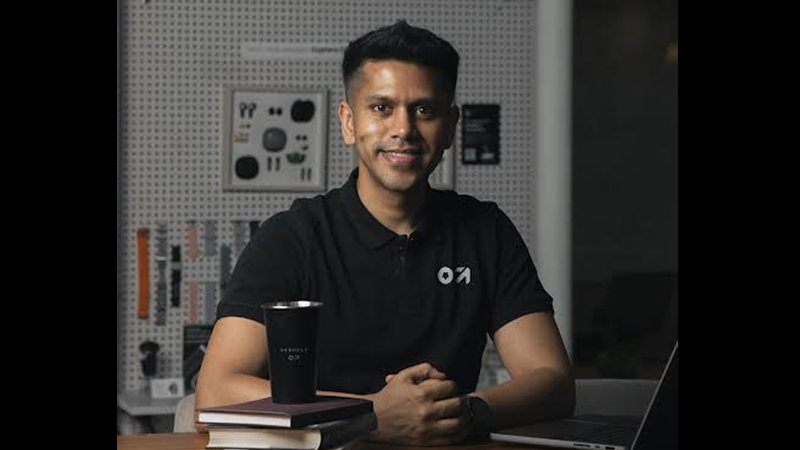
MUMBAI: Fasten your seatbelts, Goboult is here, and it’s not just screwing around. India’s fastest-growing wearables brand, formerly known as Boult, has hit refresh with a full-throttle rebrand, new name, new logo, and a supercharged strategy to match. Now called Goboult, the company is revving up its ambitions, targeting Rs 1,000 crore in revenue by FY26 after clocking Rs 800 crore in FY25 nearly double what it pulled in two years ago.
The new identity reflects more than a cosmetic makeover. It signals a decisive leap towards premiumisation, international expansion, and a tech-forward future built on speed, style, and substance. The name “Goboult” isn’t just a tagline, it’s a mindset. The “Go” symbolises agility, boldness, and forward motion, qualities baked into the company’s DNA.
And that story carries into the new logo: a screwhead (think resilience and precision) fused with an arrow (aka momentum and transformation). Together, they represent Goboult’s ambition to be the personal tech brand for a generation that doesn’t wait.

“We’re not just changing our name, we’re changing the way we operate,” said Goboult co-founder Varun Gupta. “Goboult is about thinking bigger and moving faster. It’s a personal milestone for me, a project I built with heart and hustle. We’re not following trends, we’re setting them.”
The rebranding is backed by a Rs 25 crore investment in R&D and design innovation. That includes building AI-first capabilities, integrating smarter software into wearables, and doubling down on user-centric design. Engineering and design teams are being scaled up as the brand sharpens its focus on next-gen personal tech.
A significant pivot is also underway in distribution. Goboult plans to expand its retail footprint from 3,000 to over 30,000 outlets across India in the next 18 months. That’s 10X growth in general trade, modern retail, and experiential formats expected to drastically shift the revenue mix, making offline sales a key driver.
On the product side, Goboult is stepping into the Rs 2,000 plus ASP segment with a focus on style-conscious, tech-savvy offerings: wearables, audio gear, and smart personal devices. The aim is clear be the brand that bridges fashion, function, and futuristic tech.
Also in the pipeline: global expansion. Goboult is preparing for launches in the US, Europe, Southeast Asia, and East Asia starting next year. The new identity is crafted to resonate with global audiences, positioning the brand as a serious contender in the personal tech space beyond India.
The company is also exploring design-first collaborations and pop culture-infused partnerships. A recent limited-edition tie-up with Mustang was just the beginning of a trend that aligns the brand with bold, Gen Z sensibilities.
Goboult co-founder Tarun Gupta summed it up: “We’re building for scale and experience across product, packaging, and retail. Everything is aligned toward our Rs 2,000 crore vision by 2030. This is more than a rebrand, it’s a blueprint for global leadership.”
With IPO ambitions down the line and a pulse on what Gen Z wants next, Goboult is racing ahead to become India’s most aspirational personal tech brand, one that doesn’t just follow trends, but leads the charge.
The screw’s tight, the arrow’s loaded Goboult isn’t slowing down anytime soon.




Brands
Dunkin’ Donuts to exit India as Jubilant FoodWorks ends 15-year franchise deal
The quick service restaurant giant is ending a 15-year franchise partnership with the American doughnut chain, even as it renews its Domino’s agreement for another 15 years
NOIDA: Dunkin’ is done in India. Jubilant FoodWorks Ltd, the country’s leading quick service restaurant operator, has decided not to renew its franchise agreement with the American coffee and doughnut chain, and will wind down its Indian stores in a phased manner before December 31, 2026, bringing a 15-year partnership to a quiet, loss-laden close.
The decision, approved by JFL’s board on March 30, 2026, ends a relationship that began with a Multiple Unit Development Franchise Agreement signed on February 24, 2011. JFL will now evaluate and undertake what it described in a regulatory filing as the “rationalisation and/or cessation of certain operations and/or sale, transfer or disposal of assets and/or assignment or transfer of franchise rights,” all in consultation with Dunkin’s brand owners and strictly within the terms of the original agreement.
The numbers tell the story bluntly. In the financial year 2024-25, Dunkin’ India posted a revenue of Rs 37 crore against a loss of Rs 19 crore — a haemorrhage that was always going to test the patience of a parent company recording revenues of Rs 6,104 crore and a profit of Rs 194 crore in the same period. Doughnuts, it turns out, were never going to move the needle.
The contrast with JFL’s handling of its other marquee franchise could hardly be sharper. Even as it walks away from Dunkin’, the company has just doubled down on Domino’s, signing a fresh Master Franchise Agreement on March 31, 2026, granting it exclusive rights to develop and operate Domino’s Pizza stores in India for 15 years, with an option to renew for a further 10.
JFL, incorporated in 1995 and promoted by the Bharatia family, operates a network of more than 3,500 stores across six markets — India, Turkey, Bangladesh, Sri Lanka, Azerbaijan and Georgia. Its portfolio includes Domino’s and Popeyes on the global side, and two home-grown brands: Hong’s Kitchen and COFFY, a café brand in Turkey.
For Dunkin’, India was always a stretch. The brand never quite cracked the cultural code in a market where filter coffee and chai command fierce loyalty and where the doughnut remains, at best, an occasional indulgence rather than a daily habit. Fifteen years, mounting losses and a parent with better things to spend its capital on was always going to be a difficult equation to solve.
The doughnut has had its last day. The pizza, however, is staying.






