Ad Campaigns
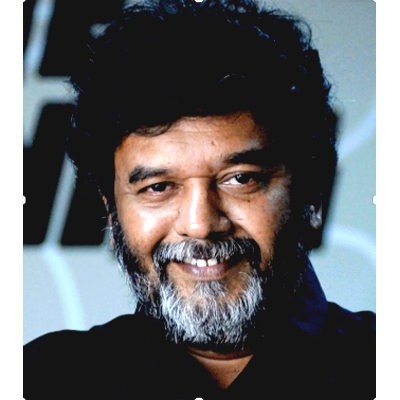
BJP’s campaign is dull, drab and quite ordinary: Prathap Suthan

MUMBAI: The upcoming election is possibly the only one in a long history of five-year polls, where political parties are unabashedly using media to promote their prime ministerial candidates and agendas.
Thus we have both the main players – the Congress and Bhartiya Janta Party (BJP) – splurging crores of public money on election campaigns in a bid to outdo each other. Indeed, Congress was the first to jump into the fray with the tagline ‘Main nahi, Hum’ which attracted much controversy, what with the BJP claiming the punch line had originally been used by its prime ministerial candidate Narendra Modi at a ‘Chintan Shivir’ in Gujarat.
However, the BJP lost no time in launching its own campaign with posters, TVCs, radio spots shouting themselves hoarse – ‘Ab ki Baar, Modi Sarkar’. The underlying message being that the common man’s woes such as inflation, lack of women’s safety etc. would be assuaged if Modi was elected for the country’s top job.

With the political climate hotting-up this election season, both campaigns are attracting their fair share of bouquets and brickbats. But we thought it would be interesting to speak to Prathap Suthan – the man who created BJP’s earlier ‘India Shining’ campaign (2004) – and get his perspective. Excerpts…
What do you have to say about the BJP slogan? Do you see it touching an emotional chord with urban and rural voters?
Barring the fact that it rhymes, I don’t think it’s an inspiring slogan. It’s a mere auto suggestion as to what the voter should do. It doesn’t hold out any promise, mission and vision to people like us. It’s dull, drab and quite ordinary.
Do you think the BJP has started too early or too late?
The BJP campaign is at least a month late. Worse still, despite the fact they have started and bits and pieces are making their way onto social media, they have been invisible. Till yesterday, I haven’t seen their advertising in print or on TV. Anymore invisibility and they’d be sending out wrong signals to the electorate. But knowing them, and their almost strident confidence, I suspect their cause has been sabotaged by terrible media planning or a media boycott. I can’t think of any other reason why their campaign hasn’t broken out in media yet.
Modi stands for development. Do you think the current campaign and slogan brings out this core message?
If the Modi line of thinking has to do with progress and development, the campaign should have been a reflection of that. This is a boring campaign. I see no cues of development and young and contemporary thinking in this. Congress on the other hand, despite whatever else, has better looking advertising by far.
 |
What are your views on the AAP and the way they use publicity in their favour?
I used to like the idea of AAP. But somewhere, they’ve changed into something else that they shouldn’t be.
Considering that they don’t have the kind of media budgets that the main parties have, their public activist avatar keeps them in view. It is clever thinking because media will carry and play the de facto advertising vehicle. However, too of much of everything has a down side. You can’t be a serious national party when you pick up street fighting as a brand character. At some level, it will backfire. Leadership, and genuinely inspiring stewardship of the nation is what’s missing today, and AAP isn’t quite playing that wedge.
One piece of advice you’d like to give to the creative and media agencies that are handling the BJP and Congress accounts?
There is no point advising advertising agencies. I believe all of us are equally qualified and experienced to handle large campaigns. We do that day in day out, and on some very challenging focussed briefs. In this case, the client takes the call and at times, dictates. The fault, if any, doesn’t lie with the agencies. It has to squarely lie with the parties.
Lastly, of the two parties, which is the campaign you are betting on and why?
I think the country is loaded in favour of BJP – but they have an uninspiring campaign. One man almost looms over you. Congress, however, seems to have delivered the campaign better. It’s younger looking, modern, non-traditional, and in a strange way, more inclusive.





NATIONAL: Amazon Ads has laid out a sharply tech-led vision for the advertising industry in 2026, arguing that artificial intelligence, streaming TV and creator partnerships will combine to turn brand building into a more precise, performance-driven business.
At the heart of the shift, the company says, is the fusion of AI with Amazon’s vast trove of shopping, browsing and streaming signals, allowing advertisers to move beyond blunt reach metrics to campaigns designed around real customer behaviour.
“The future of advertising is not about reaching more people, but the right people with messages that resonate,” said Amazon Ads India head and vice president Girish Prabhu. “By combining AI with deep customer insights, we help brands move from broadcasting campaigns to having meaningful conversations wherever audiences spend their time.”
One of the biggest changes, according to Amazon Ads, will be the collapse of the wall between media planning and creative development. Retail media, powered by first-party data, is increasingly shaping everything from brand discovery to final purchase, pushing marketers to design campaigns around audience insight rather than internal instinct.
AI is also moving from a support tool to a creative engine. Agentic AI, which automates and accelerates production, is expected to make high-quality creative accessible even to small businesses, compressing weeks of work into hours and giving challengers the ability to compete with larger brands on speed and scale.
Behind the scenes, AI-driven analytics will take on a bigger role in campaign optimisation, identifying patterns, spotting opportunities and recommending actions that would previously have required teams of analysts.
Streaming TV is another big battleground. With India’s video streaming audience now above 600 million and connected TV users at 129.2 million in 2025, advertisers are set to treat streaming not just as a branding channel but as a performance engine, measured increasingly by sales, sign-ups and bookings rather than just reach.
Finally, Amazon Ads sees creators and contextual advertising reshaping how brands tell stories. Creators will act less like influencers and more like long-term partners, while scene-aware ads on streaming platforms will allow brands to insert hyper-relevant offers into the flow of what viewers are watching.
Taken together, Amazon Ads argues, these shifts mark a move towards advertising that is both more human and more measurable, where AI handles the complexity, and creativity does the persuading.






