Brands
BharatPe banks on cricket for next growth phase

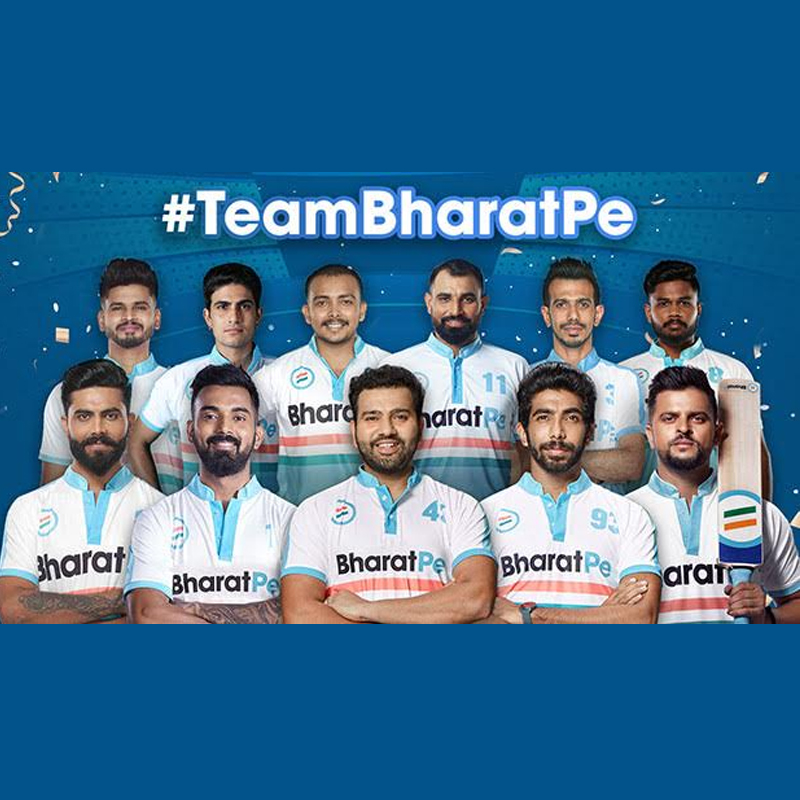
NEW DELHI: From Bollywood to cricket. That’s the path fintech brand BharatPe is taking. Bharat Pe, which is positioned as the one stop shop for the payment as well as capital needs of India’s large retailer network, has signed up 11 top cricketers as its brand ambassadors. Among them figure: Rohit Sharma, Jasprit Bumrah, KL Rahul, Mohammed Shami, Ravindra Jadeja, and Suresh Raina.
The 11 cricketers will be featuring in an ad campaign which is being directed by a top Hindi film director. The purpose: build BharatPe’s brand identity, apart from explaining its unique features, positioning and thought process to merchants. The sportsmen have been banded under a group which has been called BharatPe XI. The ad campaign is set to be unfurled closer to the festival period and will encompass TV, radio, OOH, digital, as well as print media.
The company, which is heavily funded by top investors like Sequoia, Beenext, Insight Partners, Steadview Capital management, Ribbit Capital, Coatue and Amplo, had earlier roped in Bollywood A-lister Salman Khan for its launch campaign #AbDukandarJitega.

BharatPe group president Suhail Sameer, who got on board the fintech firm as recently as August 2020, points out that the Salman association helped the brand get noticed, and connect with the merchant community who were loathe to use digital payment options.
“We decided to go ahead with cricket this year as it is one sport that brings Indians together, irrespective of their region, religion, or financial status,” he explains.
Co-founded by Ashneer Grover and Shashvat Nakrani, BharatPe’s mission is to make financial inclusion a reality for Indian merchants, especially across tier 1, 2 and 3 cities. BharatPe, since its launch, has been empowering shop owners with a single zero MDR UPI based QR code which allows them to accept payments from any app – like PayTm, PhonePe, Google Pay, BHIM and 150+ other UPI apps – at no cost to them. The cash goes directly into the retailer’s bank account and he or she can earn interest on it and even take loans if the need arises.
Sameer shares that the initial task for BharatPe was to create awareness amongst the merchant community and educate them about how digital payments work. Says he: “We have invested time and effort to educate the merchants and built trust with them. We offered them the convenience of accepting digital payments, irrespective of the consumer’s preferred choice of digital payment.”
The Salman campaign helped the company on board merchants in tier-1 and tier-2 towns and cities. As of early 2020, it had managed to rope in close to three million retailers. Average transaction values which were Rs 500 earlier rose by 60-65 per cent in early 2020.

AND CRICKET ACT AS UNIFIERS
Covid2019 and the lockdown hit BharatPe hard, with transactions dipping in the first few weeks. But with the country unlocking, these have been picking up pace. Even merchant signups have ballooned to five million, and the target is to take that number to six million by end this fiscal. BharatPe is present in 35 cities and processes five crore plus monthly UPI transactions.
“In September, we are already at 50 per cent above the pre-Covid2019 levels in the value of the transactions we process (at $4 billion annually). We aim to close the year at a run rate of $5 billion in annual total payment value,” reveals Sameer.
Currently 15-20 per cent of the total transactions come from tier-2 areas and the next wave of growth will come from tier-2 and 3 markets, Sameer reveals Covid2019, which accelerated digitisation in the country has benefited BharatPe, like many other digital first brands, as consumers are choosing to go in for contactless transaction with the pandemic still raging.
The company is on an expansion spree even on the lending side – an activity which was kickstarted a year ago. So far, it has disbursed loans in excess of Rs 250 crore, despite the Covid2019 related slowdown. It has set a target to disburse around Rs 700 crore in the next six months. “We did consciously slow down on our lending during the lockdown months, but have scaled well since July 2020,” highlights Sameer. “We are confident we will surpass Rs. 700 crore for the rest of the year, and are internally gearing for higher numbers.”
He is also sanguine that the cricketer-led advertising campaign will redefine how fintech marketing can be done. In the process, it will help BharatPe get closer to its goals.





Brands
India’s food culture takes a bold turn in 2025
From fusion desserts to experiential dining, four trends reshape how the nation eats.
MUMBAI: India’s plates just got a serious upgrade in 2025 because when tradition meets TikTok and fusion meets fitness, even the humble samosa starts feeling trendy. The Godrej Food Trends Report 2025 predicted several shifts in Indian eating habits, and the past year proved the forecasters right. From reimagined desserts to immersive dining experiences, Indian consumers showed they want authenticity, convenience, global flavours and health in equal measure.
Here are four trends that truly came alive in 2025 and are now shaping how India eats and dines:
1. Indian Desserts Get a Modern Makeover Traditional mithai found fresh life through fusion experiments. Cheesecakes, truffles and plated desserts inspired by classics like gulab jamun and rasgulla gained popularity, while chocolate-forward, fruit-led and lower-sugar options appealed to younger diners. According to the How India Eats 2025 report, desserts and ice-cream parlours were among the fastest-growing segments in organised food services. Examples: The Bombay Canteen’s Coffee Rasgulla Sundae and Le Chocolate Cakes and More’s Gulab Jamun Cake. Chef Aarohi Sanghavi of Maki Patisserie noted the shift toward seasonality and fresh Indian produce, while Chef Heena Punwani of Maska Bakery highlighted the appeal of flexible, weekend-special menus.
2. Social Media Becomes the New Menu Food discovery went fully digital. Instagram Reels, YouTube reviews and creator-led content heavily influenced dining choices, with food remaining one of the most consumed categories on social media. Restaurants began designing visually striking dishes specifically for shareability, while many diners found new spots through viral videos rather than traditional advertising. The How India Eats 2025 report revealed that over 75% of marketing spends by leading QSR chains now go toward digital channels. Cafes like Mokai and Candies became creator favourites, and brands such as Bastian Hospitality curated highly shareable pop-ups and events. Kavita Rajwade of IVM Podcasts emphasised how long-form storytelling helps decode food’s cultural and economic layers, while Pranav Joshi of Floydian Cookery admitted his page grew far beyond expectations.
3. Snacking Culture Goes Mainstream India’s love for snacks evolved into a full grazing lifestyle, with many opting for multiple small bites throughout the day instead of three structured meals. This shift spurred innovation in formats—from gourmet chips and fusion street food to protein-packed options. Restaurants responded with small-plate menus designed for sharing. The How India Eats 2025 report noted that late-night orders grew nearly 3x faster than dinner. Brands like The Whole Truth Foods and Green Snack Co. popularised clean-label snacks such as protein bars and roasted nuts. Madhushree Basu Roy of Pikturenama Studios predicted a mix of convenience, health consciousness and global influences, while freelance food writer Sharmila Vaidyanathan observed that consumers want the best of both worlds healthy options for routine snacking and traditional treats for special occasions.
4. Dining Becomes an Experience, Not Just a Meal The most noticeable shift was the rise of experiential dining. Consumers increasingly sought restaurants that offered more than good food, they wanted immersion, storytelling and chef-driven concepts. Venues like Papa’s in Mumbai (intimate tasting menus), Bombay Daak (theatrical regional flavours) and Masala Library (modernist presentations) turned meals into memorable events. Tasting menus, themed pop-ups and chef collaborations became more common, transforming dining out into entertainment. The How India Eats 2025 report highlighted how experience-led formats and storytelling are key to attracting younger diners. Chef Karan Upmanyu of ParTTwo in Bengaluru observed that new outlets are breaking away from rigid formats, focusing instead on creating relaxed spaces where people simply enjoy spending time.
As 2026 unfolds, these trends suggest India’s food culture is no longer just about what’s on the plate, it’s about how the plate makes us feel, connect and remember. From a quick Reel-inspired snack to a full theatrical dining experience, Indian diners are voting with their forks for food that is both rooted in tradition and unafraid to experiment. The table, it seems, has never been more exciting.








