Brands
Bajaj’s Chetak C2501 hits the streets

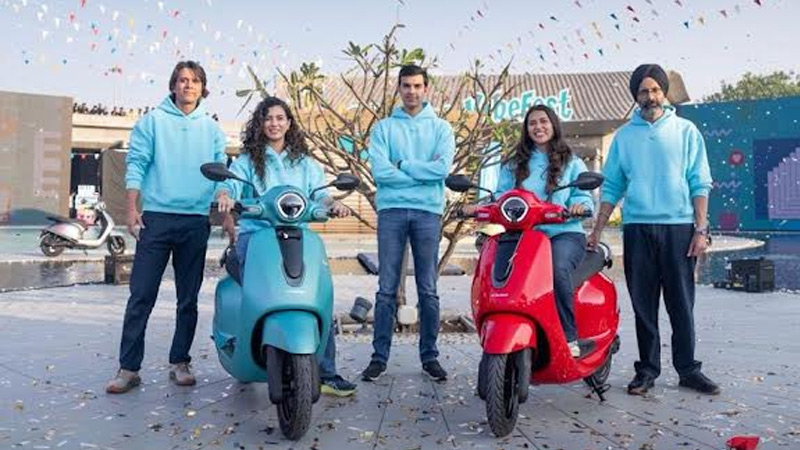
PUNE: 53 years to the day since the original Chetak puttered into Indian hearts in 1972, Bajaj Auto staged a homecoming. Not in some sterile convention hall, but under open skies, with water shimmering around the launch podium. Fireworks crackled overhead. A flash mob erupted from the crowd. Riders rolled in astride the new machine itself, dust and drama in equal measure.
Meet the Chetak C2501, the scrappy younger sibling that’s all about doing more with less. At Rs 91,399, it’s the brand’s most affordable EV variant yet.

Speaking on the launch, Bajaj Auto Ltd president- urbanite business Eric Vas said, “The Chetak C25 reflects a clear shift in how urban mobility is being used today—shorter trips, tighter streets and a growing need for independent movement. While its form is compact and contemporary, the fundamentals remain unmistakably Chetak: solidity, sturdiness and reliability. The C25 allows us to extend the Chetak portfolio to a younger, more agile use case, while continuing to deliver the trust and confidence that the brand has stood for over generations.”

Electric scooters, however, have recently come under scrutiny over safety concerns. Ola Electric, in particular, has faced criticism over battery quality, following customer complaints and reports of vehicles catching fire.
Addressing these concerns, Bajaj Auto Ltd GM (R&D) Gagandeep Singh spoke to Indian Television about Bajaj’s approach to battery quality and safety, and did not shy away from the issue. He was refreshingly direct.
“Some brands push the limits of their technology and hardware without realising that beyond a certain point it becomes detrimental,” he said. “We are very mindful of that. If we offer a certain level of performance or hardware, we know exactly how much it can handle. That confidence comes from the cells we use, the battery construction—everything.”
He added that Bajaj’s vertically integrated approach is key. “It’s all in-house. The motor, the battery pack, the hardware—everything is designed and developed at our R&D facilities. We carry out proper testing before anything goes into production.”
Singh was blunt with his thinly veiled jab at where competitors go wrong. “These problems happen when you jump the gun—when you speed up processes that demand time and thoroughness. Proper battery testing isn’t something you can fast-track. Skip those steps, and it’s not the company that suffers first. It’s the poor customer who pays the price.”
Lighter, lower, easier to handle
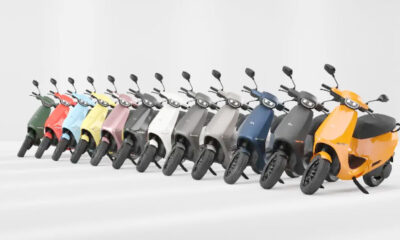
Think of the C2501 as the Chetak on a diet. At 108kg, it’s shed the bulk, and with a 763mm seat height, even shorter riders can plant both feet firmly at traffic lights. The retro soul remains intact, circular LED headlamp winking at you, tidier tail end, matte black mirrors but now dressed in six shades ranging from sunshine yellow to stealth-mode black.
Built for city streets
Under the floorboard hums a 2.5kWh battery pack promising 113km of urban wandering. Here’s the twist: Bajaj ditched its usual motor setup for a hub-mounted unit (a Chetak first), churning out 1.8kW steady and 2.2kW when you twist the throttle with intent. Top speed? A modest 55km/h—but honestly, when was the last time you hit 60 in city traffic anyway? Plug in the 750W charger and you’re 80 per cent juiced in under two and a half hours.

To hit that price point, Bajaj swapped the fancy leading-link suspension for good ol’ telescopic forks up front. Purists might wince, but your wallet won’t. The front disc brake stays, along with twin rear shocks to smooth out those pothole-riddled commutes.
Packed with features that matter
Don’t mistake “budget” for “basic.” The C2501 packs a colour LCD that syncs with your phone: calls, texts, Spotify, the works. Hill-hold assist has your back on those 19 per cent inclines (with a pillion, no less). Toggle between Eco and Sport modes depending on your hurry. There’s reverse assist for tight parking, a USB port for your dying phone, a front cubby for chai money, and a cavernous 25-litre boot that swallows a full-face helmet without complaint.
The 1972 scooter became India’s workhorse, its name synonymous with middle-class aspiration. Now, as petrol prices climb and cities choke, Bajaj is betting the next generation will trade nostalgia for pragmatism, provided the entry price is right and the style stays intact.
The Chetak isn’t just back. It’s electric, accessible, and ready to reclaim the streets. The C2501 undercuts rivals while keeping that unmistakable Chetak swagger intact. For first-time EV buyers tired of petrol pump queues and craving Instagram-worthy retro style? This might just be the spark they’ve been waiting for.






Brands
Tessolve lands a semiconductor veteran to drive its next big push
Ravi Kumar Chirugudu, who started his career at ISRO and has spent 35 years building chips and companies, joins the Bengaluru-based firm as president and chief operating officer
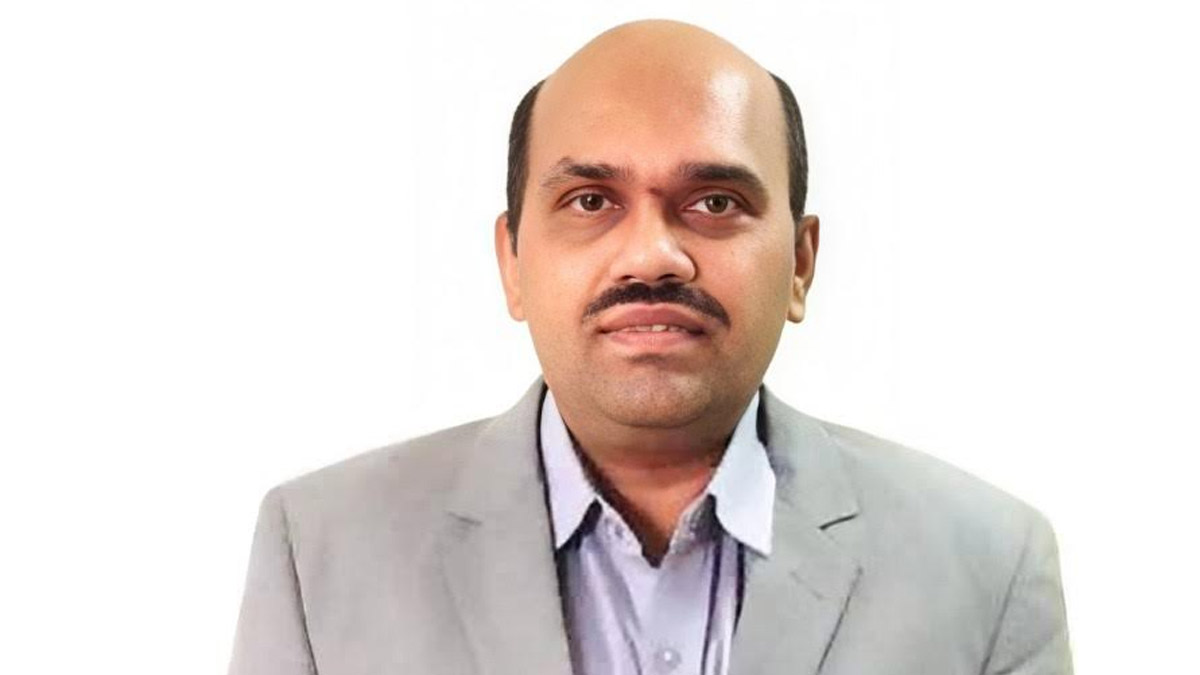
BENGALURU: Tessolve has never been shy about its ambitions. The Bengaluru-based engineering services firm already counts 18 of the world’s top 20 semiconductor companies among its clients, employs more than 3,500 engineers across 12 countries, and last year pocketed a $150m investment from TPG. Now it has hired the executive it believes can turn those assets into something bigger. Ravi Kumar Chirugudu, a 35-year semiconductor veteran who once built satellite payloads for ISRO and has since scaled engineering organisations across three continents, joins as president and chief operating officer, effective immediately.
THE MAN AND THE MANDATE
The appointment is, by any measure, a serious hire. Ravi Kumar Chirugudu comes to Tessolve after senior leadership stints at HCL Technologies, Altran and Wipro, where he managed large profit-and-loss portfolios and oversaw cross-regional teams. Over the course of his career, he has been instrumental in bringing more than 1,000 new products to market across the high-tech, energy and manufacturing verticals. Before the private sector claimed him, he began his working life as a scientist at the Indian Space Research Organisation, contributing to research and development in charge-coupled device technology and satellite payloads, a foundation that shaped everything that followed.
In his new role, he will lead Tessolve’s global growth strategy: expanding its engineering capabilities, deepening customer relationships and accelerating innovation across semiconductor and high-performance computing domains. The brief is broad, but the context is specific. Tessolve operates in the $550 billion global semiconductor market, and its recent moves, the acquisition of Germany’s Dream Chip Technologies and the TPG funding round, have sharpened both its reach and its expectations.
Srini Chinamilli, co-founder and chief executive of Tessolve, is characteristically direct about why Ravi Kumar Chirugudu was the choice:
“As we scale our global semiconductor and system engineering capabilities, Ravi’s appointment marks an important step forward. As global semiconductor demand continues to accelerate across industries, it is creating significant opportunities across the semiconductor lifecycle, from design, packaging, validation and systems integration. Ravi’s deep knowledge and leadership in this ecosystem brings the right mix of industry expertise, customer connect and execution capability, which will play a key role in strengthening our position as a trusted global engineering partner and reinforcing our market leadership.”
THE NEW ARRIVAL SPEAKS
Ravi Kumar Chirugudu, for his part, frames the move in terms of timing and culture, two factors that veteran executives tend to weigh as heavily as title or compensation:
“I am happy to join Tessolve at a time when the industry is rapidly evolving towards more complex, AI-driven systems. What stands out to me is its strong people-first culture and its commitment to bringing value to its customers. The strength of its global team, combined with its deep expertise in semiconductor innovation and next-generation product engineering, creates a solid foundation to build differentiated, scalable solutions. I look forward to working closely with the team to drive strategic growth and strengthen its role in shaping the global semiconductor ecosystem.”
The reference to AI-driven systems is not incidental. The semiconductor industry is in the midst of a structural reshaping, driven by the insatiable compute demands of artificial intelligence. For engineering services firms like Tessolve, which offers end-to-end capabilities from silicon design to packaged parts and invests in high-performance computing, high-speed interfaces, photonics and 5G, the moment is both an opportunity and a test. The company says it is well positioned to capture the next wave of industry growth. Ravi Kumar Chirugudu is now the person who has to prove it.
He came in from outer space, literally, and spent three decades learning how the semiconductor industry works from the inside out. Now Tessolve is betting that accumulated knowledge can help it cross the next frontier. In the $550 billion global chip market, the gap between ambition and execution is measured in engineering hours and leadership quality. Tessolve has just gone shopping for both.






