MAM
Average ad duration on the rise again?

Whenever there is a slowdown and results in belt-tightening by companies, one of the direct casualties is the duration or length of the television commercial (TVC). During recessionary times, average ad duration on television plummets not only because advertisers take lesser time to convey their messages but also because of various consumer promotions that are run with even shorter duration.
AdEx India has observed that in the last few years, the average ad duration plummeted to just above the 20 seconds mark. This raised a fear among ad agencies and broadcasters that if this phenomenon continues, we will have increasing clutter and frequency of TVCs thereby reducing the effectiveness of television advertising.

However, years 2003 and 2004 ended with a surprise and posted an average ad size above 23 seconds mark. The average ad size during 2003-2004 has touched a level that we haven’t seen in the last five years! A record of sorts as shown in chart below!

Let’s look at the ad duration slots used in 2004. The pie shows that 30 seconds commercial is the most preferred one (with 27 per cent of the advertising share) followed by 20 second commercial contributing 19 per cent.

As a result, one is forced to ponder on the following:
a) Does this signify that the Indian advertisers’ fraternity showed sound judgment by not falling prey to frequency trap and therefore bettering their creative quality?
b) Also, what kinds of product categories have led this change?
To answer whether this is a freak phenomenon, let’s look at the Top 10 spending categories on Television in January-December 2004.

Here we see mixed results – We see that the Top 1 category – Shampoos uses large average ad sizes. However, the second Top category – Toilet soaps have the shortest ad sizes among the Top 10.
Let’s also have a look at the pattern of average ad sizes across the months during 2001-2004. Here we will see a very unusual behavior – average ad sizes observes dip during the festival season across 2001-2004 though 2002 was an exceptional case.







MAM
Ajio launches Dhurandhar merchandise collection with Jio Studios
Limited edition range inspired by the film starts at Rs 349 on Ajio.
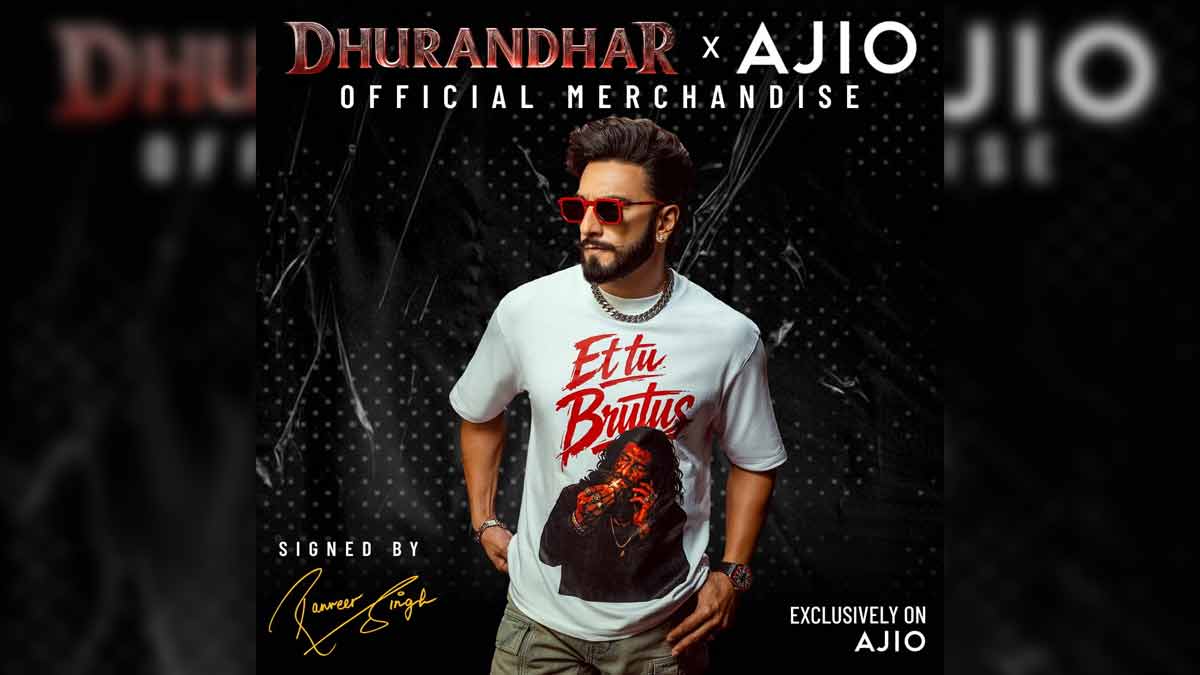
MUMBAI: When cinema meets the wardrobe, fandom doesn’t just stay on the screen, it walks out onto the street. Ajio, India’s fashion e-commerce platform, has launched an exclusive merchandise collection inspired by the spy-action film Dhurandhar, extending the film’s bold on-screen personality into everyday fashion.
The limited-edition range has been created in collaboration with Jio Studios and features graphic driven apparel and statement silhouettes that draw directly from the film’s high-energy aesthetic and characters.
Designed to appeal to both movie fans and style conscious shoppers, the collection translates the cinematic swagger of Dhurandhar into wearable fashion pieces starting at Rs 349.
The collection includes graphic T-shirts featuring iconic movie quotes, signature tees inspired by actor Ranveer Singh and limited-edition signed Pathani outfits that echo the larger-than-life style associated with the film’s characters.
Also part of the line-up is a collection inspired by Sara Arjun, translating her on-screen styling into contemporary silhouettes designed to appeal to younger audiences and fashion forward fans.
With bold typography, statement graphics and confident tailoring, the range blends cinematic storytelling with streetwear aesthetics, turning the film’s cultural energy into a fashion statement.
The collaboration reflects Ajio’s growing strategy of using fashion collaborations to tap into pop culture moments and entertainment properties.
By bringing elements of popular films into apparel, the platform allows audiences to move beyond simply watching a film and instead wear their fandom, making cinema part of everyday style.
Produced by Jio Studios and B62 Studios, Dhurandhar has emerged as one of the most talked-about action thrillers in recent times, known for its high-octane storytelling and larger-than-life characters.
The film, written and directed by Aditya Dhar, is also set to expand into a franchise, with the sequel “Dhurandhar: The Revenge” scheduled to release in theatres worldwide on March 19, 2026.
By launching the merchandise collection ahead of the sequel, Ajio and the film’s producers are extending the film’s universe into fashion, giving fans another way to connect with the story and its characters.
The Dhurandhar merchandise collection is now available exclusively on Ajio, bringing cinematic attitude, bold graphics and spy-thriller swagger straight into the wardrobes of fans.