MAM
Apply to change; evolve to grow: Brand Summit 2005

CHENNAI: The second day at the brand summit infused a lot of inspirational thought, discussion and provocation with speakers across genres addressing the age old yet absolutely paramount subject of branding in the new era and expectation setting with the target group.
A day of branding all the way. From the branding of a state to hardware, to beauty products to rural branding to the more macro ‘Brand India’ the summit covered it all.
Kick started by Bharat Bhushan principal secretary – tourism, Government of Kerala, the speaker threw light upon enhancing customer connect for profitable business solutions. Talking specifically about the hospitality services category, brands adopt an even more complex avatar in making that connect and creating an enduring bond with the consumer. Experiential marketing he said combined the desire for favourable experiences with the believability of first hand knowledge.
Referring to Kerala as ‘Gods own country’ Bhushan discussed how the campaign for promoting Kerala as a tourism destination worked wonders in terms of actual results and attributed it to experiential marketing and how it succeeded in establishing a connect with the consumer. “What matters most is how an experience shapes a consumer’s perception of the brand. The brands that succeed on a long-term basis are those able to form strong, differentiating emotional bonds with consumers. Without this bond, a brand’s relevance and connectivity with a consumer is not sustainable.” Kerala if looked at closely was an endeavour to realise the customer experience at every ‘touch point’ and more importantly to create touch points that would ensure sampling the experience.
Changing gears, from branding Kerala, the focus moved to consultative selling where Parag Samarth, country manager, Industrial and Distribution Sector, IBM India discussed this evolving concept and how it has helped establish the all important connect with its consumers. Some important points in note were establishing common goals across the company, creating customer value in every interaction, building and leveraging team synergy and thereby improving the win rate whilst shortening the sales cycle.
The IBM Consultative selling focused on a need based concept where the process puts the customers first, understanding his needs and there on moving to the execution of sales opportunities through customer interactions. The underlying principle being the ability to add value to the customer at every step of the selling process. His closing words being, ” Let’s not think of marketing as a manipulation, but as a process that delivers solutions and not products.”

Moving on to a more macro topic, ‘Brand India’, the session was hosted by none other than Jairam Ramesh, the economist who defined India in five points:
1) Multilayered
2) Evolving
3) Aggregate brand
4) Brand in transition
5) Unique psychology
Describing India as an onion he said those marketers who have not understood the fact that India is multilayered have quickly come to grief. He blatantly said that ‘Brand India’ was impossibility and the focus must be on building sub brands and India be a cafeteria of brands. Ramesh explained, “Lets not fall into the same trap as the ‘India Shining’ campaign fell into,” taking a dig at the BJP led campaign. “We are diversity in unity and this fact must be celebrated.”
Are consumers asking for too much?
The general consensus on this one was that consumers should be expecting the moon and if they are not then one has a problem. Increased levels of awareness has catalyzed the whole process of consumer expectations. Moving away from FMCG categories Ajit Mantagani president – denim division, Raymond India said, “In our line of business, we have to provoke the consumer to ask for the moon thereby increasing the value associated with our products. Given the existing environment, where a customer has more choice, other products to choose from, it became imperative for companies to develop trust and connect for them to succeed.”
He pointed out that defining one’s primary consumer was itself a strategic issue, as non FMCG categories do not deal with the end user directly and hence a lot of middlemen also become one’s customers.
Next was Lowe’s executive creative director R Balakrishnan, who in very simple words said gaining an insight into a customer is nothing but looking inside one’s self. Citing examples of the Balbir Pasha campaign to Vim Bar to Saint Gobain, Balakrishnan said the moment marketers stopped borrowing from consumers and started giving, that’s when we will become a cutting edge community.
Coming to making a rural connect, Rajesh Gupta VP DCM Sriram said how it was imperative to first have knowledge of the domain. Marker research done by a third party could provide with data but not the desired connect. Most rural consumers may abstain from telling you what they want, so the trick is to sense the needs and translate them into sales. Interpretation being critical.
Last mile branding in a retail model was covered by Pankaj Mehra, national sales director Loreal. The ultimate expectation has to do with an overall, more holistic assessment of what a brand delivers. This means that brands are expected to become more responsible for what they stand for in terms of their identities and what they provide beyond just the product. Since the way people define value changes with the times, consumers today are more in tune with the overall experience a brand provides versus what a product offers in terms of its attributes and functional benefits. While there are many companies that have already addressed a broader experience with their brands and products, marketers need to look closer at how their brand can enhance the overall experience that consumers will encounter before, during and after consumption of the end product.
The closing session highlighted the new age consumer and where they were headed. Delivered by Venkat Ramaswamy, professor of marketing at the University of Michigan, focused on the “next” practices of value creation. “Everybody is sensing a very basic and fundamental shift in business,” said Ramaswamy. With increased awareness, consumers today are highly networked with the Internet, mobile phones and the rise of consumer to consumer communication. He reiterated that it was time companies wake up and understand that they can no longer create value for the customer, but need to create value with the customer. Hence there has to be a constant endeavour towards co-creation.
Overall the day provided insight, raised relevant concerns: some age-old, some emerging one to ensure perspective and progress.
The discourse delivered some interesting take home value!


Brands
Tessolve lands a semiconductor veteran to drive its next big push
Ravi Kumar Chirugudu, who started his career at ISRO and has spent 35 years building chips and companies, joins the Bengaluru-based firm as president and chief operating officer
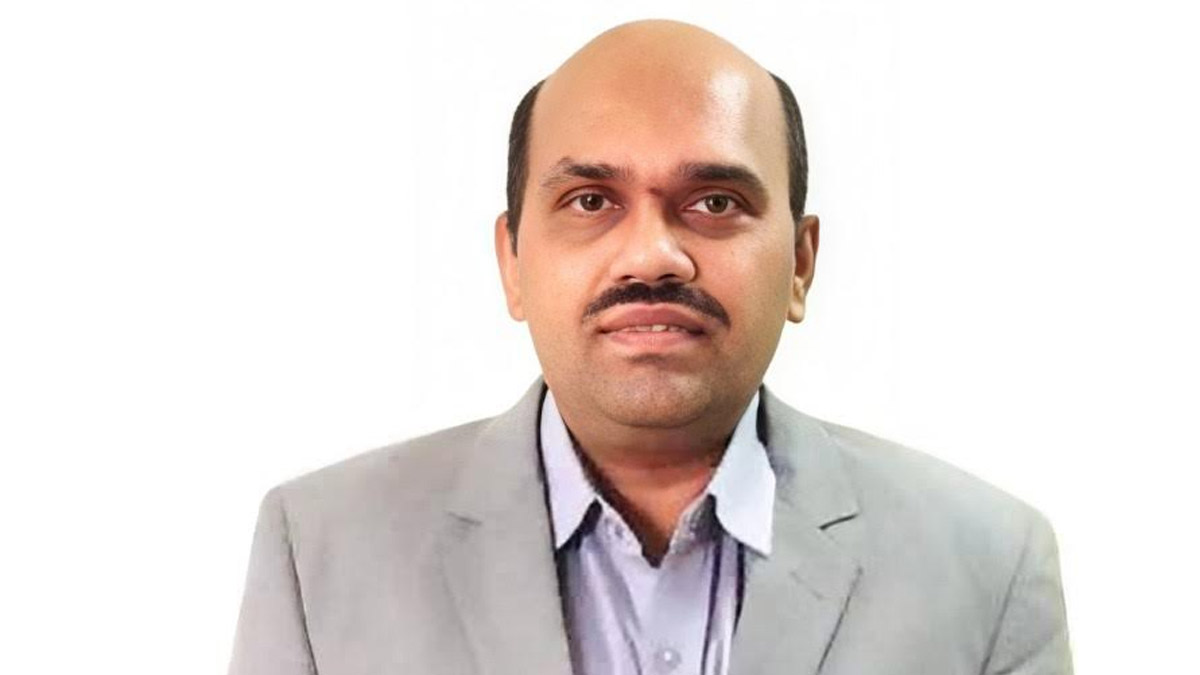
BENGALURU: Tessolve has never been shy about its ambitions. The Bengaluru-based engineering services firm already counts 18 of the world’s top 20 semiconductor companies among its clients, employs more than 3,500 engineers across 12 countries, and last year pocketed a $150m investment from TPG. Now it has hired the executive it believes can turn those assets into something bigger. Ravi Kumar Chirugudu, a 35-year semiconductor veteran who once built satellite payloads for ISRO and has since scaled engineering organisations across three continents, joins as president and chief operating officer, effective immediately.
THE MAN AND THE MANDATE
The appointment is, by any measure, a serious hire. Ravi Kumar Chirugudu comes to Tessolve after senior leadership stints at HCL Technologies, Altran and Wipro, where he managed large profit-and-loss portfolios and oversaw cross-regional teams. Over the course of his career, he has been instrumental in bringing more than 1,000 new products to market across the high-tech, energy and manufacturing verticals. Before the private sector claimed him, he began his working life as a scientist at the Indian Space Research Organisation, contributing to research and development in charge-coupled device technology and satellite payloads, a foundation that shaped everything that followed.
In his new role, he will lead Tessolve’s global growth strategy: expanding its engineering capabilities, deepening customer relationships and accelerating innovation across semiconductor and high-performance computing domains. The brief is broad, but the context is specific. Tessolve operates in the $550 billion global semiconductor market, and its recent moves, the acquisition of Germany’s Dream Chip Technologies and the TPG funding round, have sharpened both its reach and its expectations.
Srini Chinamilli, co-founder and chief executive of Tessolve, is characteristically direct about why Ravi Kumar Chirugudu was the choice:
“As we scale our global semiconductor and system engineering capabilities, Ravi’s appointment marks an important step forward. As global semiconductor demand continues to accelerate across industries, it is creating significant opportunities across the semiconductor lifecycle, from design, packaging, validation and systems integration. Ravi’s deep knowledge and leadership in this ecosystem brings the right mix of industry expertise, customer connect and execution capability, which will play a key role in strengthening our position as a trusted global engineering partner and reinforcing our market leadership.”
THE NEW ARRIVAL SPEAKS
Ravi Kumar Chirugudu, for his part, frames the move in terms of timing and culture, two factors that veteran executives tend to weigh as heavily as title or compensation:
“I am happy to join Tessolve at a time when the industry is rapidly evolving towards more complex, AI-driven systems. What stands out to me is its strong people-first culture and its commitment to bringing value to its customers. The strength of its global team, combined with its deep expertise in semiconductor innovation and next-generation product engineering, creates a solid foundation to build differentiated, scalable solutions. I look forward to working closely with the team to drive strategic growth and strengthen its role in shaping the global semiconductor ecosystem.”
The reference to AI-driven systems is not incidental. The semiconductor industry is in the midst of a structural reshaping, driven by the insatiable compute demands of artificial intelligence. For engineering services firms like Tessolve, which offers end-to-end capabilities from silicon design to packaged parts and invests in high-performance computing, high-speed interfaces, photonics and 5G, the moment is both an opportunity and a test. The company says it is well positioned to capture the next wave of industry growth. Ravi Kumar Chirugudu is now the person who has to prove it.
He came in from outer space, literally, and spent three decades learning how the semiconductor industry works from the inside out. Now Tessolve is betting that accumulated knowledge can help it cross the next frontier. In the $550 billion global chip market, the gap between ambition and execution is measured in engineering hours and leadership quality. Tessolve has just gone shopping for both.






