Digital
Apple taps Google’s Gemini to supercharge Siri in a rare tech truce

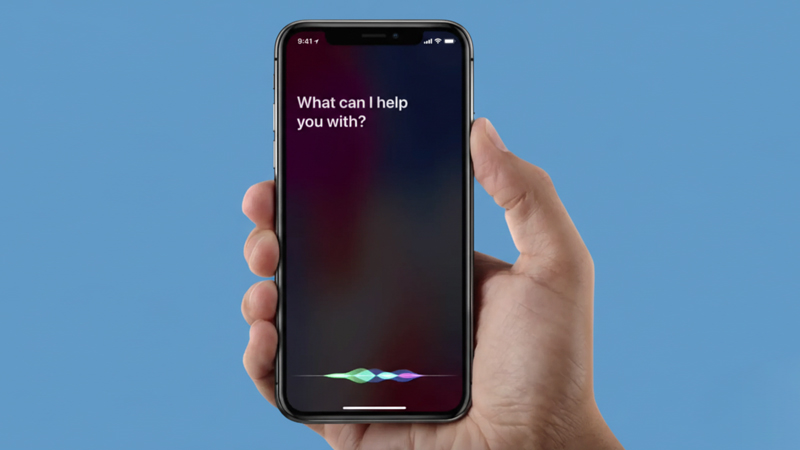
CALIFORNIA: Apple has struck a multiyear deal with Google to run its next wave of artificial intelligence, including Siri, on Google’s Gemini models, sealing an unlikely alliance between two of Silicon Valley’s fiercest rivals.
The iPhone maker said it chose Gemini after a “careful evaluation” showed Google’s system offered the strongest foundation for its AI push, a tacit admission that Apple’s in-house efforts have lagged in the race to catch up with fast-moving rivals.
The pact is a sharp departure for Apple, which has traditionally built its core technologies itself. Yet it also extends a long-running commercial relationship that already sees Google pay Apple billions of dollars a year to remain the default search engine on iPhones, a deal currently under US antitrust scrutiny.

News of the AI tie-up lifted Alphabet’s shares above a $4 trillion valuation for the first time, underlining investor belief that Google has secured a commanding role in the next phase of consumer AI.
Not everyone is cheering. Elon Musk, whose xAI competes in the same field, called the agreement “an unreasonable concentration of power”, given Google’s grip on Android and Chrome.
Apple had also weighed partnerships with OpenAI, Anthropic and Perplexity, but ultimately plumped for Gemini. Financial terms were not disclosed.
For Apple, the deal offers a quick route back into the AI arms race after a faltering start that saw delays to a revamped Siri and the departure of its AI chief late last year. Analysts said the partnership gives the company breathing room as it tries to get its broader AI strategy on track into 2026.
Apple insisted that its own system, Apple Intelligence, will still run on devices for core functions, preserving what it calls industry-leading privacy, even as Google’s models do the heavy lifting behind the scenes.







Digital
AI drives 92 per cent surge to 15M views across India’s open web
Taboola data shows rising AI curiosity reshaping digital consumption trends
MUMBAI: Artificial intelligence is fast becoming the internet’s favourite topic in India, with fresh data showing a sharp spike in audience interest across the open web.
Insights from Taboola’s Taboola Newsroom reveal that AI-related content generated more than 15 million pageviews over the past 90 days, marking a striking 92 per cent jump compared to the previous 45-day period. The surge signals a clear shift, with AI moving from niche tech chatter to mainstream digital curiosity.
The broader technology category is also seeing momentum, clocking around 1.7 million pageviews and a 27 per cent rise in engagement. However, much of that growth appears to be riding on the AI wave, as developments in artificial intelligence increasingly dominate tech narratives.
Within the AI ecosystem, newer players are quickly capturing attention. Content linked to Anthropic alone drew roughly 2.5 million pageviews, registering a dramatic 2,096 per cent surge. The spike reflects growing interest in alternative AI models and emerging competitors in the space.
Meanwhile, familiar names continue to hold steady ground. Coverage around ChatGPT generated about 1.2 million pageviews, underlining sustained curiosity as users explore practical applications, updates, and everyday use cases for generative AI tools.
Big Tech is firmly in the spotlight too. Content related to Meta attracted approximately 2.2 million pageviews, up 30 per cent, as audiences track its expanding role in AI infrastructure and innovation.
Taken together, the data points to a deeper shift in how audiences engage with AI. Interest is no longer tied only to big announcements but is evolving into a steady stream of exploration around tools, platforms, and real-world uses.
For publishers, this opens the door to richer storytelling through explainers and practical insights. For advertisers, it presents a chance to tap into a highly engaged, tech-savvy audience.
If the numbers are anything to go by, AI is not just part of the conversation anymore, it is leading it.