MAM
Anil Kapur Joins MoneyGram as Head of Asia Pacific and South Asia


MUMBAI: MoneyGram (NASDAQ: MGI), a global provider of innovative money transfer and payment services, today announced that industry veteran Anil Kapur has joined the company as head of Asia Pacific and South Asia.
“We are happy to welcome Anil to the MoneyGram team,” said Grant Lines, Chief Revenue Officer at MoneyGram. “He is well known throughout the industry for his organizational proficiency and ability to establish third-party partnerships that help drive growth. His leadership will be invaluable as we continue to expand our reach in the Asia Pacific and South Asia markets.”
A widely recognized business leader in India, Kapur brings more than 28 years of experience in financial services across retail banking, remittances and digital payment sectors. He comes from Wirecard, a global Internet technology and financial services provider, where he served as the company’s director for India. He played a pivotal role in driving company revenue by diversifying the business and its product lines.

“It is an honour to join MoneyGram, an organization which is globally recognized and highly trusted with such a strong product portfolio. I accept the challenge to lead the company’s Asia Pacific and South Asia business and implement a strategy that will enable us to grow strongly. It is my personal endeavour to make a positive, meaningful impact that matters to every stakeholder.”
Prior to Wirecard, Kapur worked for Western Union as managing director for India, South Asia and South-East Asia where he was instrumental in setting up business throughout the region. Under his leadership, he built a significant and robust network of agent locations spread across the geography of India, which became the largest distribution portfolio for Western Union globally.
Kapur’s talents have also been sought after as the founder of InTandem Advisors, a remittance consulting and advisory firm where he provided consultancy services for fintech players, payments banks and global organizations. He brings this vast experience to MoneyGram and will provide valuable insight as a member of the regional leadership team.



Brands
Aman Gupta’s OFF/BEAT secures Rs 100 crore seed funding round
Bessemer backs new venture betting on AI and India’s digital shift
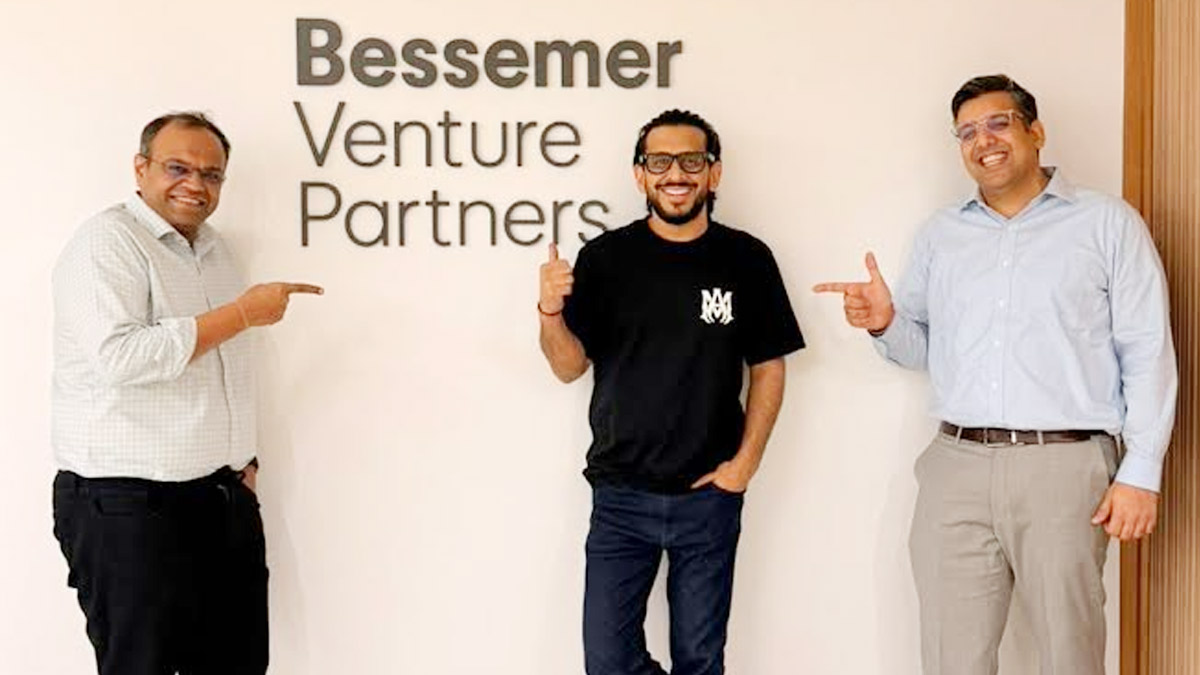
MUMBAI: Aman Gupta has raised Rs 100 crore in seed funding for his new venture OFF/BEAT, with Bessemer Venture Partners leading the round as it bets on a new wave of AI-led, consumer-first businesses in India.
The funding marks an early but significant push for OFF/BEAT, which is positioned to tap into a rapidly evolving market shaped by a digitally native generation and advances in artificial intelligence. The venture aims to build at the intersection of culture and technology, where brand identity and innovation increasingly go hand in hand.
Gupta, best known for co-founding boAt and scaling it into a Rs 3,000 crore-plus business, is now looking to apply those learnings to a new playbook. His focus this time is not just on building a consumer brand, but on leveraging AI and global networks to accelerate growth.
OFF/BEAT founder Aman Gupta said, “Having built from scratch before, I know what capital can do and what it cannot. This time, I was looking for partners with a global perspective who can help me leverage technology and AI, because that is where the future lies. Bessemer’s track record with companies like Anthropic, Shopify, Canva and LinkedIn says it all.”
The choice of investor reflects that ambition. Bessemer Venture Partners has backed global technology players such as Anthropic, Shopify, Canva and LinkedIn, bringing not just capital but strategic support and global reach.
Bessemer Venture Partners partner Anant Vidur Puri said, “We back founders who see around corners. Aman saw how a new India would come to think about aspiration, identity and quality, and built boAt as proof. He is now applying that same instinct to a market being reshaped by AI and by a generation with entirely new expectations.”
The investment comes at a time when India’s startup ecosystem is being reshaped by both consumer behaviour and technological disruption. Founders are increasingly expected to understand not just products, but the cultural shifts that drive adoption.
For OFF/BEAT, the journey is just beginning, but the signal is clear. In a market where attention is fleeting and expectations are rising, building something truly distinctive may be the only way to stay on beat.






