MAM
Amagi flips the script with AI tool to keep programmers off the ropes

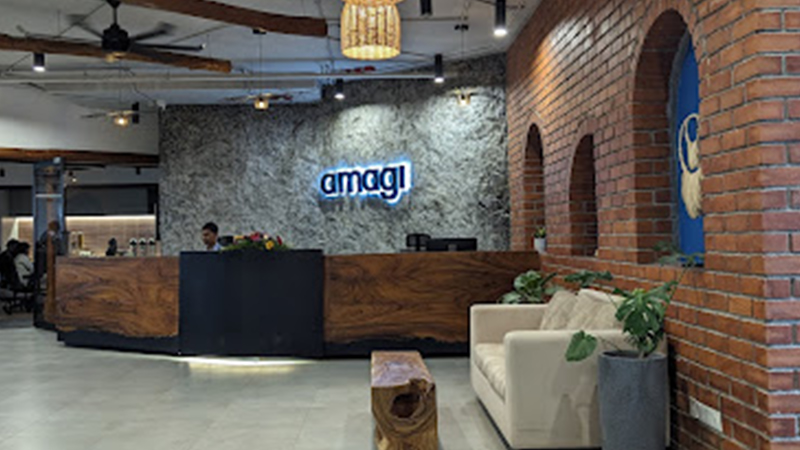
MUMBAI: In the OTT jungle, the bots are now doing the heavy lifting
Gone are the days when content teams had to wrestle with Excel sheets and caffeine-fuelled late nights to build programming schedules. In a move that gives human schedulers their long-overdue coffee break, Amagi has just launched Amagi Smart Scheduler — an AI-powered scheduling solution designed to make sure your content hits the right eyeballs at the right time, without the daily data gymnastics.
The company, a major player in cloud-based SaaS solutions for TV and streaming, announced the launch on 7 April 2025, positioning this slick new tool as a saviour for content teams, streaming platforms and broadcast networks alike. Built on Argoid’s AI scheduling platform — following Amagi’s acquisition of Argoid AI — Smart Scheduler marks the company’s latest bet on AI to revolutionise media operations.

“The future of media programming lies in intelligent automation,” said Amagi co-founder & CRO Srinivasan KA. “With Amagi Smart Scheduler, we offer programmers and content owners a solution that reduces manual workload and enhances audience engagement and revenue potential.”
Smart Scheduler doesn’t just slap AI on a spreadsheet and call it magic. It offers two modes of operation:
1. Fully automated mode: One click, and your channel schedule is AI-optimised using machine learning models trained on historical viewership data, content preferences, and real-world trends. No tarot cards involved.
2. Rules-based automation mode: Want a little more control? Teams can set custom rules and let the AI play within those lines — ensuring precision without paranoia.
In both cases, editorial control stays intact. You can tweak, finesse, and fine-tune like the artsy genius you are. But now, you won’t need three screens, two assistants and a prayer circle to do it.
The Smart Scheduler uses a buffet of data sources — historical content performance, metadata, audience trends, and even social engagement signals — to craft schedules that are actually smart, not just buzzword-flavoured.
Traditional content scheduling has long been the media world’s necessary evil — time-intensive, manual, and prone to human error (and burnout). With Smart Scheduler, Amagi says it will scale multi-channel programming, improve operational efficiency, and crucially, boost ad revenue.
The product is now generally available, ready to enter the workflows of media companies everywhere that are sick of spreadsheets and starving for streamlining.
The timing couldn’t be better. With audience behaviour evolving faster than Tiktok trends and ad budgets getting squeezed like toothpaste tubes, content teams need tools that are sharp, swift and smart enough to keep up. Amagi’s Smart Scheduler might just be the solution that gives programmers their weekends back — or at least, fewer panic attacks.




Brands
GUEST COLUMN: Beyond layoffs, India emerges as creative-tech hub
Shift in hiring and AI-led workflows is reshaping global media and marketing
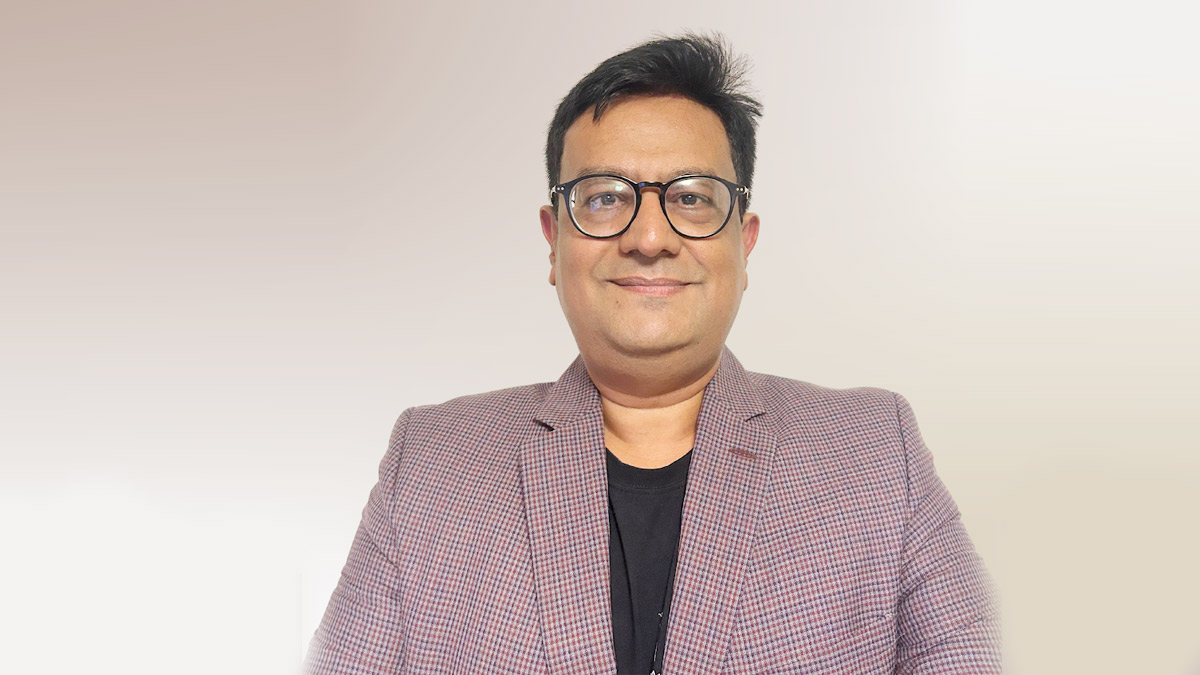
MUMBAI:The global narrative around layoffs in media and technology may suggest contraction, but a deeper transformation is reshaping how creative and tech capabilities are built and deployed. For Sanjil Zaveri, general manager – India at Brandtech+, this shift is less about decline and more about redistribution, one that is positioning India at the centre of a new global operating model. In this piece, Zaveri explores how integrated workflows, AI-powered production, and evolving talent demands are redefining the creative-tech ecosystem, why India is emerging as a strategic hub for global content and innovation, and what this means for the future of media, marketing, and talent.
The global headlines around layoffs in technology and media continue to dominate industry conversations. From platform restructuring to reduced marketing spends, the narrative suggests a slowdown across the creative and digital ecosystem.
But beneath these headlines, a different shift is underway, one that is quietly redefining how creative and technology work is delivered globally.
Hiring is not disappearing; it is being redistributed. And India is increasingly at the centre of this transition.
A structural shift in the creative-tech ecosystem
The media and marketing landscape is undergoing a fundamental reset. Brands today are moving away from fragmented agency models and siloed teams toward more integrated, agile structures.
Creative, technology, and media are no longer operating in isolation. Campaigns are now built through connected workflows, where ideation, production, and optimisation happen simultaneously.
This shift is forcing organisations to rethink where and how teams are built. Increasingly, the focus is on capability, speed, and scalability, rather than geography alone.
India’s emergence as a creative-tech hub
India’s role in this evolving ecosystem has expanded significantly.
Traditionally positioned as a backend execution market, India is now playing a far more central role in global campaign delivery. Teams based here contribute not just to production, but also to strategy, content development, and performance optimisation.
This is particularly relevant in a market where content velocity has increased dramatically. With the rise of digital platforms, OTT, and always-on marketing, brands require high volumes of creative assets without compromising on quality.
Industry insights from Ernst & Young point to India’s growing strength as a global content hub, while NASSCOM continues to highlight the scale and depth of the country’s digital talent pool. Together, these factors create a compelling case for India as a foundation for more efficient, integrated content ecosystems serving global markets.
A global company’s perspective on India
At Brandtech+, this shift is already shaping how we operate.
As a global organisation working across creative, marketing, and technology, our talent strategy is increasingly driven by capability rather than location. India has therefore become a key market for both scale and strategic talent.
In the first quarter of this year, we have significantly accelerated hiring in India across creative, technology, and operations roles, moving well ahead of plan and continuing to build strong momentum. We are actively hiring across multiple functions, with India playing a central role in delivering integrated creativetech solutions for global brands.
These signals reflect a broader change in how global companies view India, not as a delivery centre, but as a hub for connected creative, data, and technology capabilities.
“While much of the global narrative is centred on contraction, what we are seeing in India is a different kind of growth,” says Sanjil Zaveri. “As a global company, we are investing in talent that can work across creative, data, and technology, because that is where the future of marketing is headed.”
AI and the new content economy
Artificial intelligence is playing a critical role in enabling this transformation.
In today’s media environment, the demand for content has scaled exponentially. Brands are expected to create, adapt, and optimise creative assets across multiple platforms in real time. The scale of this demand would be difficult to sustain through traditional production models alone.
AI is helping make this possible.
Rather than replacing roles, AI is streamlining workflows, automating repetitive tasks, accelerating production timelines, and enabling faster experimentation. This allows creative and strategy teams to focus on higher-value outputs.
“AI removes the mundane and elevates the meaningful,” says Zaveri. “It allows teams to focus on ideas and storytelling, while technology drives efficiency.”
For media platforms and advertisers, this is redefining how campaigns are built, moving from linear production cycles to continuous, data-driven content creation.
What this means for media talent
For professionals across media, advertising, and digital, this shift is redefining skill requirements.
The traditional boundaries between creative, media planning, and technology are blurring. Content creators are expected to understand performance metrics. Media professionals are working more closely with data, platforms, and automation. Collaboration across disciplines is becoming a core skill.
This is creating demand for hybrid talent, professionals who can operate across disciplines and adapt to rapidly changing workflows.
India’s talent ecosystem is particularly well suited to this environment. With strong capabilities across content, design, engineering, and analytics, the market offers a unique combination of scale and versatility.
Importantly, global exposure is no longer tied to relocation. Professionals in India are increasingly working on international brands and campaigns, collaborating with teams across markets in real time.
Looking ahead: India at the centre of the reset
What we are witnessing today is not a temporary phase; it is a structural reset in the global creative-tech ecosystem.
Layoffs may continue to shape short-term narratives, but they do not capture where long-term growth is being built. That growth lies in new operating models, integrated workflows, and markets that can deliver both scale and innovation.
India is firmly at the centre of this transformation.
As global media and marketing organisations continue to evolve, India’s role will only become more critical, not as a support market, but as a strategic hub for content, creativity, and technology-led innovation.
The future of creative-tech will be defined by collaboration, speed, and adaptability. And increasingly, it will be shaped from India.
Note: The views expressed in this article are solely the author’s and do not necessarily reflect our own.






