MAM
AI to transform marketing strategies, not its core – Vikram Sakhuja

MUMBAI: Artificial intelligence (AI) has gone from being a buzzword to an indispensable tool, revolutionising industries across the globe.
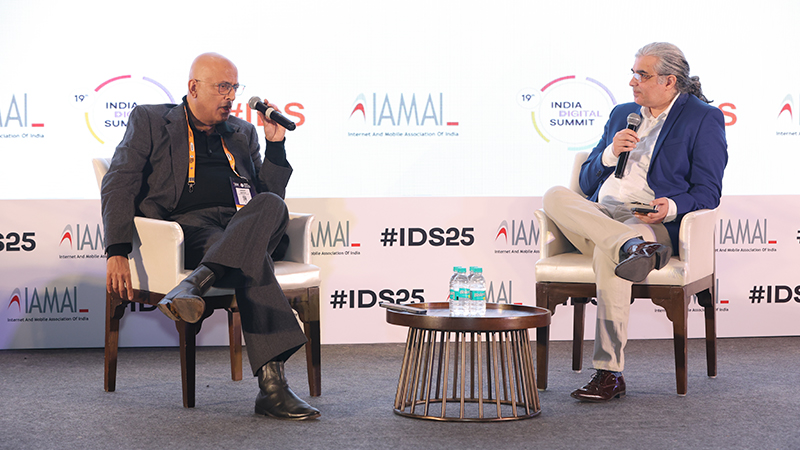
At the 19 India Digital Summit, Madison Media & OOH at Madison World group CEO Vikram Sakhuja shared his views on how AI is transforming marketing strategies without disrupting its core principles. Spoiler alert: marketing fundamentals are safe, but the methods? They’re getting an AI upgrade!
Sakhuja made it clear that while AI is rewriting the “how” of marketing, the “why” and “what” remain rooted in human understanding. “The core principles of marketing will largely remain unchanged. What will evolve and transform are the methods of marketing,” he said during a thought-provoking session hosted by India Today Group consumer revenue group CMO & COO, Vivek Malhotra.

Malhotra posed the billion-dollar question: Can publishers leverage AI-driven algorithms to help the ad industry scale to $1 trillion? Sakhuja’s reply was simple: AI’s learning thrives on data. “You can’t just write an algorithm; it’s the data fed into the system that enables learning and improvement over time,” he noted, adding that companies like Google are refining AI engines to optimise media spends through better data.
Can AI foster human connection? The answer is a surprising yes.
Are algorithms too mechanical to form meaningful consumer bonds? Not according to Sakhuja. “AI can create a deep connection. For instance, when Meta launches a trailer, the number of shares it gets is a real-time pulse check,” he explained. AI helps broadcasters and advertisers bypass traditional targeting and focus on consumers who actually engage.
And the examples don’t stop there. Think about Cadbury’s Diwali campaign, where Shah Rukh Khan’s virtual presence personalised messages for neighbourhood stores. That’s AI delivering local charm on a national scale.
Sakhuja dismissed the notion that AI is the sole domain of new-age brands. “Of course, legacy brands can embrace AI,” he said. He highlighted how even routine tasks like food delivery via Swiggy or Zomato rely on AI, demonstrating its seamless integration into daily life.
The takeaway? Age doesn’t matter if you’re willing to innovate.
But wait, what about data validation? With great data comes great responsibility.
Sakhuja cautioned about the dangers of bad data—what he called the “garbage in, garbage out” problem. Feeding unvalidated data into AI can lead to “hallucinations” (no, not the psychedelic kind) where outputs are wildly off-mark.
The solution? “Validation checks are crucial to ensure accuracy and prevent biases. The key is balancing AI’s capabilities with human oversight,” Sakhuja advised, adding that ethical use and privacy concerns need to stay top of mind.
Three ways AI supercharges marketing:
1 Precision targeting: AI identifies who’s engaging and how, skipping old-school guesswork.
2 Customised experiences: From localised campaigns to dynamic messaging, AI personalises at scale.
3 Smart scaling: Brands like Cadbury use AI to connect with millions while keeping it personal.
Final thought: Will AI replace humans? Not likely. Sakhuja pointed out that AI is a tool, not a replacement. “Human judgment remains critical. Over-reliance on AI could erode the creativity and ethics that define good marketing,” he concluded.
So how will your brand embrace the AI wave without losing its human touch?






Brands
Tanishq enters natural gemstone segment with Triptii Dimri campaign
Hues collection debuts ahead of Akshaya Tritiya, spotlighting self-expression
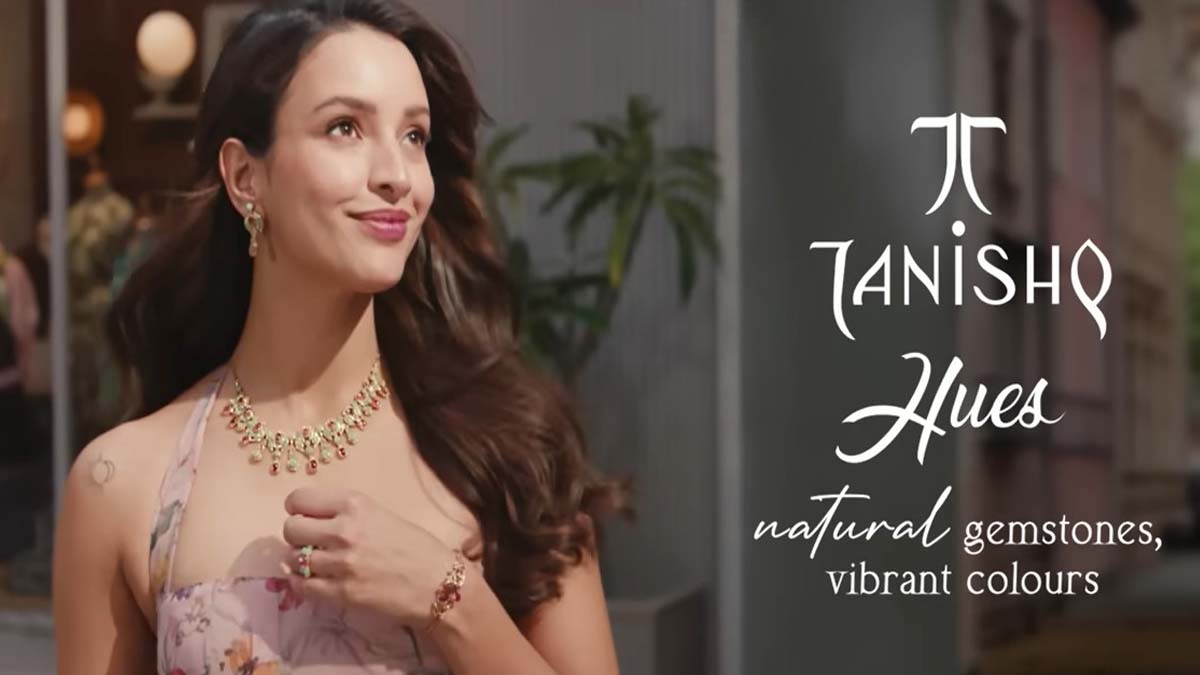
MUMBAI: Tanishq is stepping into the natural gemstone jewellery space with a new campaign featuring actor Triptii Dimri, marking a strategic expansion ahead of Akshaya Tritiya.
The launch introduces the brand’s latest collection, ‘Hues’, a design-led range crafted in 18kt gold and built around 100 percent natural gemstones. The move signals Tanishq’s intent to tap into a fast-growing category driven by consumers seeking authenticity, individuality and expressive styling.
Conceptualised by Lowe Lintas, the campaign film leans into the idea of colour as a form of self-expression. Set in a muted, almost paused world, the narrative comes alive as Dimri selects her jewellery, triggering a burst of colour that transforms her surroundings. The visual metaphor captures how jewellery is evolving from occasion-led adornment to a more personal, mood-driven choice.
The ‘Hues’ collection draws inspiration from the vibrancy of an Indian summer, featuring gemstones such as emeralds, amethysts, citrines, tourmalines and tanzanites. With sculptural forms and techniques like cabochon cuts and layering, the designs aim to bring depth, movement and a contemporary aesthetic to fine jewellery.
Titan Company Limited chief marketing officer Pelki Tshering said, “‘Hues’ marks a bold new chapter as we introduce natural gemstone jewellery in India. The collection reflects the evolving Tanishq woman who is expressive and confident, and seeks jewellery that mirrors her individuality.”
Sharing her perspective, Triptii Dimri said, “What I love about this collection is how it celebrates self-expression through colour. It feels less about occasion and more about expressing who you are in the moment.”
Priced from Rs 30,000, the collection is positioned for both everyday wear and special occasions. To coincide with the festive season, the brand is also rolling out promotional offers, including discounts on making charges and gold rate protection schemes.
With Hues, Tanishq is not just adding a new category but also reshaping how jewellery is worn and perceived, placing personal expression and colour firmly at the centre of its design philosophy.






