Brands
After viral campaign, brands take on Cred with ‘bread’ & ‘bed’ points

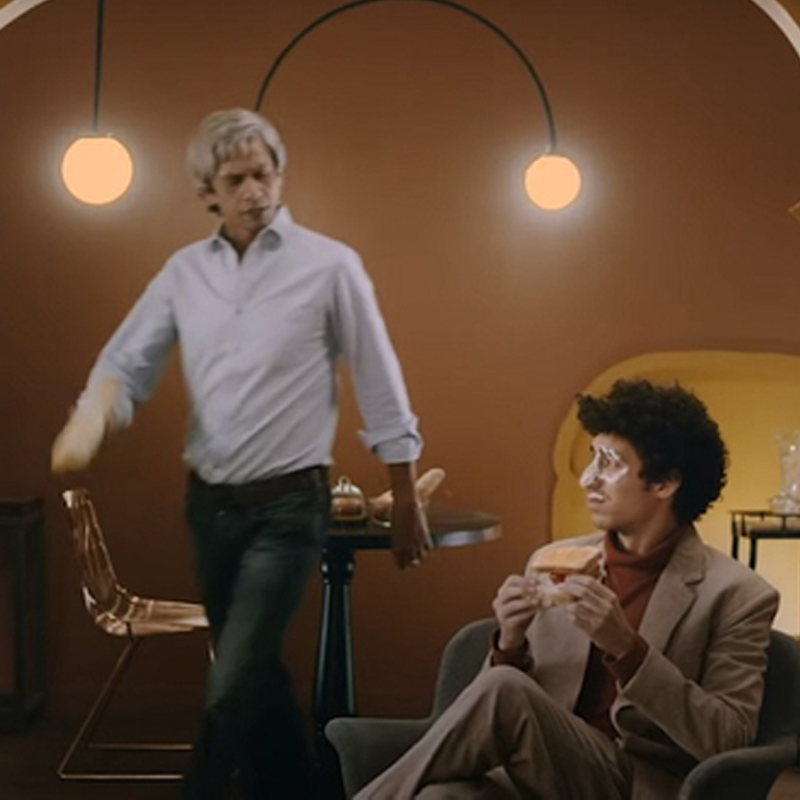
MUMBAI: Credit card payments app Cred has been grabbing a lot of eyeballs for its latest series of ads coming against the backdrop of the Indian Premier League, featuring actor Jim Sarbh and a host of other celebrities – from cricketer Rahul Dravid, to actor Jackie Shroff and playback singer Kumar Sanu. The Dravid one, of course, hit the ball out of the park with the memorable ‘Indiranagar ka gunda’ quip, sparking a great deal of buzz and meme fests.
But while the ads were a superhit, the brand itself came in for some nit-picking and fault-finding from a section of netizens over the usage of the app, with folks cribbing about not knowing what to do with their accumulated Cred points. Soon, other brands piled on too.
Piggybacking on the visibility earned by the Cred ad and riding on the ambiguity element surrounding its “Cred points”, rival brands Magicpin and CashKaro have now released ads, lampooning it with their “bread” and “bed” point metaphors. The message is unambiguous: users want to earn asli (real) savings and actual money – “not just collect Coins or Points” and wonder “what’s the point?!”

“We’ve all watched Rahul Dravid, a distinguished, well-loved celebrity, lose his mind on TV. We love it too. But do we know how this much-touted rewards program even works, or what the reward “coins” are even worth? One insight we encountered was that most Cred users have lakhs of points, but don’t seem to know how or where to use them,” online business discovery and rewards platform Magicpin said in a press statement.
Magicpin has collaborated with actor Vijay Raaz known for his down-to-earth, plainspoken and dry persona for their ad. And contrasted it with the polished tone and tenor of Jim Sarbh in the Cred ad. With this, the brand hopes to position its own rewards program as the straight-talking, ‘Asli Savings’ option for everyone.
It released another ad in the series, which directly takes a dig on Cred’s hit creative featuring Rahul Dravid in an angry avatar, by having Vijay Raaz talk about coming to the point without even getting angry.
Homegrown cashback and coupons site CashKaro has also rolled out an ad film about “The Magic of #CashOverCoins”. The video, featuring no known faces or celebrities, talks about how we all want to “earn MORE Money & not just collect Coins or Points that we can’t easily use”. It also claims that CashKaro gives its users actual cashback & money on each transaction made via the site.
Conceptualised in-house, the film takes a dig at Cred’s ads featuring celebrities and, in a way, is also a cheeky dig on Magicpin’s ad. The campaign consists of a film which is shot on a set similar to Cred, just like the Magicpin ad.
Created on a lighter note, both these ads give a humorous spin to celebrity endorsements by conveying tongue-in-cheek that you don’t need to resort to gimmicks or big celebrities if your product is genuine. While it’s entertaining for the consumer, it remains to be seen which brand gets the most mileage from these amusing brand wars.






Brands
E-commerce growth rises, but profits come under pressure
Shop Culture flags rising costs, weak systems and a $5.38 billion quick-commerce boom reshaping global retail

MUMBAI: E-commerce is booming, but profits are thinning. A new report by Shop Culture warns that brands clinging to outdated, growth-at-all-costs strategies are being outpaced in a costlier, more complex 2025 landscape.
Global online retail is expected to cross $6.86 trillion this year, with 2.77 billion shoppers making at least one purchase. Yet returns are under strain: average return on ad spend has slipped to 2.87:1, exposing cracks in how brands chase scale without building sustainable margins.
Three shifts are rewriting the rules. First, retail media is getting pricier, with Amazon’s average cost per click rising 15.5 per cent year-on-year to $1.12. Second, while 77 per cent of e-commerce professionals now use AI daily, many see limited gains as weak systems blunt its impact. Third, geography is no longer expansion, it is strategy. The share of Shop Culture clients operating across multiple markets has more than doubled, from 30 per cent in 2024 to 65 per cent in 2025.
Subarna Mukherjee, founder and ceo, Shop Culture, is blunt: “The e-commerce industry has a nostalgia problem. In 2022, the playbook was simple: list aggressively, spend on ads, and ride the wave of post-pandemic digital adoption. It worked. Revenue grew rapidly. But by 2025, the industry is seeing the consequences of those structural shortcuts. E-commerce itself is not slowing down, the challenge lies in how brands are operating within it.”
Nowhere is the shift sharper than in India’s quick-commerce boom. The segment is set to hit $5.38 billion in 2025, growing 17 per cent and emerging as the fastest-growing globally. What began as a convenience play is fast becoming a margin buffer. In one case, quick commerce drove 70 per cent of a packaged food brand’s online revenue, delivering 130 per cent year-on-year growth. A beauty brand, meanwhile, saw selling prices rise 25 per cent higher than on traditional marketplaces.
Expansion, too, is being rethought. The report argues that brands chasing the largest markets first often stumble. Better outcomes come from sequencing entries based on efficiency, regulatory readiness and competition, with markets such as the UK and Germany offering smarter entry points than the United States.
Compliance has turned from a checkbox into a revenue lever, especially in Europe. Brands with ready frameworks can go live in 8 to 12 weeks, while others risk delays of six months or more due to listing and documentation hurdles.
AI, for all the hype, is no silver bullet. Across more than 1,500 listings, it improved conversion rates by 10 to 15 per cent, cut TACOS by 7 to 10 per cent and reduced stockouts by 20 per cent, but only when layered on strong foundations. As Mukherjee puts it: “AI is not a growth strategy, it is an amplifier. It enhances strong systems and exposes weak ones.”
The message for 2026 is stark. Growth alone will not save brands. Margins, discipline and smarter strategy will. In a market still expanding at breakneck speed, the real race is no longer for scale, it is for survival.