MAM
Advertisers chase soccer World Cup

A day to go to the Fifa World Cup and fans are already geared up to pump their lungs that would scream and pound to cheer their favourite teams.
And to attract those fans, companies around the world are devising various strategies to build consumer connect.
 These range from apparel manufacturers, airlines and TV hardware companies to gaming and DTH service providers. Everybody wants a piece of the action which comes around just once in four years.
However, there is a certain amount of caution in the market in terms of marketing spends as the economic downturn is just over. Also, not all Fifa partners are doing activation around the event.

Products that will be the most active are youth centric and upper middle class brands that would be targeting the urban youth. This would be important as international footballers are treated almost on par with cricketers – at least in three states. There is, as expected, some amount of activation happening in Goa, Kerala and West Bengal where the interest for soccer is high.
Percept India joint MD Shailendra Singh notes that male specific brands for the foreseeable future would be active. “This is because marketing ultimately has to justify some sort of RoI and products that are looking for a higher sale during this period would be the ones that would market extensively,” he says.
Boon for ESPN Star Sports: Broadcast partner ESPN Star Sports is expected to clock an advertising revenue of Rs 1 billion from the Fifa World Cup.
ESS has sold most of its inventory and has roped in sponsors that include Vodafone, Airtel, Nokia and Samsung.
ESS MD RC Venkateish expects a 25 per cent growth in ratings this time around. “Last time the event managed an average TVR of 2.1. We also expect families to tune in besides males. That is because the soccer World Cup cuts across TGs,” he says.
ESS‘ bullishness is shared by a Nielsen study. According to it, eight out of 10 Indians surveyed would follow the event live on television.
While the ratings during Fifa World Cup in terms of absolute numbers may not go up by a lot, the sheer increase in the base will see larger audiences coming into the game. There has been a lot of coverage especially in newspapers which will drive people to ESS.
Venkateish is confident that the boost in viewership for the soccer World Cup will have a positive carry over effect to other soccer events as well like the EPL once the World Cup gets over.
TV companies get cracking: With the sporting extravaganza being on HD, television manufacturers are looking at boosting their sales of premium products. Brands like Samsung and LG who have a global exposure to the football platform through multiple fronts will be most active.
Analysts say television sales could grow in the region of 15 per cent as consumers prefer to upgrade to better and bigger sets. In the key markets of West Bengal, Goa and Kerala sales can actually double.
Sony Electronics, which is a Fifa partner, will focus on launching a full range of Bravia Full HD and LED 3D TVs. The 3D push is being done as it gives the consumer a new way of looking at soccer.
Says Sony India MD Masaru Tamagawa, “We are focussing on the soccer crazy Kerala and West Bengal. We have introduced consumer promotions in West Bengal and Kerala wherein on purchase of every Bravia LCD TV above 26 inches, the consumer shall also be a recipient of Official Fifa Football replica. Our aim is to sell around 30,000 units in West Bengal region and around 10,000 units in Kerala.”
Haier, meanwhile, has launched their Soccer Scheme in the form of the Haier ‘Free Kick offer‘. Haier India president Eric Braganza says that this is a scratch card scheme where on purchase of any LED/ LCD TV above 81 cms (except 32S9), a customer can win 100 per cent cash back or an Adidas track jacket with an autograph from its brand ambassador John Abraham, worth Rs 2290. In terms of new products, Haier has launched a range of 117 cm inch Full HD LED backlit TVs and 140 cm LCDs.
Panasonic India is targeting a sales turnover of Rs 750 million from Kerala, West Bengal and Goa during the event. Panasonic‘s marketing manager sports and eco products Kunal Dua points out that the company, which is the primary sponsor of the Indian football team, has kicked off road shows to promote its products during the World Cup in Kochi, Kolkata and Goa.
“Panasonic has introduced a unique ‘Panasonic Soccer Mania 2010‘ offer on their range of ‘Viera‘ Plasma TV and LCD TVs where the customers can get assured gifts. The aim is to maximise the wave of excitement and joy during the football seasons,” he says.
The Merchandise Scene: On the merchandise front, adidas, Nike and Puma will be active.
adidas will supply outfit and gear to 12 teams including Spain, Argentina, Germany and France while Nike is working with nine teams and Puma with six. adidas, in fact, is sponsoring the teams that play the opening match – Mexico and South Africa. These companies leverage on the iconic status of some of the footballers. It is likely that the winner of the event will be wearing gear from one of these companies.
Nike is cashing in on Ronaldo as part of their ‘Write The Future‘ campaign. The company will benefit in a big way if Brazil win. Puma is outfitting defending champions Italy. Adidas, meanwhile, focussed on a three-city selection event in New Delhi, Mumbai and Chandigarh to select six students. They will be the official ‘adidas Fifa Fair Play Flag Bearer‘ at the 2010 Fifa World Cup in South Africa.
More recently in Johannesburg, adidas launched The Quest with its interactive Fifa World Cup football campaign. Kicking off with a star-studded film, created in the style of a movie trailer, The Quest challenges fans from all over the world to sign up to a multi-platform digital innovation. Highlights include a Live Graphic Novel that combines live action and animation in an interactive experience that reacts as the tournament unfolds.
Online marketplace eBay will be having some official Fifa Merchandise listed on eBay India from adidas which will be promoted on eBay. An eBay spokesperson says that this will mark the first time that eBay is promoting Fifa merchandise in India. The issue though is whether this entire buzz will translate into strong retail sales for jerseys, boots etc.
adidas India MD Andreas Gellner says that he expects sales to multiply.
Relay Worldwide India GM Mahesh Ranka, though, notes that companies need to get their price points right. “The fact that a jersey costs a few thousands of rupees means that a large section of fans are excluded. While merchandise will sell, it may not be significant. Also, the consumer today is very value conscious. He wants RoI on every rupee spent. Also, consumers are still facing difficult economic conditions due to inflation, home loan rates etc. Therefore, spending could be more discretionary compared with 2007 and 2008.”
He also notes that Indians still have to grow in the merchandise realm. “We are happy following the sport, speaking and debating about it and probably have an expert comment or two. But when it comes to spending the greenbacks for the team, there has to be a good reason to do so, and for better value to prevail. Having said that, the EPL teams‘ Jerseys have sold in decent numbers – especially the bigger clubs like Man U and Chelsea.”
Interestingly, DVDs around the event are not expected to fare as well. Collectibles are still to grow but a start should be made.
As far as retail stores are concerned, Shoppers Stop and Landmark are rolling out Fifa-licensed merchandise. While Shoppers Stop and adidas are selling the official casual wear range, Landmark is focussing on non-apparel merchandise.
Ranka adds that while the mood in the market is much better compared to 2006, it hasn‘t translated much in terms of marketing spends by companies. The economy has come around a full circle in last two years and even now people are being cautious of spending money on marketing.
What is good for companies, though, is that there is more awareness about soccer. This has grown over the past four years with all the sports channels pushing it. In addition, the number of foot-balling icons has grown and the competition this time is more open. There are more than the usual two or three suspects. So the reach for the event will be much more compared to 2006.
According to a recent study, Manchester United has close to 13 million fans in India, while Chelsea has close to nine million fans.
In South Africa, meanwhile, the rush for merchandise related to the event is high. But there is a lot of counterfeit merchandise that is also being sold which is hurting the manufacturing industry. Fifa‘s official World Cup suppliers are losing thousands of dollars.
Gaming: Another product category that will benefit is gaming. Zapak, for instance, expects millions of game plays for Power Soccer which is its MMOG launched last year.
7Seas Technologies will launch two games, Soccer Ball and Soccer Tournament, to coincide with the event. Indiagames is distributing Electronic Arts‘ Fifa game on its portal and will also be doing activities with telecom operators to push the game.
Says Indiagames COO Samir Bhangara, “Soccer games will see thrice as much activity during the one-month period that the World Cup is on. After that it will reduce to an extent but interest will still be there.”
Globally, it is expected that 10 per cent of Internet users will play soccer related games.
A sponsorship windfall for Fifa: The IEG Sponsorship Report says that the tournament has generated $1.6 billion between 2007 and 2010 as opposed to $584 million between 1999 and 2002.
Fifa had introduced a three-tier sponsorship system with the levels being Fifa Partners, Fifa World Cup Sponsors and National Supporters. Partners received exclusive marketing assets and international rights to various Fifa activities including the World Cup and other competitions. FIFA‘s six partners are adidas, Coca-Cola, Emirates Airlines, Hyundai-Kia, Sony and Visa and they pay between $ 24 to 44 million every year.
The eight companies, Anheuser-Busch InBev‘s Budweiser, BP Castrol, Continental tires, McDonald‘s, MTN, Mahindra Satyam, Seara and Yingli Solar, are at the World Cup Sponsor level and pay anywhere from $10 – $25 million in annual fees. These companies have acquired the rights to the event at a worldwide level and they also have chosen marketing assets, secondary media exposure and the assurance of category exclusivity.
In India, in terms of Fifa‘s partners, one of the companies that is being aggressive is Castrol. In fact, the campaign is its largest ever consumer promotion activity being carried out in India. As part of its promotional activity, Castrol has a contest. It will fly 50 winners along with its brand ambassador John Abraham for World Cup matches.
Another company that will have a big presence at the Fifa World Cup is Mahindra Satyam which is the IT services provider. To manage ticketing, accreditation, transport, materials management and overall event management, Fifa employees will be using a software solution developed by Mahindra Satyam.
Team Valuations: The Spanish team is the most valuable with an estimated value of 565 million euros, according to Euromericas Sport Marketing and Gerardo Molina and Associates.
Number two is Brazil, with an estimated value of 515 million euros. France is third, with an estimated value of 450 million euros, followed by England which is worth 440 million euros.
The rankings calculate the market worth in terms of economic rights, or contract value, of the 25 players who have played most frequently for their teams during the qualifying round of the World Cup.




Digital
GUEST COLUMN: How AI is restructuring distributor and retailer motivation models
From incentives to intelligence, AI is redefining how brands engage channel partners
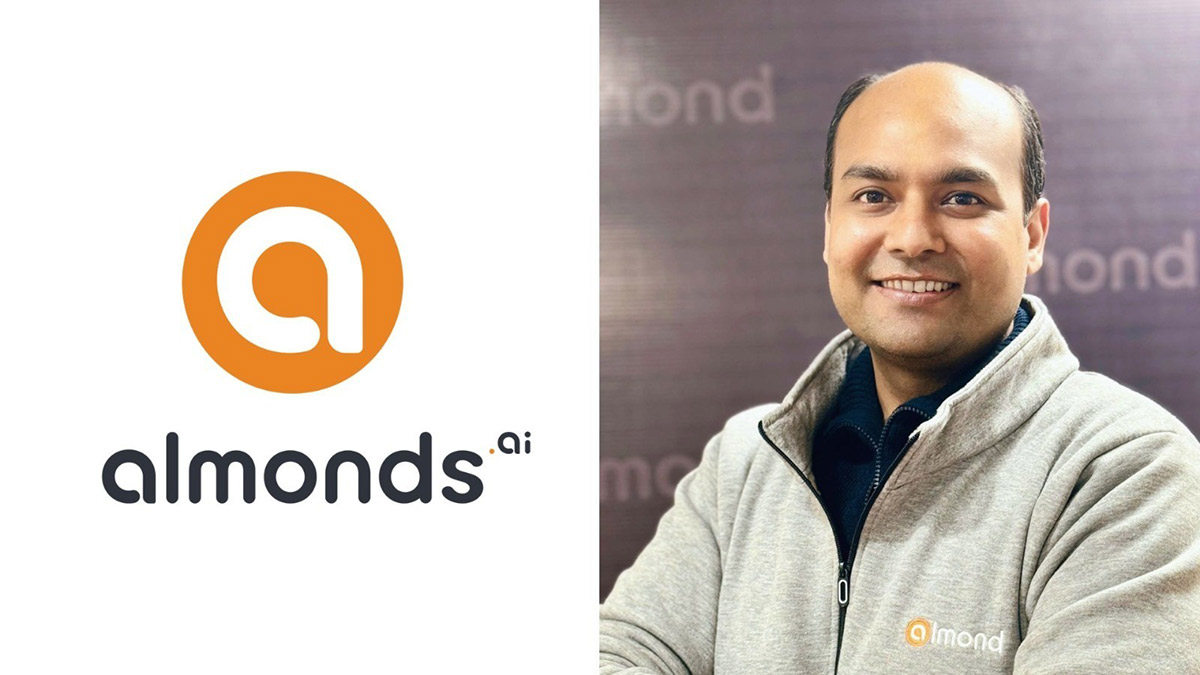
MUMBAI: Artificial intelligence is rapidly transforming how brands engage with their most critical yet often overlooked stakeholders: distributors, retailers, and last-mile influencers. For Abhinav Jain, co-founder and CEO of Almonds Ai, this shift marks a fundamental departure from traditional, transaction-led incentive models toward behaviour-driven, data-intelligent ecosystems. In this piece, Jain examines how AI is enabling brands to decode partner motivations, predict engagement patterns, and deliver personalised, scalable experiences—ultimately redefining channel relationships from transactional exchanges to long-term growth partnerships.
Across many sectors, there is increasing recognition that motivating those who bring products to market (distributors, retailers, last-mile influencers) poses a growing challenge.
Brands continue to invest significant marketing and digital resources to consumers, yet in many countries and the vast majority of emerging economies, these types of consumer-focused investment areas have had little impact on ultimate product delivery. Rather, it is still the case that traditional retail continues to make up most products sold.
So why is it that the systems built around motivating these channels have yet to evolve?
For decades, distributor and retailer engagement revolved around static schemes – quarterly targets, volume-based rewards, and occasional trade promotions. These programs were designed around transactions, not behaviour. The assumption was simple: if incentives increase, performance will follow.
Now, with the advent of artificial intelligence, the definition of performance is being challenged.
With the development of artificial intelligence, businesses can move beyond simply creating loyalty based on transactional-based models and toward models built on behaviours, the behaviours of channel partners that are intrinsic to their motivations in engaging with particular brands. As a result, the means by which businesses develop relationships within their distribution network are starting to evolve; thus, ultimately changing how brands interact with those within their distribution network.
Assessing engagement: Transitioning from transactional- to behavioural intelligence
Traditional loyalty systems refer to transactional activity (sales data). Although this data is valuable and important, it only provides a partial view of engagement across the channel partner.
For example, a retailer may have a high frequency of sales of a product, but their lack of engagement with the manufacturer would not reflect that they have true loyalty toward that brand. Conversely, a retailer who actively participates in training programmes, acts as brand advocates, and is engaged in learning with the supplier would exhibit more profound levels of loyalty but would have been invisible based on historical incentive programmes.
Artificial intelligence allows for the identification of behaviours that help to address this gap. Brands are able to use a variety of engagement data points, participate in learning programs, respond to communications, redeem behaviour and track platform use behaviour in order to identify motivation through behaviour.
McKinsey has stated that companies that leverage advanced analytics for their sales and distribution functions can achieve as much as a 15-20 per cent increase in productivity due to increased awareness of their behavioural trends throughout their networks.
This visibility of behavioural patterns within channel ecosystems can be transformational to brands as they can now view how partners engage on their path to purchasing products, instead of just measuring the sales revenue generated by those purchases.
Predicting motivations, not just measuring performance
Possibly, the largest contribution of Artificial Intelligence (AI) to helping brands engage with partners via channel ecosystems is its ability to predict future engagement versus simply measuring past performance.
Traditionally, brands only realised that a partner was disengaged (not likely to purchase products) once their sales performance had already declined. By then, the brand would have to use significant amounts of incentives or aggressive promotional activities to recovery their partner’s engagement level.
AI models can help organisations to detect early signs that a partner is becoming disengaged, such as declining participation in learning modules, declining interaction via the platform, or slower reward redemption rates. These indicators can help organisations to proactively engage with their partners before their sales performance begins to decline.
The practical application of AI and predictive analytics gives brands the ability to re-engage with their partners prior to their sales performance declines. For example, instead of developing and implementing broad-reaching incentive programs that provide a “one size fits all” incentive to all partners in an ecosystem, brands are able to develop targeted, engaging re-engagement programmes. This is how personalisation can be done on a large scale, such as across global distribution and retail networks.
The vast majority of distributor and retailer channels have thousands, if not millions, of individual channel partners. Historically, providing personalisation to such a large number of businesses has not been feasible.
However, with the advent of AI, personalisation at scale is becoming a reality.
Brands can now create tailored engagement journeys for all their partners, based on their partner profiles, through some combination of machine learning models and behavioural segmentation. For example, high-performing distributors might receive higher levels of leadership-based recognition and greater incentives to continue to grow. Emerging retailers, on the other hand, might be supported with training, onboarding rewards, and measurable performance milestones.
The shift towards personalisation of partner engagement echoes the direction that consumer marketing is already moving towards.
According to Salesforce’s report, over 70 per cent of customers expect personalisation in the way that brands engage with them. As such, there is a growing expectation for B2B ecosystems to have these same types of expectations from their channel partners.
Gamification and continuous engagement
AI is also radically changing how brands will engage with their channel partners through the use of gamification.
Many traditional incentive-based contests and leaderboards would spark temporary engagement among their participants, but they struggled to sustain engagement over time. With the use of AI, gamification mechanics are evolving dynamically based on historical and evolving participation patterns by their channel partners.
Challenges, rewards, and recognition structures can be modified continuously in order to sustain engagement with all of a brand’s partner segments. This will provide a greater opportunity to move away from episodic campaigns towards ongoing, continuous engagement experiences.
When channel partners receive motivation as part of their daily business activities through recognition, learning, and tracking their performance, long-term loyalty will be achieved.
Aligning motivation to broader impact
There is a growing trend within the channel ecosystem to integrate sustainability and socially responsible behaviours into the channel partner programmes of brands.
Increasingly, brands are motivating their partners to use sustainable practices in their operations, participate in sustainable practices like sustainability-related knowledge programmes, or promote products that are in line with their sustainability objectives.
Brands can use AI to monitor and measure these types of behaviours and incorporate them into their incentive frameworks so that brands can align their commercial objectives with broader social and environmental outcomes.
A shift in the way brands view their channel partners
AI is having the most significant impact on the way that brands are now viewing their channel partners, as it relates to the underlying philosophy of those fundamental relationships.
For the past several decades, many brands have viewed their channel partners as intermediaries in the supply chain. More and more brands are now beginning to view their channel partners as key ‘partners-in-growth,’ and their actions can have a direct impact on market performance.
In fact, all the channel ecosystems are using behavioural engagement platforms to design new models that reward not just transactional behaviour, but also create continuous engagement journeys for their partners, where their partners can receive recognition for their participation, learning, and continued engagement, thereby reinforcing long-term loyalty to the brand.
The future: Intelligent channel ecosystems
As we consider what the next phase of channel engagement may look like, many believe that it will be based on intelligent ecosystems, using AI to continuously monitor and adjust the engagement strategies used to engage their channel partners, in real time and based on the behaviours of those partners.
For brands operating in complex distribution networks, the ability to perform well will be determined both by whether products are available to their customers, as well as by the enthusiasm, expertise, and loyalty shown from each channel partner that represents the brand each and every day that they are working on behalf of the brand.
While AI clearly does not eliminate the human aspect of a brand’s relationship with its channel partners, it does allow brands to better understand and nurture that relationship.
In markets where the last mile will determine whether a sale is made, how one leverages the intelligence gained by using AI will ultimately be the difference between gaining a new, sustainable competitive advantage versus losing one.






