MAM
A sunshine year for outdoor industry

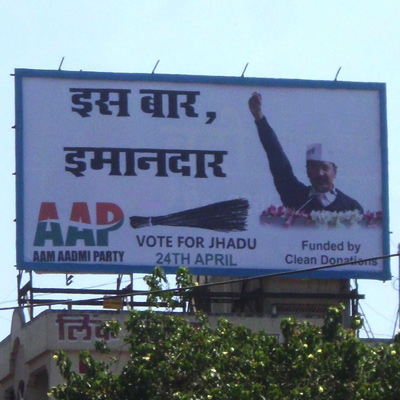
MUMBAI: Got distracted while driving through the highway? Then blame it on the rise of the hoardings.
What was not an essential part of any advertisers’ marketing plan when the television was on rise has now once again caught everyone’s attention as numerous channels quote premium rates.

“It is an in-your-face advertising. While one can skip and miss an ad on TV, it is very rare that one will miss out a life-size hoarding,” say media observers while adding that it is also the cheapest form.
Metros continue to garner the largest share (in excess of 50 per cent) of the outdoor pie. However, in line with the trend witnessed in the last couple of years, the Tier II and III cities continue to outperform the larger metros. The reason for this is the fact that a large number of campaigns are being projected for Tier II and Tier III audiences. Nonetheless, since the cost of media is lower, the percentage contribution is almost negligible. Regionally, north and west contribute up to 60 per cent of the total advertisement spend in OOH.
Interestingly, billboards are cherry-picked by brands and planners alike as it makes for approximately 55 per cent of the format used by outdoor advertisers 2013. Thirty-four per cent of revenue came from transit mediums.
However, thanks to economic uncertainties and who will come to power, the year 2013 saw muted growth of the Indian outdoor advertising industry. The current story is quite different.
According to the Ficci report of 2014, brand owners spent approximately Rs 19.3 billion in 2013 on OOH which was only five per cent of their total advertisement spends. The projected spends this year is close to Rs 21.2 billion.
The general election gave many advertising agencies reasons to rejoice, especially the ones in the outdoor business. According to a senior media planner from Maxus, political parties on an average had spent 20 per cent of their marketing budget on outdoors.
“Election campaigns came as an additional benefit to us beside our regular business. From the starting of the year, we started receiving bookings for our sites by various national parties. For three months, March, April and May, all our sites were booked. Anticipating this demand, we had expanded our portfolio, much earlier, which included big size hoardings at prominent areas, extensive reach in tier II and tier III cities, unbeatable pricing points and transparent policies,” says Global Advertisers managing director Sanjeev Gupta.
The first half was in favour of political advertising; the other categories which also spent and continue to do so on outdoors are real estate and e-commerce companies that are leaving no stone unturned to woo customers. While there are many low spenders, the categories which slashed their spends drastically are telecom, automobile, consumer electronics and banking, financial services and insurance (BFSI).
According to media experts, though inventories appeared to be completely occupied during election seasons, they are not sure about the revenue numbers. The pricing during a political advertising campaign roll was highly influential and negotiated on the basis of personal relations. Having said, many outdoor players are happy with the start of the business.
The forward trend
Innovation is the key to survive in the competitive business and this is the reason today advertisers want more than just plain vanilla hoardings. They prefer them with illumination, advance public utility structures especially for short duration campaigns. “Flip billboards (flip hoardings) is now becoming a new trend in the advertising industry,” mentions Gupta.
Laqshya Media chief operating officer Atul Srivastav highlights that the two trends, which have recently sprung in the outdoor space, are emergence of vendor based agencies and consolidation of media ownership business.
“Outdoor is moving to become Out-of-Home in true sense of it. The lines are blurring, no longer do we have compartments of 20x40s to qualifying as an outdoor. With mobile, tabs etc seeping in rapidly and with the consumer constantly being on the go, the trend is to create campaigns that engage consumers when they are out of home. Thus, while our age old hoardings remain essential, we approach the medium with an open mind and give integration a lot of importance,” believes Posterscope Group India managing director Haresh Nayak.
Monsoon, a worry?
If one goes by what the MET has to say about the monsoon this year then OOH players have little to worry.
Though weak monsoon will affect the economic sentiments, experts believe that the new government will able to handle the situation. Hence, resulting in better spends even in the coming months which will be more than last years.
“We are expecting good sale in monsoon season. Presently, it has brought us clients of resorts, hotels, holiday destinations, tourism, education sector, amusement parks and many more. In our attempt to have full occupancy during the monsoon season, we have introduced various selling concepts in our business such as hoardings on rotation basis, barter plans, mix-media plan, tier I & tier II cities plan and many more,” reveals Gupta.
The industry, overall, now waits for a better festive season which will be followed after the unpredictable monsoons. Currently, many show launches are lined up by the entertainment sector which the outdoor industry is betting high on.
The future is bright like our streets for the OOH sector.

MAM
Sleepwell unveils nationwide sleep study on World Sleep Day
79 per cent use screens before bed, 36 per cent of 18–25-year-olds sleep ≤5 hours.

MUMBAI: Sleepwell just dropped the pillow truth bomb because when India’s sleeping less and scrolling more, even the mattress wants to stage an intervention. On World Sleep Day 2026, Sleepwell released its nationwide Sleep Study, painting a stark picture of India’s escalating sleep crisis. The findings show that 79% of Indians use screens right before bed, fuelling restless nights and drowsy days. Alarmingly, 36% of young adults aged 18–25 sleep five hours or less making them the country’s most sleep-deprived group.
The study also busts the myth of “catch-up sleep”, 65% of respondents actually sleep even later on weekends, pointing to increasingly irregular patterns that spill fatigue into the working week. Mattress discomfort emerged as a frequently overlooked culprit behind late-night wake-ups and constant leak-anxiety checks.
To drive the message home, Sleepwell’s CMO Puneet Gulati appeared on Zee Business, stressing that quality sleep isn’t a luxury, it’s foundational health. He highlighted how the right mattress can transform restless nights into restorative ones.
The brand doubled down with clever late-night activations, partnering with a quick-commerce platform to serve contextual ads between 11 pm and 3 am, gently nudging bleary-eyed scrollers to consider mattress discomfort as the reason they’re still awake and pointing them to the nearest Sleepwell store. Digital influencers and creators also shared relatable stories of how poor sleep fuels impulsive late-night behaviour.
In a nation that celebrates hustle but quietly pays for it in lost rest, Sleepwell isn’t just selling mattresses, it’s selling the radical idea that sometimes the bravest thing you can do is close your eyes and actually sleep well.







