MAM
A journalist with soild values: RIP Subrata N Chakravarty

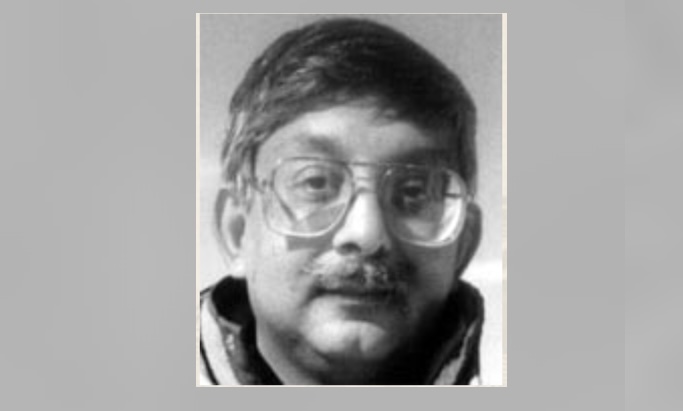
MUMBAI: In 2007, Subrata N. Chakravarty wrote a remembrance piece on Forbes editor and his mentor James W Michaels for India Abroad. This what he had to say: “Jim was far more to me than my editor. He was also my mentor and friend. He brought me into journalism, taught me, supported me when others were sceptical of my analysis, and helped me succeed.”
Little did Subrata know that 18 years later another respected scribe Raju Narisetti would be writing to inform the world about his passing while at the same time thanking him for his goodness when he was alive. This is how Raju described Subrata: : “Mourning the loss of a pioneering Indian journalist in America and a friend to many of us who chose to be journalists in the US, and looked up to him and benefited from his friendship and counsel. Subrata was a founding board member of South Asian Journalists Association (SAJA) in 2001. Thank you, Subrata, for your kindness and generosity.”
Subrata passed away on 1 February 2025 at 4 pm in the United States after a career that saw him stay at Forbes for 27 years from June 1972 to November 1998 with his mentor James Michaels and transform it from a struggling magazine to one of the most respected business publications in the US. (He had been suffering from dementia since 2021.)

He then served as senior editor for The Boston Consulting Company from November 1998 through April 2000. He worked as an assistant manager and editor for Institutional Investor Magazine from January 2001 through June 2003, and as an editor and reporter for Bloomberg News from July 2003 through November 2006.
Born in Kolkata, and after an AB in Political Science from Yale University and an MBA from Harvard Business School, Subrata spent his time at Forbes mentoring scores of young journalists.
He was greatly influenced by Jim who had told him: in his early days “if a story wasn’t fresh, it should not be written….. if the herd was running one way, the story was quite often in the other direction…..writers have to be “the drama critic of business,” bluntly judging the performance of top management.”
He made those nuggets of advice his leitmotifs throughout his career always looking for a new angle to a story or development. He also passed on that advice to those he mentored. He set up a company SNC Media, helping journalists to polish their interviewing, research, analytical and writing skills. He used the problem-solving techniques learned at the Harvard Business School with a writing style and attitude developed at Forbes magazine to help journalists tell factually accurate, compelling and entertaining stories. (He had held quite a few training sessions with Indian publishing houses – amongst which figured the then-ABP-owned BusinessWorld before the group sold it. BusinessWorld too was once rated as the top business publication in India between the late 1980s and early 2000s.)
Subrata through his career did in depth interviews with the likes of futurist Herman Kahn of the Hudson Institute, management thinker Peter Drucker, Edwin Land of Polaroid, and Harold Geneen of ITT. But most of all he researched everything about companies and predicted the success of many and the downfall of some – rather with a high per centage of accuracy.
Subrata leaves behind the his wife Barbara, and children Anjali and Joya.




MAM
Lego brings Messi, Ronaldo, Mbappé, Vinicius together
Campaign clocks 314 million views ahead of FIFA World Cup 2026 buzz.
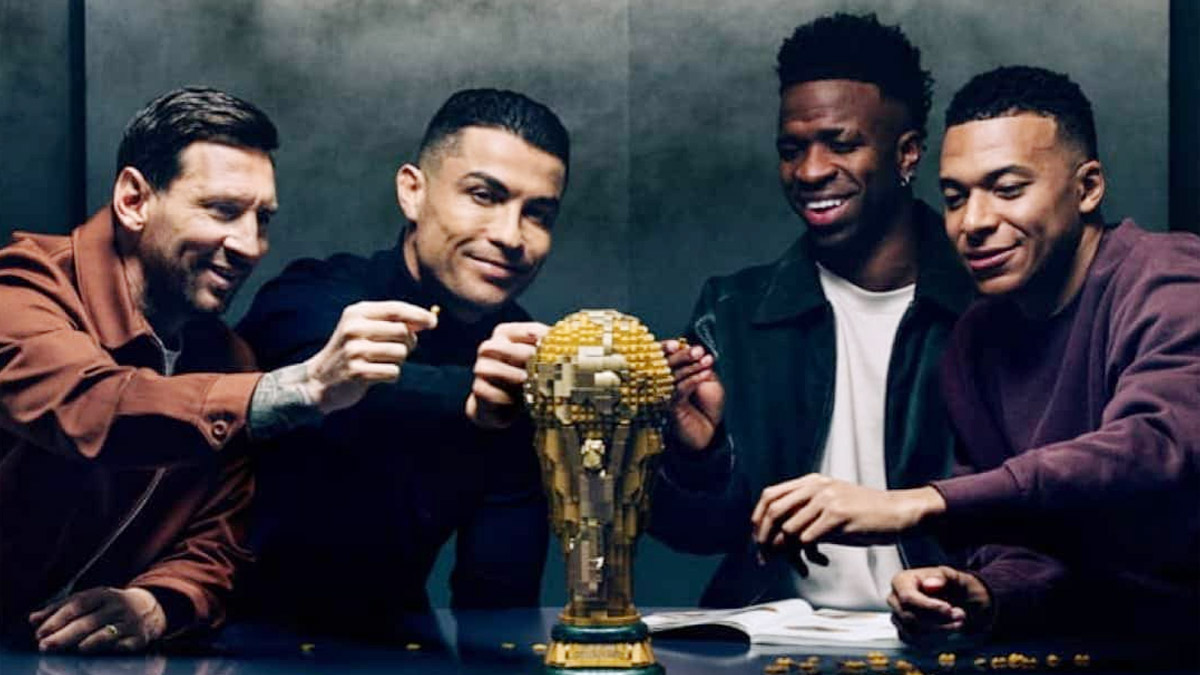
MUMBAI: Four legends, one frame and not a single tackle in sight. Lego has pulled off a crossover few thought possible, uniting Lionel Messi, Cristiano Ronaldo, Kylian Mbappé and Vinícius Júnior in a single campaign ahead of the FIFA World Cup 2026 only this time, they’re building dreams brick by brick.
Titled “Everyone wants a piece”, the campaign features the quartet assembling a Lego version of the World Cup trophy, before placing miniature versions of themselves atop it, a playful nod to football’s ultimate prize. Shared widely across social media, the ad carries a pointed disclaimer: it is not AI-generated, a subtle but telling signal in an era where even reality is often questioned.
The numbers tell their own story. The campaign has already crossed 314 million views on Instagram across the players’ accounts, with fans hailing it as a rare, almost nostalgic moment particularly for the reunion of Messi and Ronaldo, whose last shared campaign ahead of the 2022 World Cup became one of the platform’s most-liked posts.
Beyond the film, Lego is extending the play with exclusive, player-themed sets tied to each of the four stars, part of a broader football-led programme designed to ride the global momentum building towards 2026. The idea, as echoed by the players themselves, leans into the parallels between football and play experimentation, creativity, failure, and triumph.
Messi described the sets as a way to bring on-pitch moments into an imaginative, hands-on world, while Ronaldo called the transformation into a Lego figure a rare honour, blending sport with storytelling. Vinícius, meanwhile, struck a more personal note, recalling childhood moments of building with Lego and framing creativity as a universal language that transcends borders.
The timing is no accident. With the 2026 World Cup set to run from June 11 to July 19 across the United States, Canada and Mexico, and featuring an expanded 48-team format, global anticipation is already building. Argentina, led by Messi, will enter as defending champions, adding another layer of intrigue.
For Lego, the campaign does more than celebrate football, it taps into its mythology. Because when icons become figurines and rivalries turn into play, the beautiful game finds a new kind of pitch. one built, quite literally, by hand.






