Comment
A hot cuppa instant marketing

'Just take an Uber', is the fastest way of telling, 'arrange a clean, safe, convenient, mode of transport for yourself'. Theoretically, the company and its marketers have at this moment communicated awareness, interest, consideration, preference, purchase, loyalty and even advocacy. Congratulations, dear readers, you just saw a company become a brand.
“Marketing is a series of events,” said the gurus. Only no longer now and we’ll tell you how!
With the abundant channels, competitors, digital literacy and logistical accessibility, time has become expensive than money. But the startups and investor backed companies have brought in variety in almost all B2C sectors. As a consumer our intent is to receive the best experience instantly, with least research done. With all of us locked down, all traditional marketing efforts are meagre right now. The marketers are under pressure to create an empirical roadmap to make the target consumer be aware, buy, and become a brand custodian. What’s the bailout?

Making a quicker marketing journey
With due respect to the legends, and thanks to the majority imbibing technology across all levels we can jump and skip the non-bankable steps in the various marketing models. Technology and its prodigy, 'the digital', is the push that has triggered the plunge. Our focus on sharper techniques will cut the flab out of the marketing budgets. We’ll hit the target audience where they belong saving a lot of resources and time.
The new format, we call it the ‘instant marketing’, enables the brand to reach the target customer fast and reduce the cost of communication.
Marketing today is only as impactful as a user’s attention span
Marketers have this tremendous pressure to make the consumer make a right swipe within 8 seconds. It’s the ultimate test of seduction out there. Only the best combination of content and media wins the race. This compels us marketers to think slow and act fast. Our goal is to understand everything about our customers, be where they are and then gratify their mind-set.
In the marketing funnel of 2020, we may not really have to go all the way through awareness, interest, consideration, desire, engagement and action. As per our audience, maybe we jump straight from awareness to engagement and purchase action. Or from interest to desire and action. Any of the combinations work best for our brand! The accessibility of technology and the hand-held medium has given us this superpower to jump our marketing methodology around.
Covidified consumer behaviour
Marketers will see themselves become more budget-oriented in order to be cost effective. On its way up to revival, marketers will opt for the most economical methods to reach their audience. There isn’t a lot of liquidity, yet there are huge capacity and inventory. Any player to chance upon and make the fastest dash to be in the playfield will rise above the competition. Post-Covid, brands have a changed course already.
Consumers will be more thoughtful about what they consume and how much they need to consume. Their value seeking parameters will now be different and they’d look brands with a different eye. Safety, empathy, concern, wellness, purpose driven, social could be some of them. Less experimental now, they’ll choose the brand that they best understand and relate to.
The marketer’s 2020 tool kit
Unlike the old dictum, we can now easily measure where half of the money in marketing and advertising goes. We can have instant stats of what works and what doesn't and can promptly change the strategy. We have amazing forces to choose from –
· Programmatic Communication – To shout out loud where your consumer is listening
· Communications Formats – Video and Pictures for tempting their senses
· Performance Marketing – Make a payment on delivery (on a completed lead, sale, booking or download)
· Communications Platforms – Tactically repurposing content for Youtube, Instagram, Google and Twitter
The organic traffic is down in major industries globally. That’s a huge concern cited by the marketing guru, Niel Patel. When that happens, it reflects, that there is a demand crunch in almost all sectors. It means that disposable incomes are now savings. And it means that the money isn’t flowing. This is the time for consolidation, for being judicious with the expenses and for reaching out to the customers in the tools that use the shortest time. As a marketer, do not be fearful, because right now, everyone is. Be smart, because everyone isn’t.
By the time you finish reading this article, three businesses got shut down worldwide. You don’t believe me? Google it!
(The author is integrated marketing specialist at Topline Consulting Group. The views expressed are his own and Indiantelevision.com may not subscribe to them.)






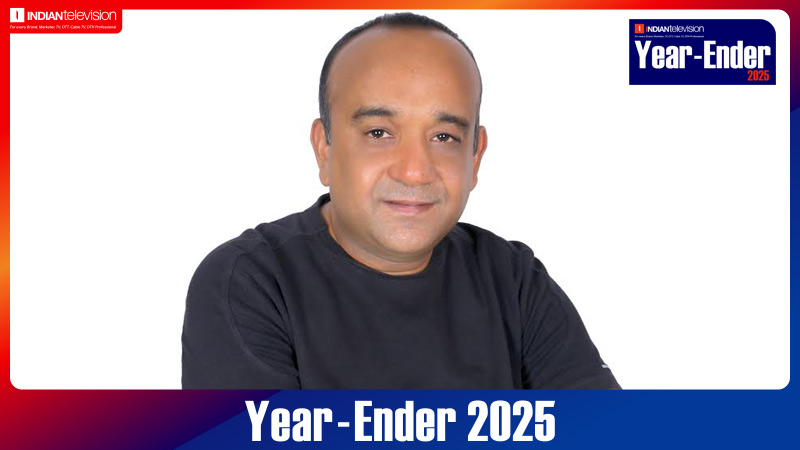
MUMBAI: 2025 will be remembered as the year India’s OTT industry stopped chasing scale for its own sake and began reckoning with how audiences actually consume content. Completion rates fell, patience wore thin and the limits of long-form excess became impossible to ignore. In this guest column, Pratap Jain, founder and CEO of ChanaJor, traces how micro-drama moved from the fringes to the centre of viewing behaviour, why short-form fiction emerged as a retention engine rather than a trend, and how platforms that respected time, habit and emotional payoff were the ones that truly grew up in 2025.
If there is one thing 2025 will be remembered for in the Indian OTT industry, it’s this: the industry finally stopped pretending.
Stopped pretending that bigger automatically meant better.
Stopped pretending that viewers had endless time.
Stopped pretending that scale without retention was success.
What began as a quiet reset in 2023 and a cautious correction in 2024 turned into a very visible shift in 2025. Business models matured. Content strategies tightened. And most importantly, platforms started aligning themselves with how Indians actually watch content, not how the industry wished they would.
At the centre of this shift was micro-drama—not as a trend, but as a behavioural inevitability.
When OTT finally understood the time problem
For years, long episodes were treated as a marker of seriousness. A 45–60 minute runtime was almost a badge of credibility. Shorter formats were pushed to the margins, labelled as “snack content” or “mobile-only.”
That belief quietly collapsed in 2025.
What platform data showed very clearly was not a drop in interest—but a drop in patience. Viewers weren’t rejecting stories. They were rejecting commitment.
Across platforms, the same patterns appeared:
* First-episode drop-offs on long-form shows kept increasing
* Completion rates continued to slide
* Viewers were sampling more titles but finishing fewer
At the same time, shows with episodes in the six to 10 minute range started showing the opposite behaviour: higher completion, higher repeat viewing, and stronger daily habit formation.
Micro-drama didn’t win because it was short. It won because it respected time.
Micro-Drama didn’t arrive loudly. It took over quietly.
There was no single moment when micro-drama “launched” in India. It crept in through dashboards and retention charts.
By mid-2025, it was clear that viewers were happy watching four, five, sometimes six short episodes in one sitting—even when they wouldn’t finish a single long episode. Romance, relationship drama, slice-of-life conflict, and grounded comedy worked especially well.
This wasn’t disposable content. It was compressed storytelling.
In shorter formats, there was no room for indulgence. Every episode had to move the story forward. Weak writing was punished faster. Strong writing was rewarded immediately.
Micro-drama raised the bar instead of lowering it.
Where ChanaJor naturally fit into this shift
ChanaJor didn’t pivot to micro-drama in 2025 because the market demanded it. In many ways, the platform was already built around the same viewing behaviour.
From the beginning, ChanaJor focused on short-to-mid-length fictional stories that felt close to everyday Indian life—hostels, rented flats, office romances, small-town relationships, young people figuring things out. Stories that didn’t need heavy context or cinematic scale to connect.
What worked in ChanaJor’s favour in 2025 was clarity:
* A clearly defined audience
* Tight episode lengths
* Storytelling that prioritised emotion and pace over spectacle
While several platforms rushed to copy global micro-drama formats, ChanaJor stayed rooted in familiar Indian settings and conflicts. That familiarity mattered. Viewers didn’t have to “enter” the world of the show—it already felt like theirs.
Why audiences started responding differently
One of the biggest misconceptions going into 2025 was that audiences wanted shorter content because their attention spans had reduced. That wasn’t entirely true.
What viewers actually wanted was meaningful payoff per minute.
On platforms like ChanaJor, episodes didn’t waste time setting the mood for ten minutes. Conflicts arrived early. Characters were recognisable within moments. Emotional hooks landed fast.
A typical consumption pattern looked like real life:
* One episode during a break
* Two more before sleeping
* A few the next day
This is how viewing habits are built—not through marketing spends, but through comfort and consistency.
Viewers came back not because every show was a blockbuster, but because they knew what kind of experience to expect.
2025 was also the year OTT faced business reality
The other big change in 2025 was on the business side. Subscriber growth slowed. Discounts stopped hiding churn. Customer acquisition costs rose.
Platforms were forced to ask harder questions:
* Are viewers finishing what they start?
* Are they returning without reminders?
* Is this content worth what we’re spending on it?
This is where micro-drama began outperforming expectations. A well-written short series could deliver sustained engagement without massive budgets. It didn’t peak for one weekend and disappear—it stayed alive through repeat viewing.
Platforms like ChanaJor benefited because they weren’t chasing inflated launch numbers. The focus was on consistency and retention, not noise.
Failures Became Visible Faster
2025 also exposed weaknesses brutally.
Several platforms assumed micro-drama was a shortcut—short episodes, quick shoots, instant traction. What they discovered was that bad writing fails faster in short formats than in long ones.
Viewers dropped off within minutes. Episodes were abandoned mid-way. Weak stories had nowhere to hide.
Micro-drama didn’t forgive laziness. It amplified it.
The platforms that survived were the ones that treated short storytelling with the same seriousness as long-form—sometimes more.
OTT Stopped Chasing Prestige and Started Chasing Habit
Perhaps the most important shift in 2025 wasn’t technical or creative—it was psychological.
OTT stopped trying to look like cinema. It stopped chasing validation through scale and awards alone. It began behaving like what it actually is in people’s lives: a daily companion.
Platforms like ChanaJor found their space here because that mindset was already baked in. The goal wasn’t to dominate a weekend launch. It was to quietly become part of someone’s everyday viewing routine.
That shift changed everything—from release strategies to how success was measured.
What 2025 Ultimately Taught the Industry
By the end of the year, three truths were impossible to ignore:
* Time is the most valuable thing a viewer gives you
* Retention matters more than reach
* Format must follow behaviour, not ego
Micro-drama didn’t take over because it was fashionable. It took over because it fit real life.
Looking Ahead
Micro-drama is not replacing long-form storytelling. It is redefining the baseline of engagement.
Longer shows will survive—but only when they earn their length. Short-form fiction will continue to evolve, becoming sharper, more emotionally confident, and better written.
Platforms like ChanaJor have shown that it’s possible to grow without shouting—by understanding the audience, respecting their time, and telling stories that feel real.
2025 wasn’t the year OTT became smaller. It was the year it became smarter.
Note: The views expressed in this article are solely the author’s and do not necessarily reflect our own.