iWorld
Trendspotters.tv’s $2mn online gamble with OG content

If you think you are the stylish, fashion-forward type, then this may well be the destination for you.
Welcome to Trendspotters.tv, India’s first online digital channel engaged in spotting trends across genres. Launched on 23 August by Smartube Entertainment, Trendspotters promises to guide you about what’s hot and what’s not on a screen near you – be it a tablet, laptop or cell phone.
 |
|---|
|
We will be aggressively investing more on creating independent video platforms and creating a lot of content for the internet audience, says Kunal Kishore Sinha
|
About the venture, Trendspotters.tv founder Kunal Kishore Sinha says: “We are glad to launch India’s first digital TV, which promises to be an exciting platform for next generation consumers whose lives are driven by upcoming trends- be it fashion, music, sports or entertainment. It is a medium for bringing the next generation trends and talents to light, especially for an upwardly mobile audience. It brings out a cluster of micro trends every day for the new age audience, which takes inspiration from out-of-the-ordinary discoveries.”
So where and how did it all start? Sinha explains that the team went through the paces; from research to coming up with a suitable name to setting up the platform. “The idea started some six months back when I realised that maximum consumption over a smart phone is on YouTube. It is more than Facebook, Twitter or any other social media platform. There are audiences that are right now looking out for comprehensible video content on the Internet and consuming it. With those facts, we started working on the platform,” he elaborates.

Starting from the word go
The first challenge was to get the right resources across categories including fashion and lifestyle, music, and entertainment and sub-categories such as trendsetters, discoveries, trend spotting and seasonal buzz.
A senior content person from CNN-IBN was roped in for each category and he/she came on board as content director/head based on qualifications and relevant experience. For example, a lady who’d completed her fashion graduation from London and was working with Adidas in Dubai was hired for the fashion category. Ditto for music, where six to seven senior people were brought in, not to mention an RJ who would be associated with them.
 |
 |
|---|
|
The offical website creates content specifically for the web audience; which is not be of long duration
|
Next, was what should they name the initiative. “From the very beginning, we wanted to have content which is more futuristic, also keeping in mind what is outdated and what is in. We started off saying we wanted to have something around the word ‘trend’. After brainstorming, we came up with multiple options. Somebody suggested it should be trendstocker, trendstop, but when we decided on Trendspotter, it felt apt, considering we are into the business of spotting trends across verticals,” explains Sinha.
But what’s in it for consumers? In every category, there’s a section ‘Discoveries’, which focuses on new talent, points out Sinha, giving the example of a boy called Rameshwar, who has a small shop in Nizamuddin, Delhi, and though he isn’t very popular, still has clients like Gulzar. “Not many mainstream media would cover or discover somebody like that. Eventually, what will happen is our ‘Discovery’ section will get further populated,” says Sinha.
Is that the broad plan, we ask, and Sinha provides: “We are spotting new trends and creating more content which can be interesting for the audience. So, the idea is to get them what is not available right now in the mainstream, maybe TV is not giving them that.”
Wouldn’t audiences find a likeness with say YouTube? “We will be creating content specifically for the web audience; which will not be of long duration. The idea behind such content is it will cater to the web audience looking for a quick break from work,” shoots back Sinha.
 |
 |
|---|
|
The website has various categories that spots new trends and creates more content which can be interesting for the audience
|
And has the response been worth mentioning? Sinha feels it’s very positive considering the entertainment industry is waking up to the potential of internet media. “When you start a new media company, what happens is getting across to the right people, getting them to come on your platform takes a lot of effort. That challenge we have not faced yet, because we have shot with designers like Troy Costa,” he says.
Coming to the most critical question – how does the team spot trends across genres on a day-to-day basis? Sinha says presently, content creation is happening in house. The plan is to get into crowd-sourcing, where creators from across the world would be contributing. Yet, the overall control of the content would lie with the company itself.
Sinha gives the example of how somebody sitting in Chandigarh would become a trendspotter. Also, contests on social media and on-ground to identify trend spotters across the country are on the schedule, and these in turn would help the channel identify trends there. Additionally, an internal research team would help everyone figure out what is new and interesting and worth talking about.
Does Trendspotters trend on social media? Well, at the time of penning this article, Trendspotters.tv had managed to garner over 30,000 likes on Facebook. Whereas, the channel’s Twitter presence is being worked upon. Says Sinha: “We were thinking that we would invest just in building up the channel and once it was ready, we would then look for revenue. But what happened is we realised that brands are already ready to partner and invest in the content we are creating. As we speak, we have already started getting revenue by having brands integrated into our shows. Our revenue-stream has already started.”
Roadmap for future
For an endeavor so novel, what does the future entail? Plans are afoot to expand the channel’s reach into areas of general interest like automobiles, consumer technology and so on. A section called Club Review is on the anvil, where the channel would be doing video reviews of clubs across the country. The focus is on parameters like music, ambiance, crowd and drinks served etc. Sinha claims they already have sponsors for this section in an international liquor company named Premium and a music equipment company.
 |
|---|
|
In a month‘s time, the official Facebook page has achieved applaudable 30,000 likes
|
That said, where does Sinha see Trendspotters.tv in the general scheme of things? “We know that even brands are realising they have to go beyond platforms like Facebook and Twitter to engage with consumers. And I think that is where we are filling in the gap by creating a new platform that will give brands a new way of connecting with their consumers,” replies Sinha.
Is it looking good hereon? “We are getting good traction from both the brand side and the consumer side. We are happy with the way things are going and going forward, we will be aggressively investing more on creating independent video platforms and creating a lot of content for the internet audience. We would ensure that in the next one year, we actually become a household name,” Sinha rounds off.
Sinha has drawn up a warchest of $ 2million to fund his dream project. That should suffice to fund his growth needs for the next two years, he says. Basically, he has a two year window to drive trendspotters.tv into a profitable business model.






iWorld
MS Dhoni invests in Kuku, joins Kuku TV as brand ambassador
Cricket icon backs AI storytelling platform, fronts Kuku TV campaign
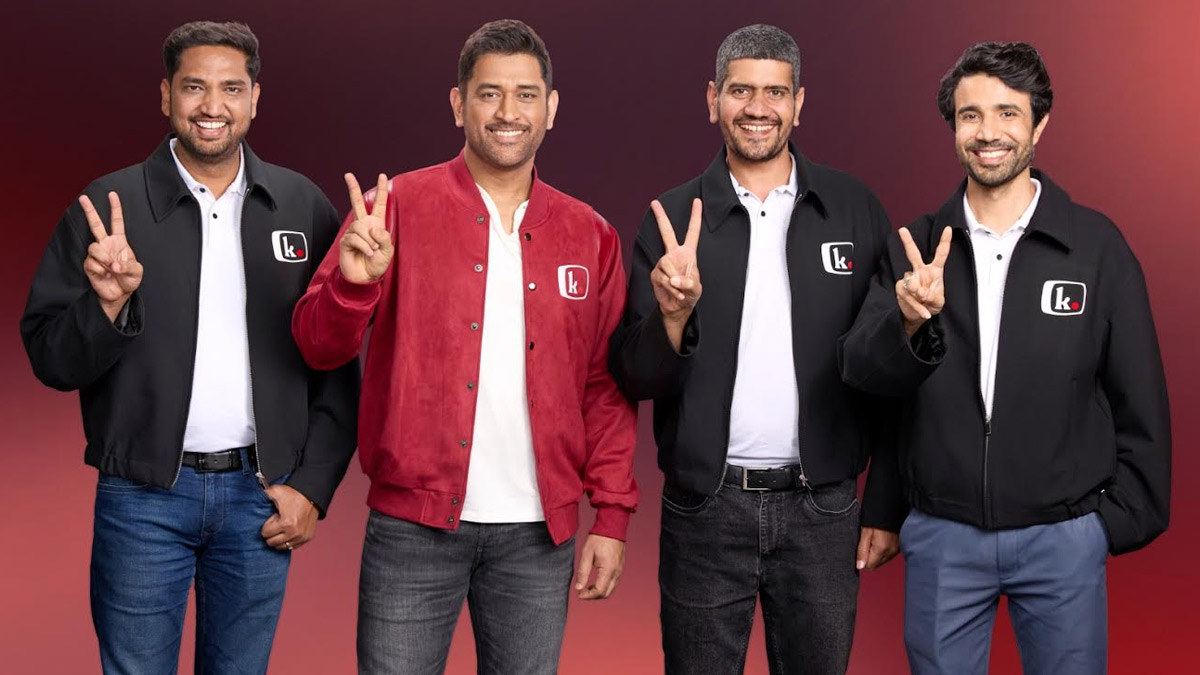
MUMBAI: MS Dhoni has invested in Kuku and joined its short-form drama app Kuku TV as brand ambassador, signalling a high-profile bet on India’s fast-growing AI-led content space.
Kuku, a mobile-first storytelling platform, operates across formats with apps such as Kuku TV for micro-dramas, Kuku FM for audio content and Guru for learning-led entertainment. Founded in 2018, the company has scaled rapidly, crossing 350 million installs and building a catalogue of over 20,000 titles across multiple Indian languages.
Dhoni said his decision to invest and partner with the platform was driven by its distinct approach to storytelling and its strong growth trajectory. MS Dhoni said, “I chose to invest in Kuku, and also come on board as the ambassador for Kuku TV, because the platform really stood out to me. It has built a differentiated entertainment experience for audiences across India, spanning multiple languages and formats. The growth has been impressive, and I connect strongly with the founders, who come from small towns like mine and have built something of this scale. I believe in their vision of building an AI-driven storytelling platform from Bharat, for Bharat, and for the world.”
Founded by Lal Chand Bisu, Vinod Kumar Meena and Vikas Goyal, the platform positions itself at the intersection of technology and storytelling, using AI to create and distribute bite-sized content tailored to mobile audiences.
Sharing his perspective, Kuku co-founder and CEO Lal Chand Bisu said, “MS Dhoni is known for backing bold decisions that others might hesitate to take. At Kuku, we are also taking bold bets. That spirit of unconventional thinking resonates deeply with us.”
Adding to this, Kuku co-founder and COO Vinod Kumar Meena said, “Our beloved Thala is one of the rare personalities with truly nationwide appeal. As we build Kuku for all of India, that connection makes him a natural fit for us.”
Further, Kuku co-founder and CTO Vikas Goyal said, “MSD has a unique understanding of people. As we build for both creators and consumers, that perspective will be incredibly valuable, especially as we continue strengthening our AI-driven storytelling stack.”
Backing the momentum, Panthera Peak Capital managing director Nikhil Bhandarkar said, “Kuku’s vision, execution, and clarity of thought are exceptional, qualities that closely mirror MS Dhoni’s approach. We are excited to partner with the team as they build Kuku into a global entertainment platform.”
To mark the association, Kuku TV has rolled out the campaign Dhoni Watches Kuku TV, anchored by a brand film that plays on Dhoni’s instinctive decision-making. Built around short, engaging stories delivered in minutes, the campaign highlights the platform’s promise of quick, compelling entertainment.
With Dhoni stepping in as both investor and face of the brand, Kuku appears to be doubling down on its ambition to take AI-driven storytelling from India to a global audience, one short story at a time.