eNews
India strengthens global enforcement to crack down on smuggling
CBIC ramps up tech-driven inspections and international partnerships to stop illicit trade

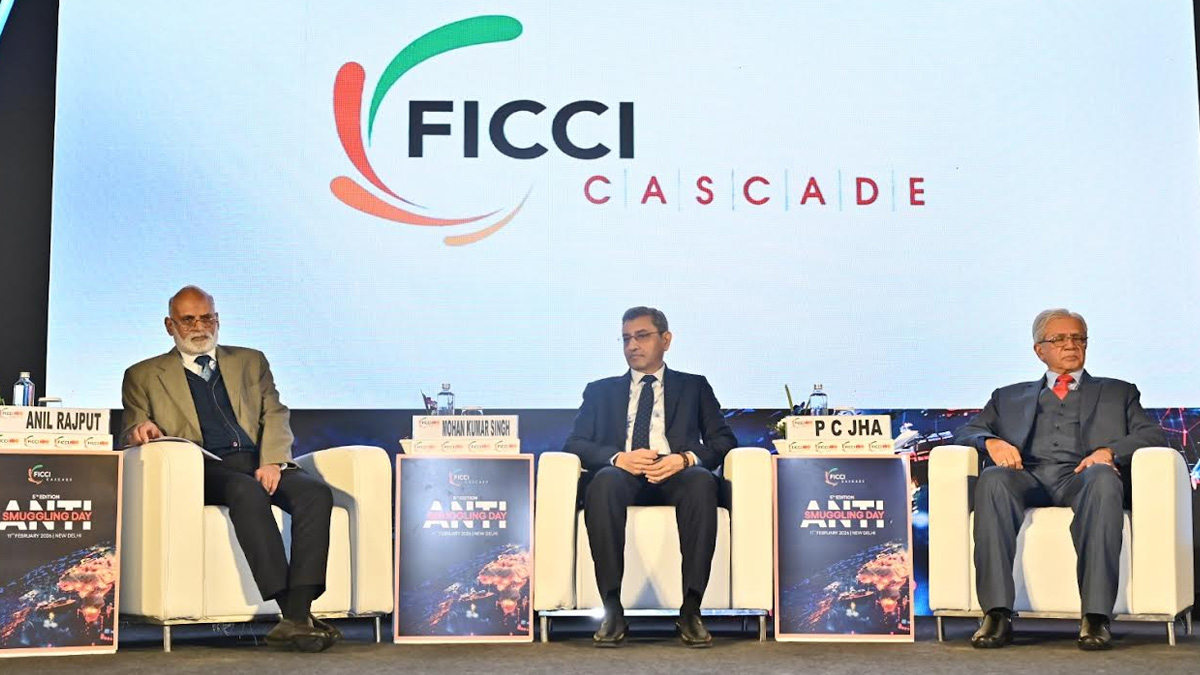
NEW DELHI: India is ramping up its battle against cross-border smuggling, with 42 Mutual Customs Cooperation Agreements already in place and 21 more in the pipeline with major trading partners, said Central Board of Indirect Taxes and Customs (CBIC) member – compliance management Mohan Kumar Singh.
Speaking at Ficci Cascade’s 5th Anti-Smuggling Day, Singh described smuggling as a sophisticated, technology-fuelled crime that threatens both the economy and national security.
“CBIC’s customs teams and the Directorate of Revenue Intelligence are stepping up efforts. In just the first three quarters of this year, we seized around 500 kilograms of gold, nearly 150 million illicit cigarettes, over 20 tonnes of red sanders, and substantial quantities of cocaine, heroin, amphetamines and cannabis. We also uncovered more than 100 wildlife trafficking cases, along with illegal arms, drones and counterfeit currency,” said CBIC member – compliance management Mohan Kumar Singh.

Singh added that modern smuggling networks are flexible and tech-savvy, mixing old-school concealment with digital anonymity and complex financial schemes. “We are moving from simply intercepting shipments to dismantling the networks behind them. Advanced cargo screening, AI-driven analytics and risk-based inspections help us stop illegal goods before they hit the domestic market,” said CBIC member – compliance management Mohan Kumar Singh.
Highlighting recent Union Budget initiatives, Singh noted that AI-powered image analysis and expanded container scanning will further boost enforcement, while GST simplification and customs reforms make legal trade easier and illicit trade harder.
Emphasising the need for global collaboration, Anil Rajput said, “Ficci Cascade, chairman, Anil Rajput, Strong partnerships, intelligence sharing and coordinated action are key. An International Anti-Smuggling Day recognised by the United Nations could give this fight a worldwide platform, and India is ready to lead.”
P C Jha added, “Ficci Cascade, advisor, P C Jha, Anti-Smuggling Day is more than a symbolic event. Smuggling thrives on organised networks and digital platforms. Effective enforcement must dismantle these networks and the financial flows that sustain them.”
Ficci Cascade research shows the economic impact is huge. A 2024 study estimates India’s illicit market at nearly Rs 8 lakh crore in 2022–23, with millions of legitimate jobs lost to unlawful trade.
The event featured two expert panels. The first focused on protecting the economy and borders through coordinated intelligence and technology, while the second explored international partnerships with representatives from Undoc, US Customs and the Indian enforcement community.
The day also celebrated young talent through the “Stand Against Smuggling” digital art competition, which drew over 10,000 entries nationwide, highlighting growing awareness and civic responsibility among youth.
Launched in 2022, Anti-Smuggling Day has quickly become a major platform for government, industry, international bodies and civil society to unite against illicit trade.

eNews
Piyush Thakur steps down as Inshorts’ chief revenue officer
Former vice president and cro says exit marks a new chapter after close to a decade of building revenue and partnerships at Inshorts Group.

NOIDA: Piyush Thakur has stepped away from Inshorts Group after nearly 10 years with the company, marking the end of a long tenure that culminated in his role as chief revenue officer.
In a farewell note, Thakur said he was “turning a new page” after almost a decade at Inshorts, calling it one of the hardest professional decisions he has made. He added that his exit was not driven by uncertainty about the future, but by reflection on a long association with the company.
Thakur joined Inshorts in October 2016 as vice president and spent around seven years in the role before being elevated to chief revenue officer in April 2024, a position he held until April 2026.
He said his tenure was defined by “thousands of mornings, late nights, product debates and breakthrough moments”, as the company evolved into a large-scale digital news platform used by millions.
In his note, Thakur emphasised that Inshorts’ growth was a collective effort across teams, adding that engineers, designers, sales teams and customer support staff all contributed to building the platform. He said the company’s success was not the result of individuals but of “everyone who stayed, passed through, and left their mark”.
Before Inshorts, Thakur worked across several digital media and business development roles. At ESPN, he served as senior regional manager from October 2015 to October 2016, focusing on growth initiatives, strategic opportunities and video distribution.
At Times Internet, he worked for nearly three years, including as head of business development from April 2015 to September 2015 and chief manager from January 2013 to March 2015. His responsibilities included monetisation of mobile platforms, managing media and developer partnerships, and driving revenue across digital properties such as The Times of India and The Economic Times.
Earlier, he worked at Brandmovers as head of business development from June 2012 to June 2013, handling digital, mobile and social media marketing solutions, client development and strategic consulting. During this period, he also worked on advertising revenue, brand strategy and CRM-based solutions.
At Inshorts, Thakur’s role focused on revenue strategy, mobile and media partnerships, and growth initiatives across platforms. His profile highlights experience in mobile product management, digital business models, partner ecosystems and revenue expansion in high-growth environments.







